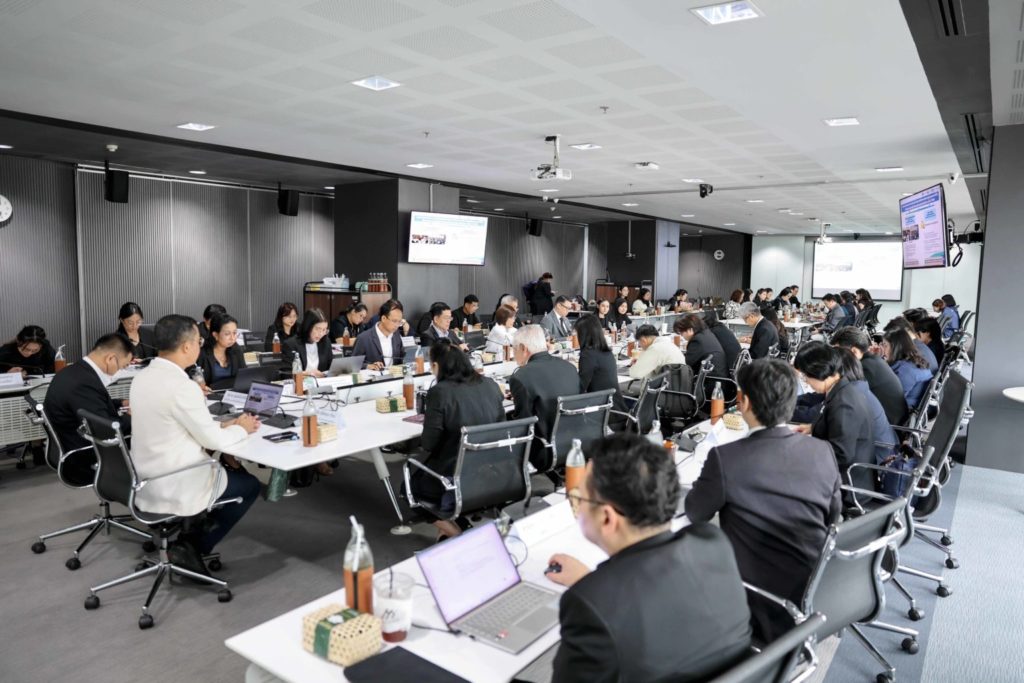
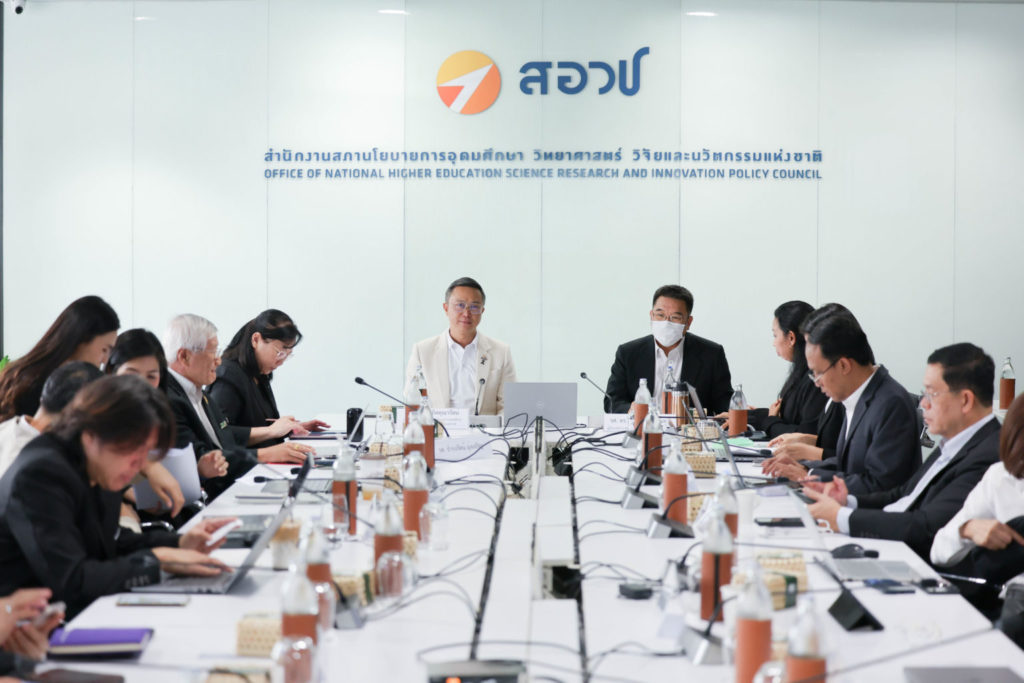
On 5 May 2026, NXPO convened a meeting of the Steering Committee and Network under the initiative “Development of Databases and Indicators to Support a Low-Carbon Economy.” The meeting was co-chaired by Dr. Surachai Sathitkunarat, President of NXPO, and Assoc. Prof. Dr. Toemsak Srikhirin, Executive Director of the National Metal and Materials Technology Center (MTEC), National Science and Technology Development Agency (NSTDA).
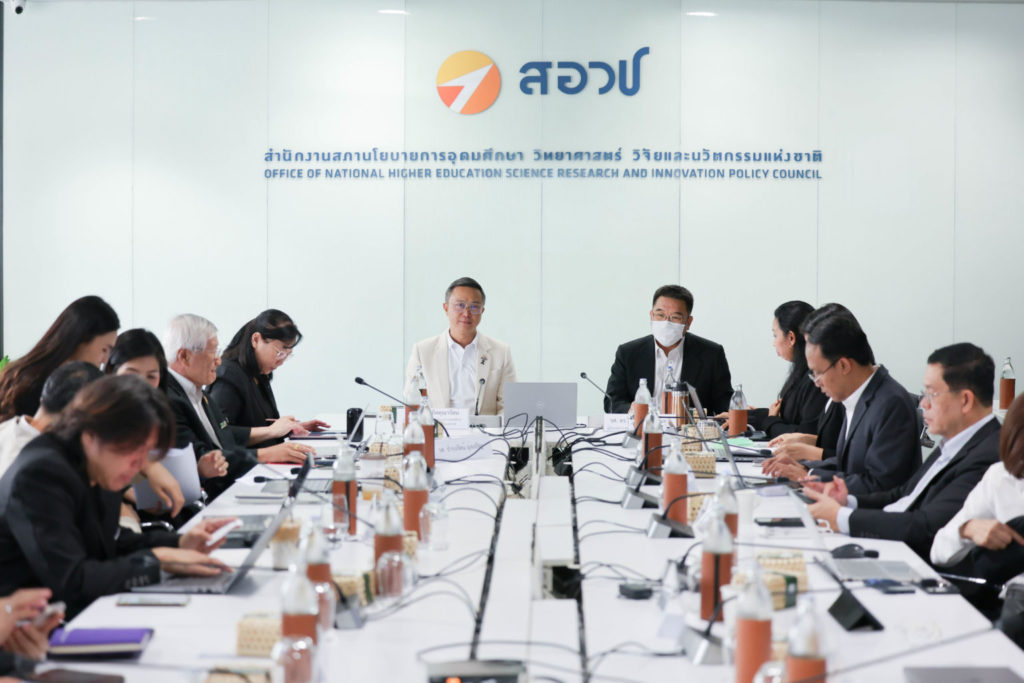
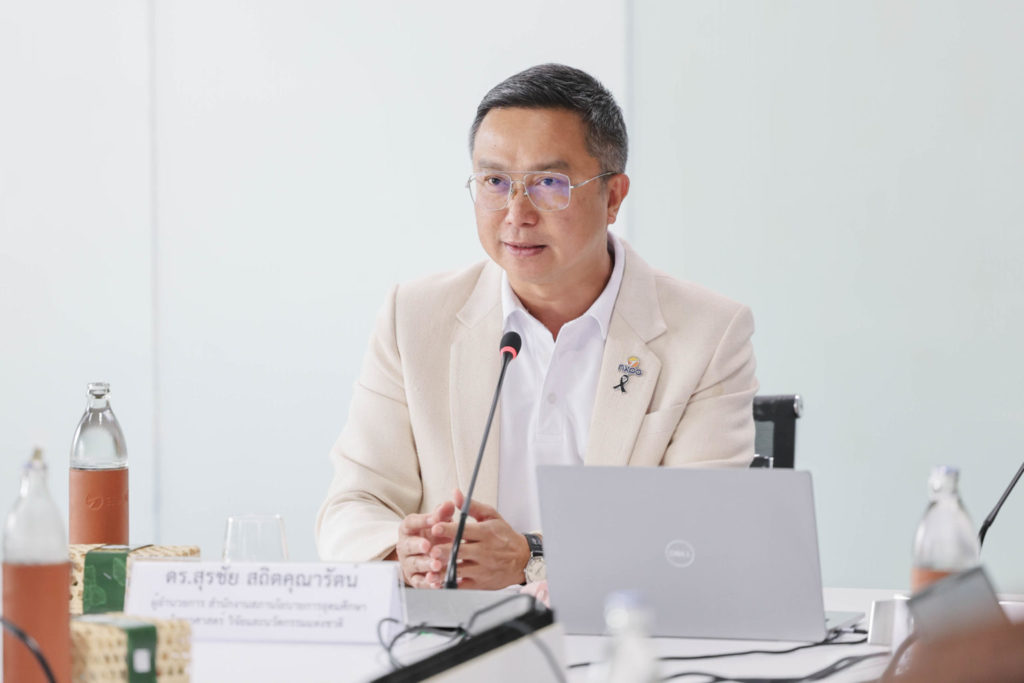
Dr. Surachai emphasized NXPO’s commitment to advancing this initiative, noting that strong collaboration among network partners has enabled the establishment of effective mechanisms and thematic working groups to deliver tangible outcomes. The database currently under development is expected to be both internationally recognized and nationally applicable.
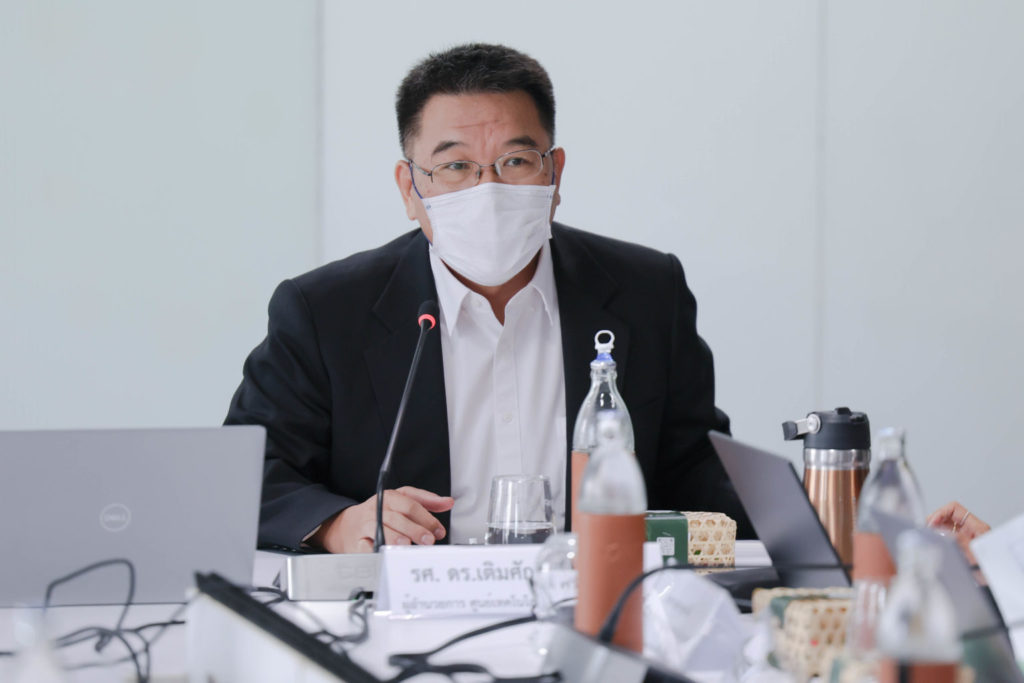

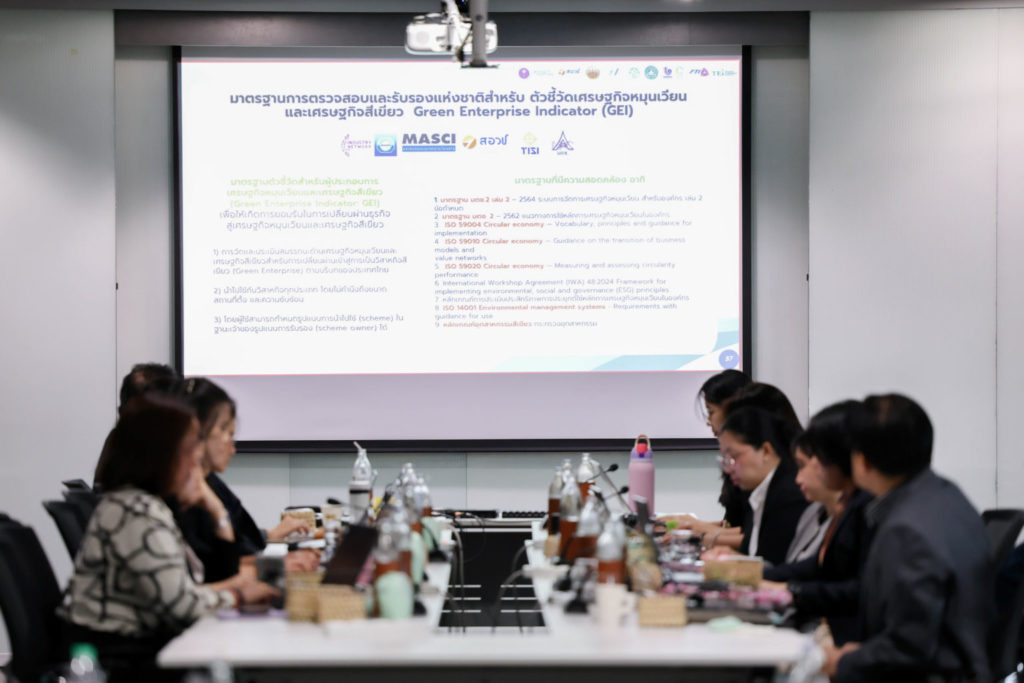
The NXPO working team, led by Dr. Saravanee Singtong, Director of the Sustainability Policy Division, reported progress on the development of indicators, standards, and policy recommendations to support a low-carbon economy. She explained that the BCG indicator was initially designed for micro, small, and medium enterprises (MSMEs) to promote sustainable business practices. However, pilot implementation revealed limitations in its operational application for driving systemic change. Consequently, the indicator has been elevated to a national standard, enabling integration with financial instruments and incentives to encourage business transition while contributing data to a centralized government database. This evolution led to the development of the Green Enterprise Indicator (GEI), a national standard designed to support transformation across supply chains and align with international frameworks.
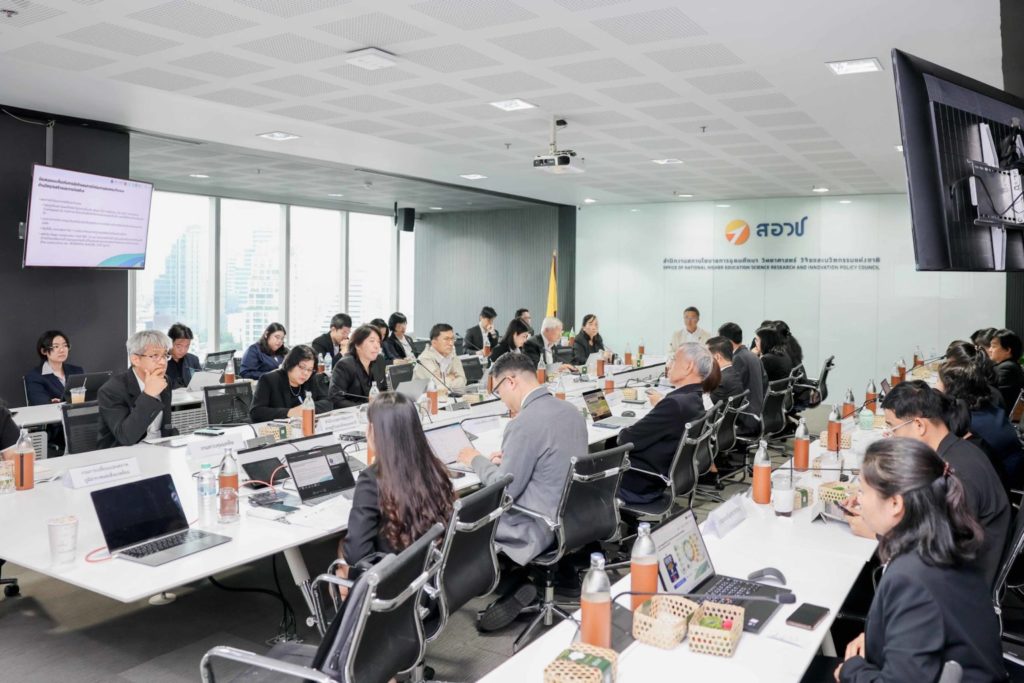
For implementation across Thailand’s industrial and business sectors, the indicator framework is structured into four levels: Setup (S), Execute (E), Mature (M), and Impact (I). These levels enable performance assessment in circular and green economy practices across enterprises of all types, while ensuring compatibility with existing standards.
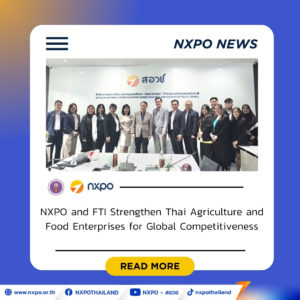
The network previously issued a declaration of collaboration to advance an innovation ecosystem supporting the transition to a green economy on 26 August 2024. Since then, the indicator has been applied by the Federation of Thai Industries (FTI) in evaluating the BCG Award at FTI Expo 2025 on 14 February 2025, and by the Office of Small and Medium Enterprises Promotion (OSMEP) in the “Empowering Thai SMEs for the Future” project on 10 March 2026.
NXPO has also submitted policy recommendations to advance Thailand’s climate agenda through higher education, science, research, and innovation for the period 2027–2032 to the National Higher Education, Science, Research and Innovation Policy Council. At its meeting on 18 February 2026, the Council approved the recommendations and tasked NXPO to collaborate with Thailand Science Research and Innovation (TSRI) on research funding allocation, and with the Office of the Permanent Secretary of MHESI to drive the development of a highly skilled workforce for the low-carbon transition. The proposal comprises three key programs: (1) the Climate Change Research Framework and Program (2027–2032), (2) the High-Skilled Workforce Development Program for the Low-Carbon Transition, and (3) the Net Zero Campus Program, which will serve as a low-emissions zone, a testbed for climate innovation, and a platform for workforce development. These initiatives will provide a foundation for advancing national indicators and databases.
Dr. Saravanee also presented a conceptual framework for the establishment of a central agency for sustainable development and trade. She underscored the need for such an entity in light of rapidly evolving trade measures, global supply chain disruptions, geopolitical uncertainties, and the expanding role of green markets—all of which require Thailand to strengthen its adaptive capacity and competitiveness. She also highlighted opportunities in the Secondary Raw Materials (SRM) market. Between 2015 and 2024, Thailand’s cumulative SRM export value reached THB 451.69 billion, growing at an average annual rate of 1.16%, compared to a cumulative global import value of THB 34,371.70 billion, indicating significant potential for Thailand to expand its market position.
Drawing on international experience, Dr. Saravanee cited China’s use of a circular economy model to drive national development, supported by a strong central coordinating body. She suggested that Thailand should similarly identify and build on its comparative strengths.
She further outlined potential roles for the proposed central agency, including monitoring sustainability-related trade measures; developing specialized databases on resource use; serving as a national hub for Life Cycle Assessment (LCA) and Material Flow Analysis (MFA); tracking and verifying resource flows and economic value; and supporting enterprise-level transition. The Network for the “Development of Databases and Indicators to Support a Low-Carbon Economy” was formally established through a memorandum of understanding signed on 17 July 2025. Members include NXPO; NSTDA; the Office of the National Economic and Social Development Council (NESDC); the National Statistical Office (NSO); the Office of Natural Resources and Environmental Policy and Planning (ONEP); the Department of Climate Change and Environment (DCCE); the Department of Industrial Promotion (DIP); the Thailand Greenhouse Gas Management Organization (TGO); the Federation of Thai Industries (FTI); and the Thailand Environment Institute Foundation (TEI).