On 18 September 2026, Prof. Dr. Yodchanan Wongsawat, Deputy Prime Minister and Minister of Higher Education, Science, Research and Innovation (MHESI), and Mr. Suchart Chomklin, Minister of Natural Resources and Environment (MONRE), signed a Letter of Intent to advance cooperation toward Nature Positive. The partnership will support the conservation and restoration of marine and coastal resources and address ecosystem degradation.
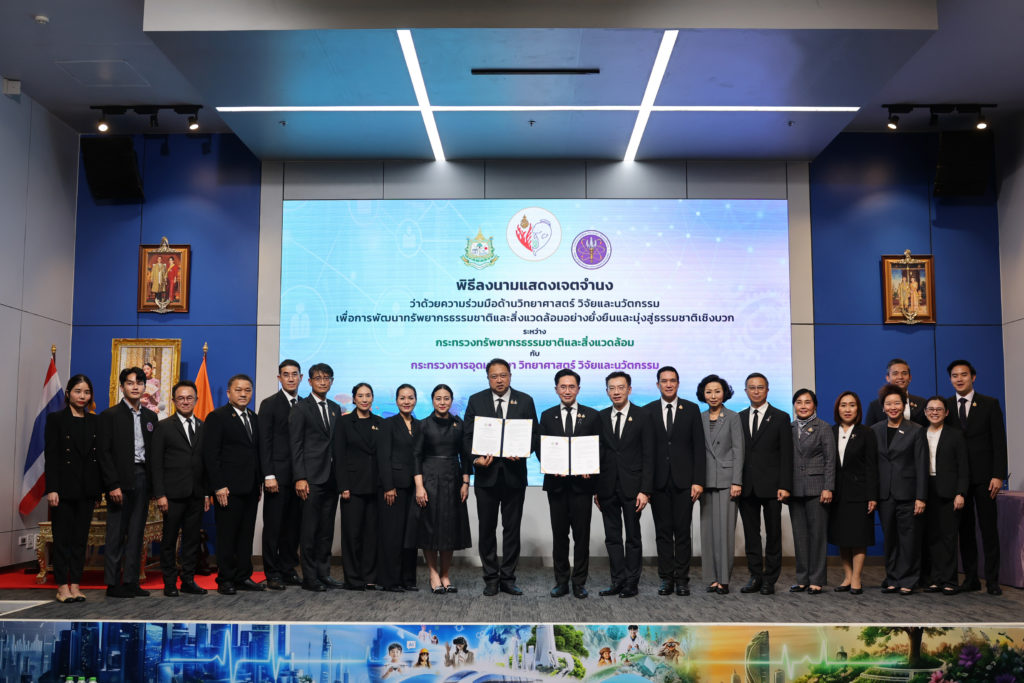
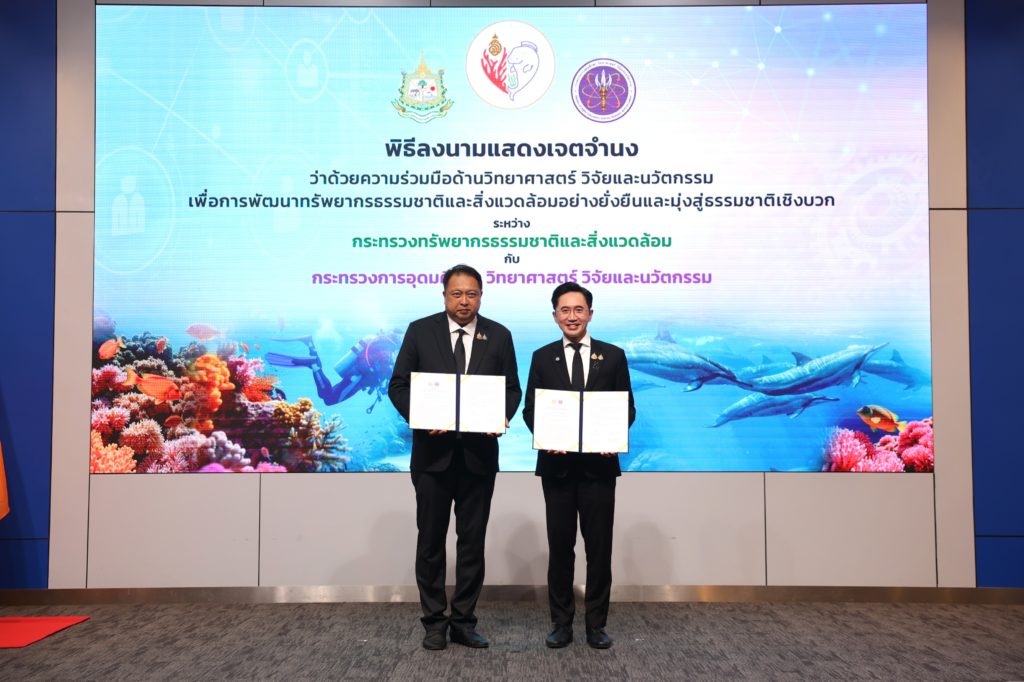
The cooperation draws on the royal initiative of Her Royal Highness Princess Sirivannavari Nariratana Rajakanya concerning the conservation of marine natural resources and the environment. It will support efforts to conserve Thailand’s coral reefs and marine life, protect rare and endangered marine animals, and apply science, research, technology, and innovation to the conservation and restoration of marine and coastal resources. These efforts will also seek to create economic opportunities for local communities.
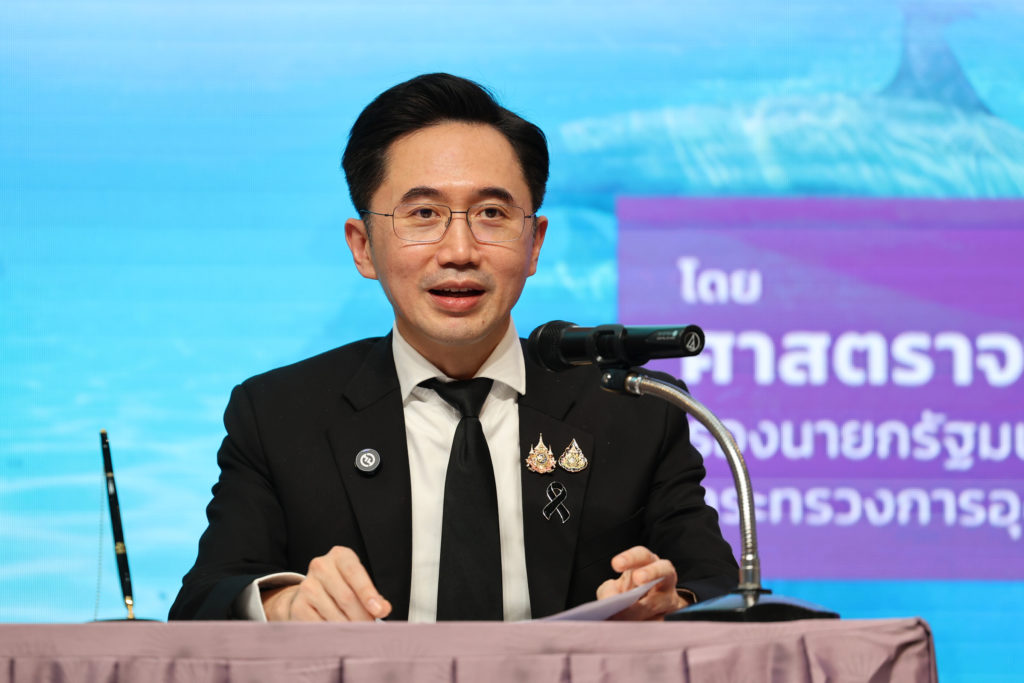
Prof. Dr. Yodchanan said the cooperation marks an important step in translating the royal initiative into practical action through the power of science, research, and innovation. Under the partnership, MONRE will lead implementation, while MHESI will provide support in knowledge, technology, and research.
The two ministries have previously worked together on coastal restoration initiatives, including expanding the blue swimming crab bank project and conserving Irrawaddy dolphins in collaboration with the World Bank. Over the next few months, the partnership will accelerate the deployment of technologies developed by the National Science and Technology Development Agency (NSTDA) to restore biodiversity and address algal blooms. The collaboration will also include the development of a warning system to reduce dugong mortality caused by boat strikes, as well as marine environmental monitoring systems and measures to regulate tourist boats around Racha Yai Island.
“We aim to advance the Nature Positive concept alongside the net zero goal by using space and satellite technologies from the Geo-Informatics and Space Technology Development Agency (GISTDA) and the National Astronomical Research Institute of Thailand (NARIT), as well as eDNA testing, to assess ecosystem health. These efforts will be linked to Nature Finance mechanisms that can turn conservation efforts into carbon credit revenues returned to local communities. The cooperation will also address urgent challenges, including PM2.5 pollution, the circular economy, and wild elephant management. This cooperation is not being undertaken for the benefit of either ministry alone, but for the greatest benefit of Thailand,” Prof. Dr. Yodchanan said.
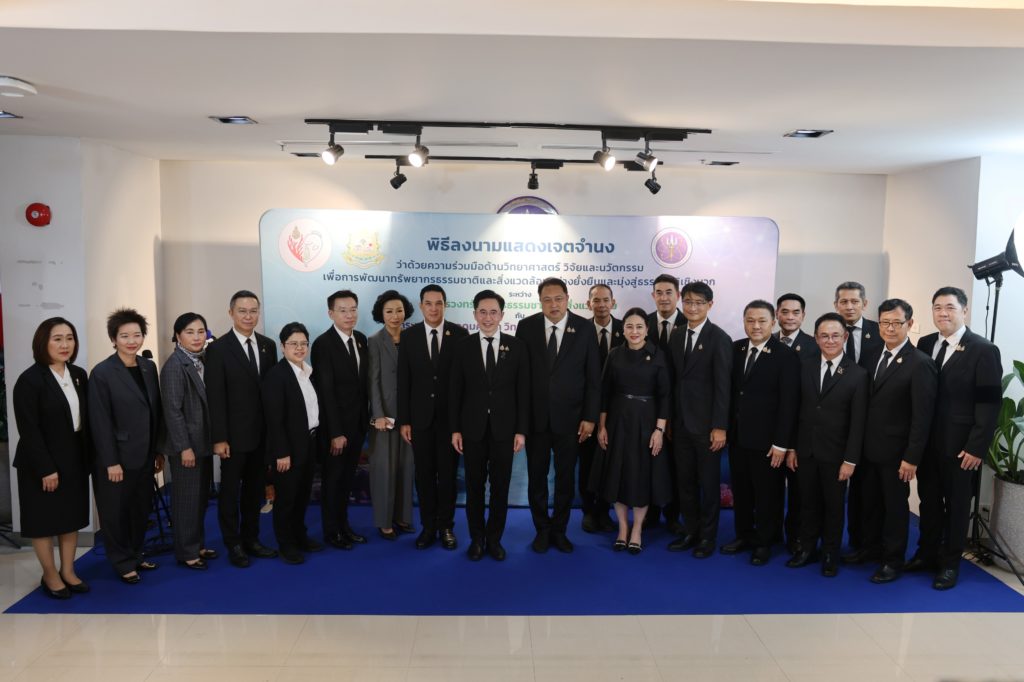
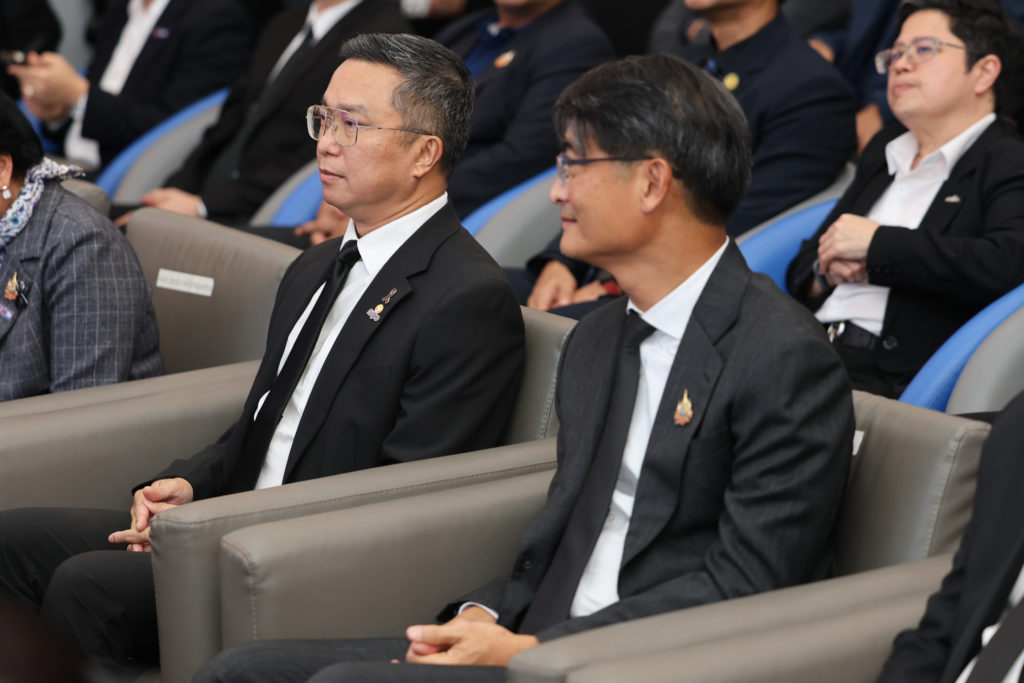
Under the cooperation, MHESI will mobilize the capabilities of organizations within Thailand’s higher education, science, research, and innovation system, including the Office of the National Higher Education, Science, Research and Innovation Policy Council (NXPO), the Thailand Science Research and Innovation (TSRI) system, the National Research Council of Thailand (NRCT), and the National Science and Technology Development Agency (NSTDA), as well as research institutes and universities. Together, these organizations will help translate the cooperation into concrete outcomes.
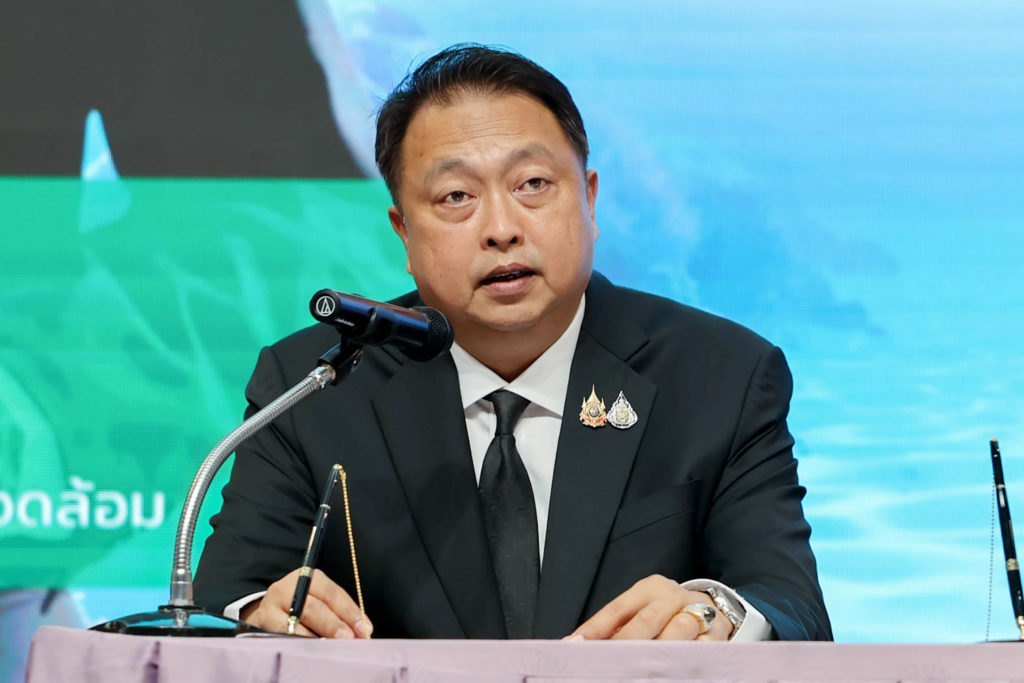
Mr. Suchart said the joint effort marks another important step for the two ministries in supporting the royal initiative on the conservation and restoration of marine natural resources, particularly coral reef ecosystems and marine life. The efforts include protecting rare and endangered marine animals, such as dugongs and sea turtles, as well as developing approaches for the management and conservation of the country’s natural resources. This includes regulating marine tourism to support the sustainable conservation and management of marine natural resources and the environment.
“Environmental crises are having severe impacts on ecosystems and biodiversity. Addressing these challenges requires the systematic application of science, research, technology, and innovation. Cooperation between the two ministries will help advance the conservation of rare and endangered marine animals, develop innovations for monitoring and early warning, and develop researchers and personnel with appropriate knowledge and skills, while also building strong research networks. MONRE will provide scientific and technical information on natural resources and the environment and apply research findings to develop policies, plans, and measures for practical implementation, enabling timely responses and delivering the greatest possible benefits to the country,” Mr. Suchart said.
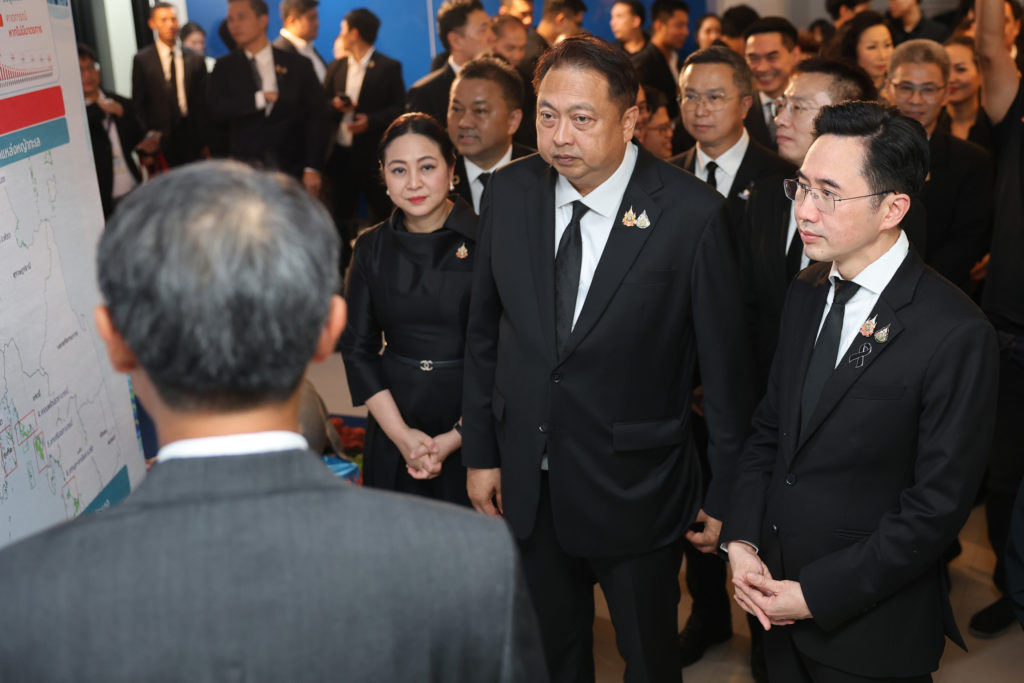
The cooperation aims to integrate science, research, and innovation to support the sustainable conservation, restoration, and management of marine natural resources and the environment, while advancing Nature Positive. It also seeks to promote the practical application of research findings, technologies, and innovations in policymaking, planning, management, and problem-solving at the local level, as well as develop model areas for subsequent scaling up nationwide. In addition, the cooperation will support the development of human resources, researchers, veterinarians, and networks working on natural resources and the environment, while promoting the exchange of knowledge, data, and experience to strengthen the country’s capacity to respond to environmental change and advance toward sustainability and Nature Positive. Three key areas of focus are: 1) conservation of rare and endangered marine animals, including dugong and Irrawaddy dolphin, as well as restoration of the Songkhla Lake ecosystem; 2) conservation and restoration of the marine environment through the development of technologies and innovations for monitoring, preventing, and managing marine environmental problems; and 3) reducing the impacts of marine tourism through innovative approaches to managing marine tourism activities and ensuring that the use of marine areas takes into account ecosystem carrying capacity.