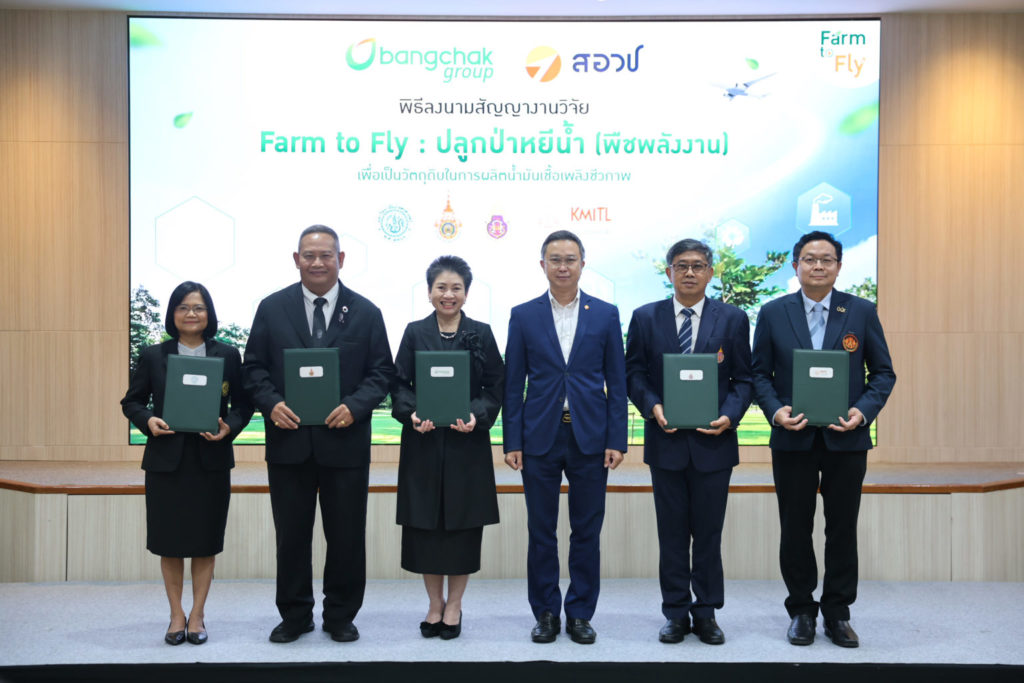
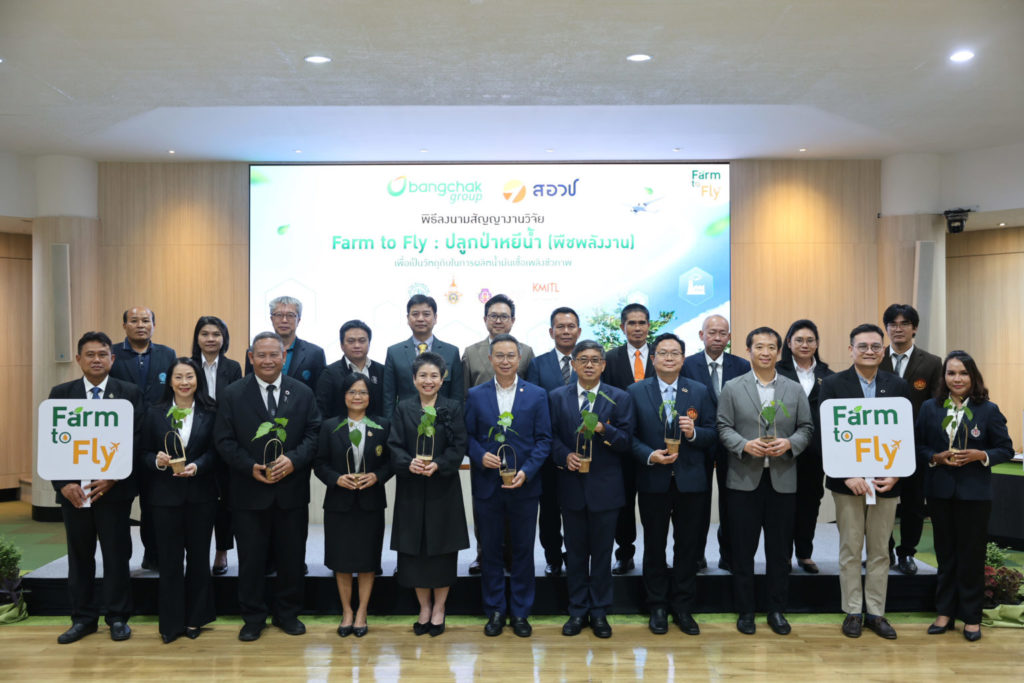
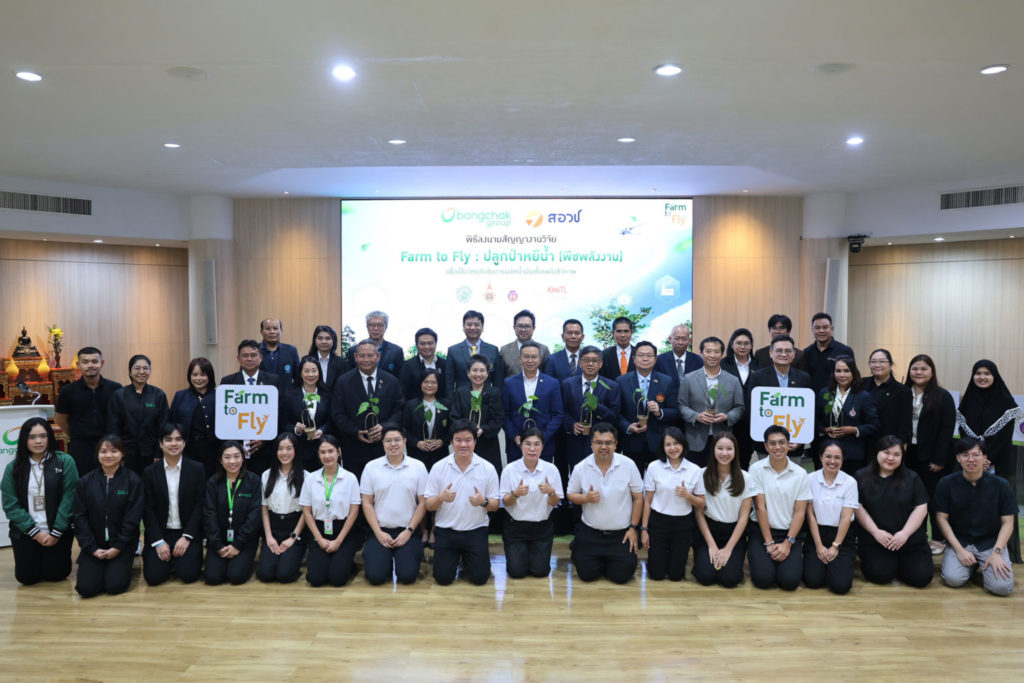
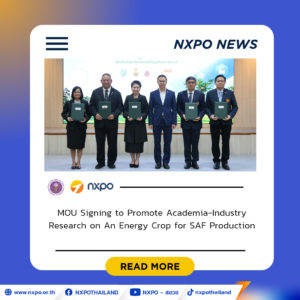
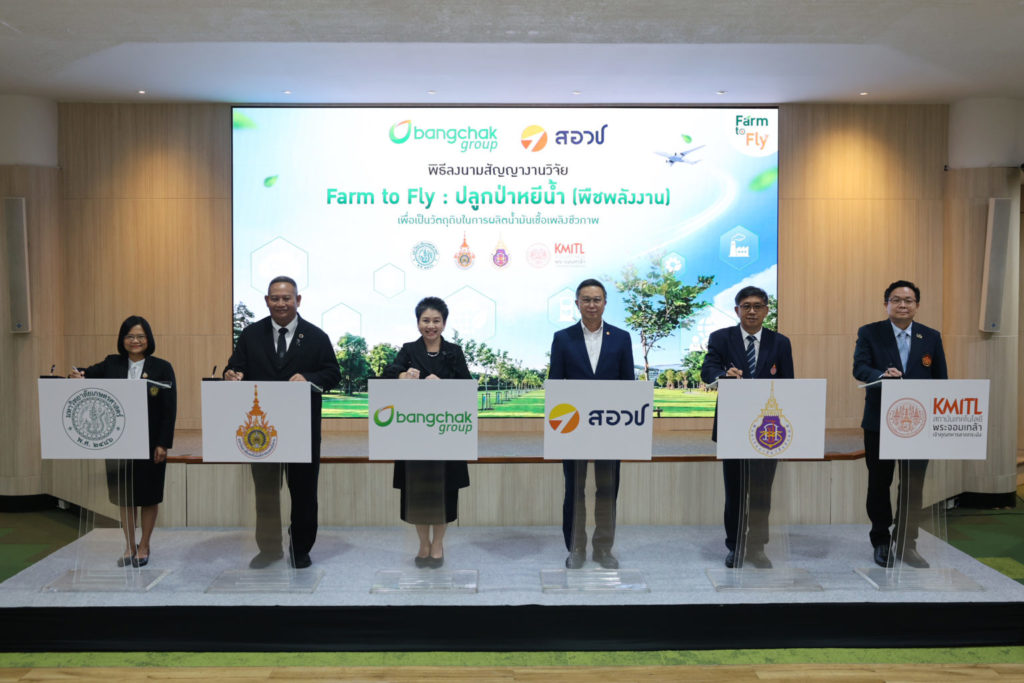
On 10 November 2026, Dr. Surachai Sathitkunarat, President of NXPO, served as a witness at the signing of a Memorandum of Understanding (MOU) for the Farm to Fly Project between Bangchak Corporation Public Company Limited and four higher education institutions: Kasetsart University, Rajamangala University of Technology Isan, Walailak University, and King Mongkut’s Institute of Technology Ladkrabang. The collaboration focuses on research and development of Pongamia (Pongamia pinnata), a promising energy crop, to support the production of sustainable aviation fuel (SAF).
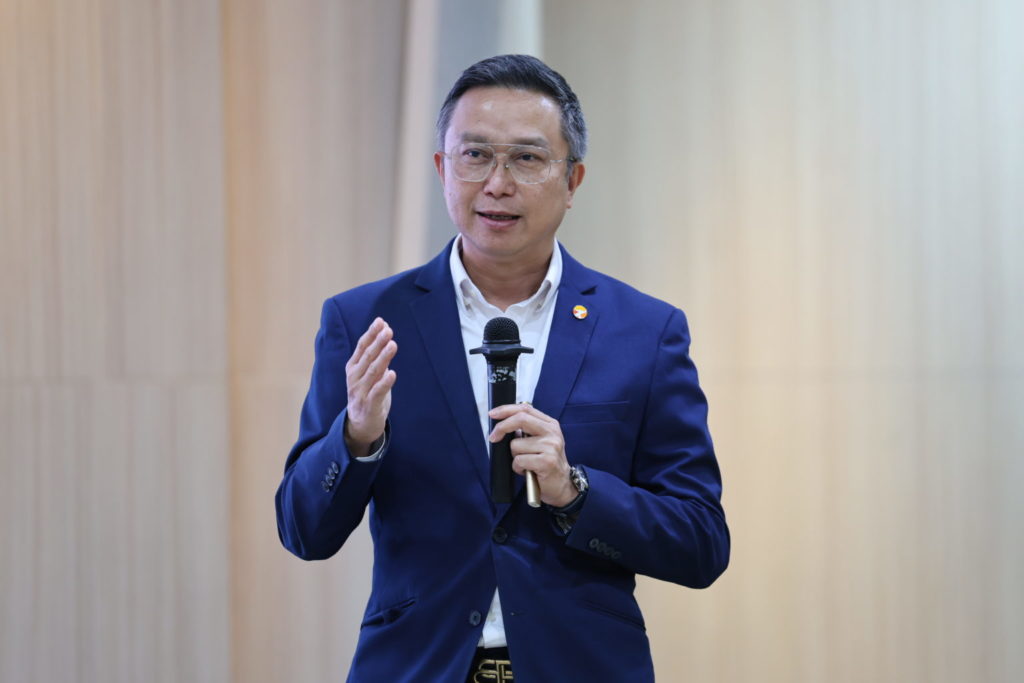
At the event, Dr. Surachai delivered a special lecture titled “Academia-Industry Collaboration in Advancing Research for Commercial Applications.” He highlighted Mission-Oriented Innovation Policy (MOIP) as a key approach adopted by NXPO to drive policy development in higher education, science, research, and innovation, particularly in formulating Thailand’s Policy and Strategy Framework for Higher Education, Science, Research and Innovation for 2028–2032. MOIP translates grand challenges into clearly defined missions that guide research, innovation, and higher education toward addressing the country’s specific needs. It provides a framework for designing missions with clear directions, objectives, timelines, and measurable outcomes, while allowing flexibility to respond to uncertainty and changing circumstances. The approach also fosters cross-sectoral collaboration among ministries, government agencies, administrative levels, academic disciplines, and other sectors through clearly defined governance structures. In addition, it combines diverse policy instruments with portfolio management and monitoring and evaluation mechanisms to support continuous learning, improvement, and adjustments in response to changing contexts.
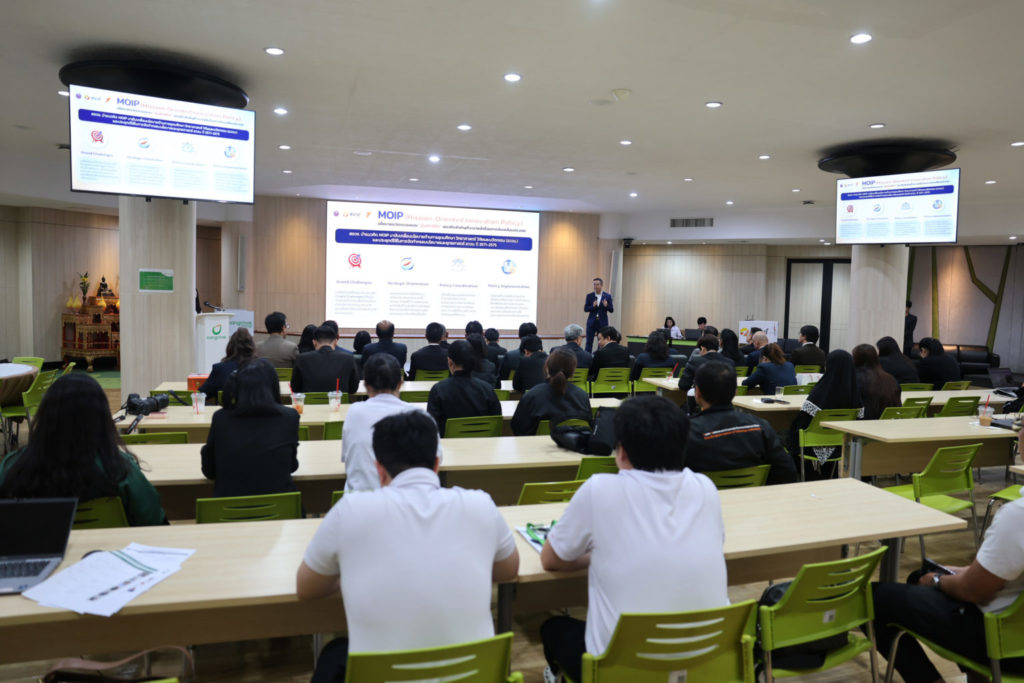
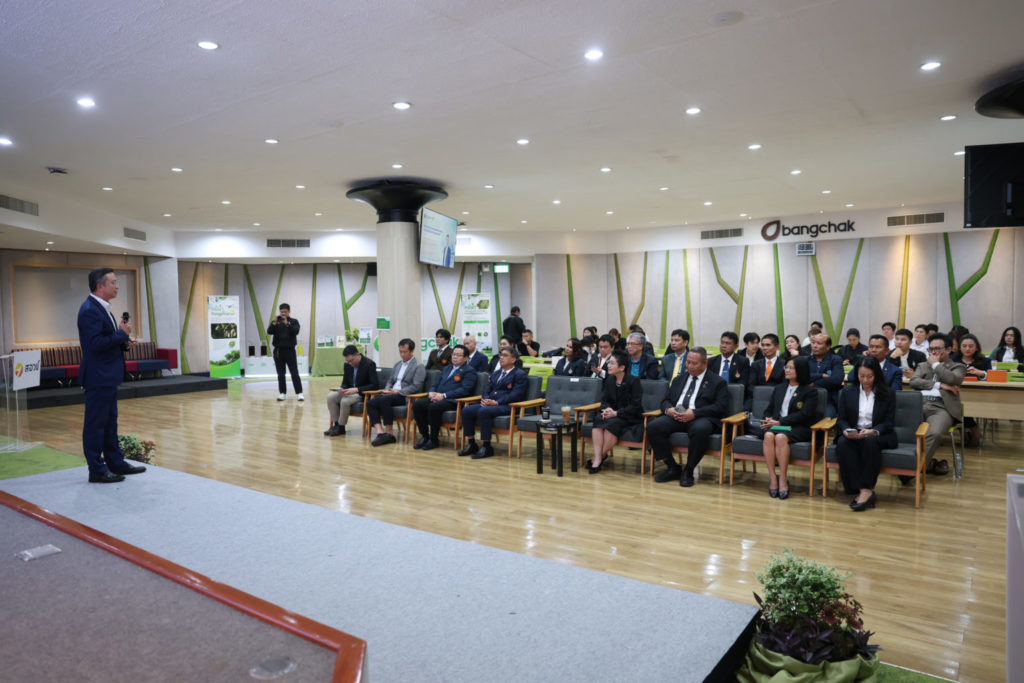
Dr. Surachai also presented the draft Policy and Strategy Framework for Higher Education, Science, Research and Innovation for 2028–2032, which aims to transform Thailand into a high-value, competitive economy while creating future opportunities through a skilled workforce, innovation, and technological capabilities, underpinned by an inclusive and resilient society. The framework identifies five strategic areas: (1) Green Industries, (2) Strategic Technologies, (3) SMEs and Local Economy, (4) Health and Wellness, and (5) Cities and Regions. These are supported by cross-cutting foundations, including workforce and future skills development, as well as an enabling ecosystem for higher education and innovation.
Dr. Surachai also highlighted NXPO’s ongoing efforts to advance Thailand’s SAF industry. These efforts focus on developing a national policy framework and strategic direction, along with policy recommendations tailored to Thailand’s specific context, to support the future growth of the country’s SAF sector.
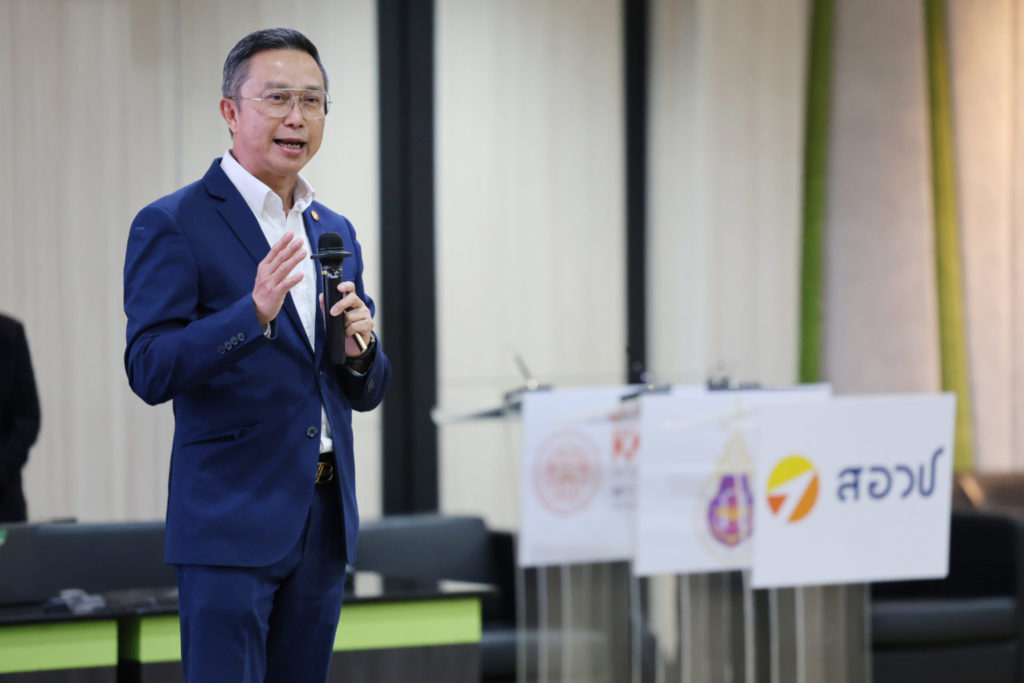
“We believe that research and technology development must be led by the private sector and driven by collaboration among multiple stakeholders. The private sector identifies challenges and defines its needs, while academia and universities contribute their knowledge and expertise. The government, in turn, facilitates the process by streamlining regulations and administrative procedures to enable more efficient implementation. This approach ensures that industry-identified challenges can be translated into research outcomes with real commercial applications,” Dr. Surachai said.
He also cited other policy initiatives that NXPO has been advancing in collaboration with relevant stakeholders to promote the commercialization of research. These include the Higher Education Sandbox, a mechanism that enables the development of innovative educational programs tailored to the needs of the private sector and industry. Another example is the promotion of University Holding Companies (UHCs), which encourage public-private co-investment in projects that translate research and innovation into practical applications. Through investment management, UHCs can help commercialize research outputs from universities and research institutes by establishing spin-off businesses. They can also invest in entrepreneurs’ research to support further development, scale-up, and commercialization. On 15 September 2026, the University Holding Company Consortium was officially launched to foster collaboration in establishing these companies.
“Research that creates value begins with real challenges identified by industry, is driven by collaboration, and is translated into commercial applications to strengthen the country’s competitiveness,” Dr. Surachai concluded.