On 15 May 2026, NXPO hosted a Policy Dialogue titled “Pathways to Inclusive and Resilient Thailand: Leveraging Social and Human Sciences for Policy and Innovation.” The event provided a platform for exchanging policy perspectives on the role of social sciences and humanities in shaping Thailand’s future.
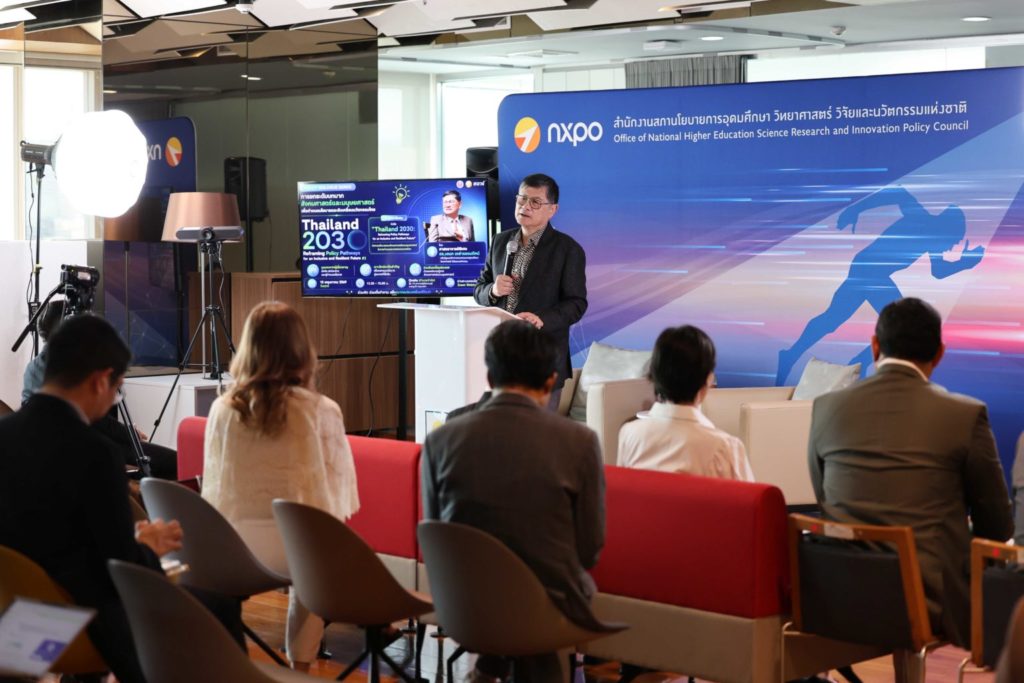
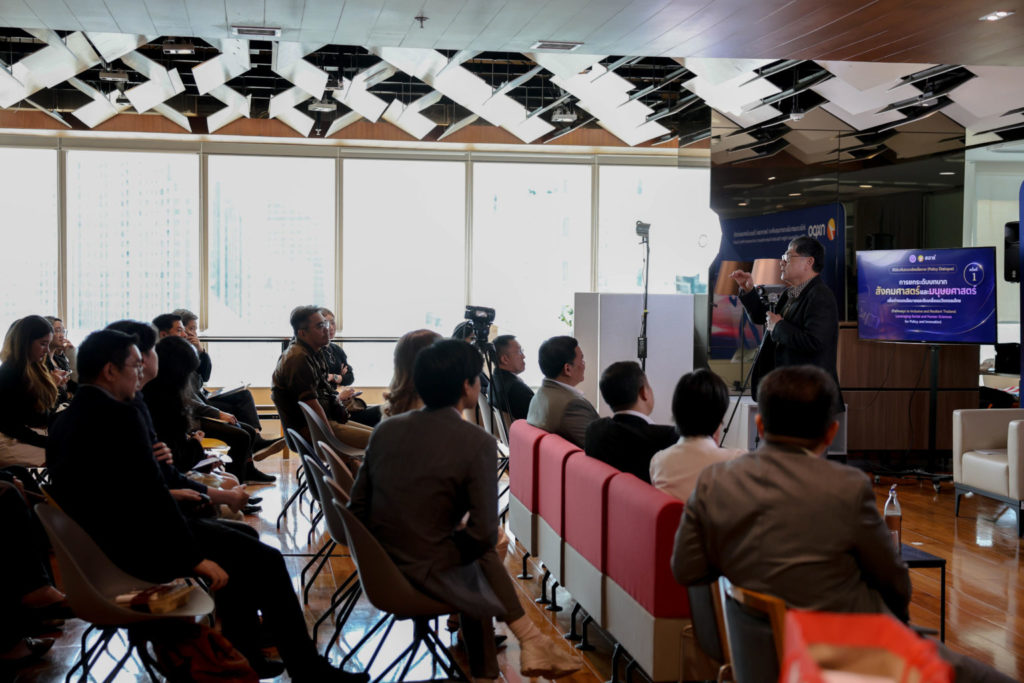
The event featured a keynote lecture by Prof. Dr. Anek Laothamatas, former Minister of Higher Education, Science, Research and Innovation (MHESI), on the topic “Thailand 2030: Reframing Policy Pathways for an Inclusive and Resilient Future.” President of NXPO, delivered the opening remarks and welcomed participants, while Asst. Prof. Dr. Suppakorn Poonyarith, Vice President of NXPO, served as moderator. The event attracted strong interest from participants across various sectors.
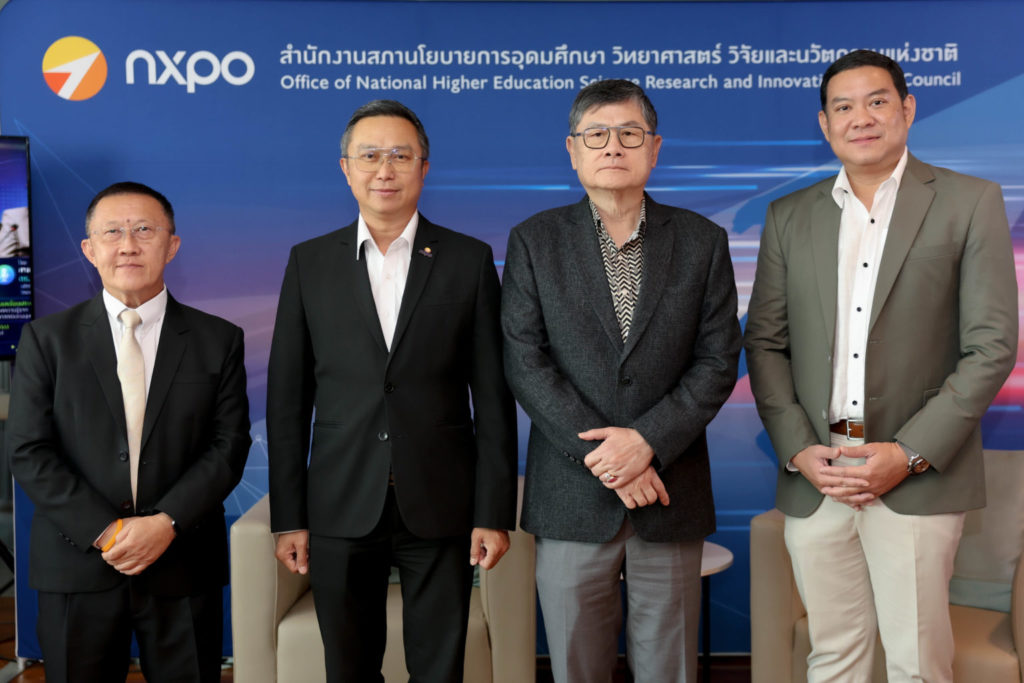
Key Messages from Dr. Surachai Sathitkunarat
- Thailand needs to leverage social sciences, humanities, and the arts to shape national direction, alongside science, technology, and innovation.
- One of NXPO’s missions is to link social sciences and humanities to national policymaking, with NXPO guiding policy direction in these fields.
- The advancement of social sciences and humanities has been recognized as critical within MHESI to help develop policies that better respond to Thai society.
- Social mobility is one of NXPO’s priority areas.
Dr. Surachai noted that in recent years, Thailand’s national development has been driven primarily by science, technology, and innovation. However, the country now needs to elevate the role of social sciences, humanities, and the arts to play a more active role in shaping national direction. He emphasized that one of the key visions he presented upon assuming the position of NXPO President was to ensure that knowledge in these fields can be translated into tangible policy outcomes.
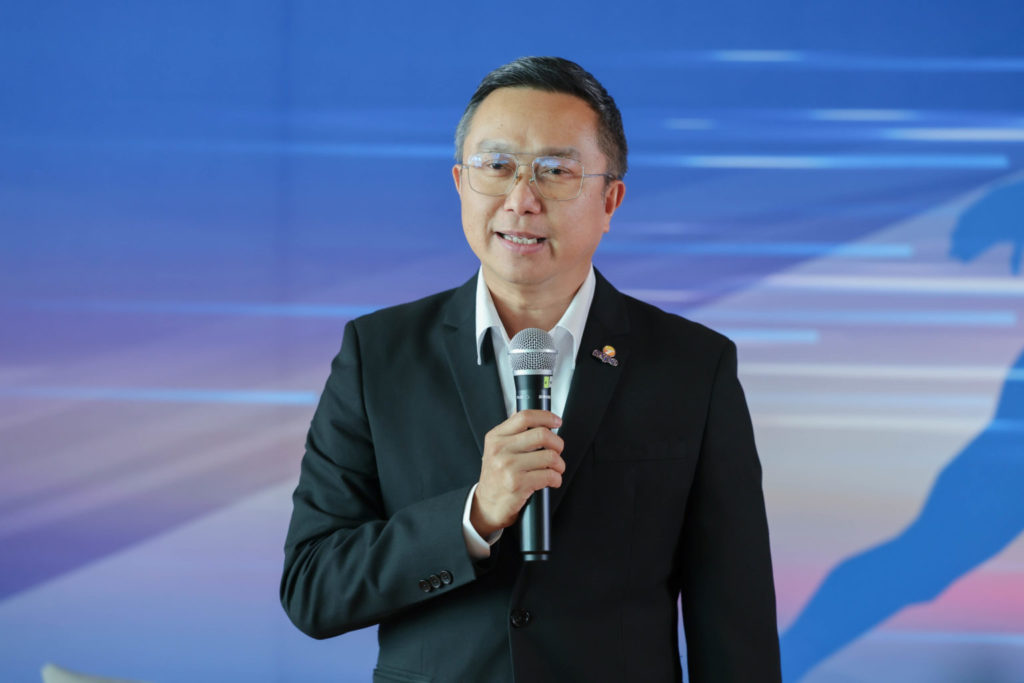
“In the past, we have advanced national policies in science, technology, and innovation. Moving forward, we are committed to formulating policies in social sciences, humanities, and the arts, under the guidance of Asst. Prof. Dr. Suppakorn Poonyarith,” Dr. Surachai said. He added that NXPO has long drawn inspiration from Dr. Anek’s ideas and has already applied some of them—particularly the concept of social mobility, which remains a key priority at NXPO. In addition, Prof. Dr. Yodchanan Wongsawat, Deputy Prime Minister and MHESI Minister, also places importance on social sciences and humanities.
Key Messages from Prof. Dr. Anek Laothamatas
- Thailand must shift its paradigm in developing social sciences and humanities, moving beyond a Western framework. New knowledge creation should integrate Thai and Eastern wisdom to develop distinct social sciences suited for future development.
- Social sciences should promote harmony, coexistence, and understanding of humanity. Thailand’s strengths lie in its social capital, culture, kindness, and opportunities for social mobility.
- Policymaking must be grounded in an understanding of human beings, not reliant solely on data or technology. Social sciences help guide actions, complementing science and technology.
- Thailand should formulate a long-term strategy for developing social sciences and humanities to build knowledge that enables the country to lead within the next 5–10 years.
- Thai research should aim to generate “big perspectives” that guide society toward happiness, equity, and sustainable development. In the age of massive data, the key lies in interpretation—understanding real-life contexts—and designing policies that truly respond to people’s needs.
- Thailand possesses over 2,500 years of civilization and history, which can be leveraged into intellectual strength.
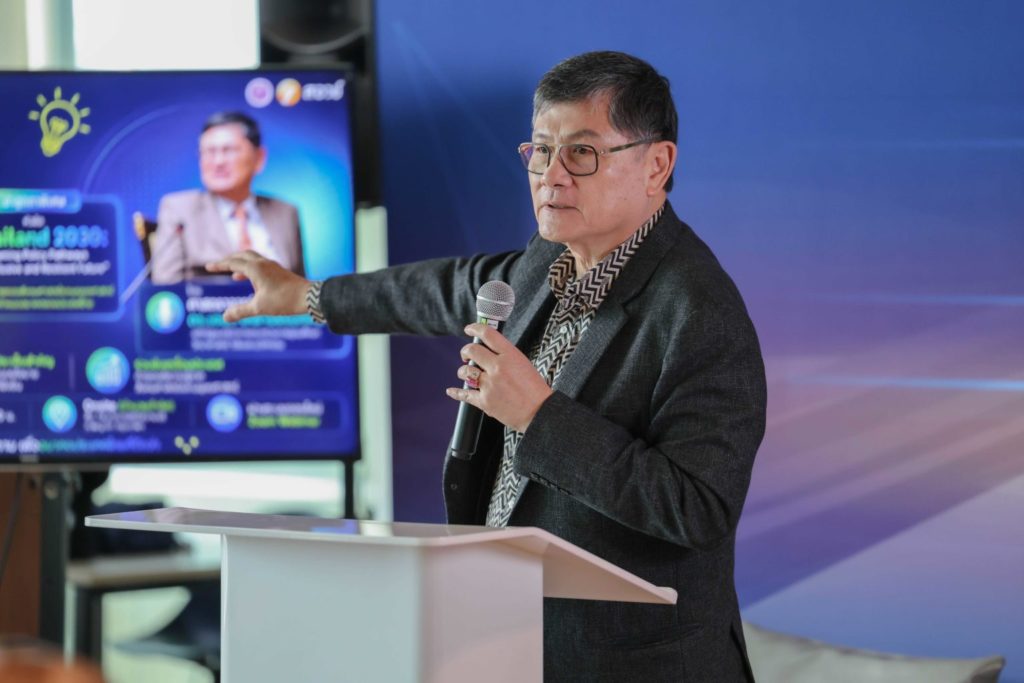
In his keynote address, Dr. Anek stated that the modern world has long been dominated by Western paradigms, particularly in social sciences and humanities, often regarded as universal models. However, for Thailand, a paradigm shift is necessary to develop its own approach.
“We must enrich social sciences with Thai, Chinese, Indian, Islamic, and other Eastern wisdom—creating social sciences and humanities that are more globally inclusive,” he said.
He further emphasized that Thai social sciences should not focus solely on conflict, but rather on harmony, coexistence, and the strengthening of social cohesion. He pointed out that Thailand’s strengths include compassion and the ability of people to achieve social mobility.
Dr. Anek also stressed that the development of Thai social sciences and humanities must be strategic, with clear goals to enable Thailand to excel and take the lead within 5–10 years through knowledge creation that responds to national needs.
“We should not conduct research that keeps Thailand perpetually a developing country. We must dare to envision Thailand as a nation distinguished by its intellectual contributions—if we are bold enough to create our own form of social sciences and humanities,” he said. He underscored that new Thai knowledge must emerge from the integration of global knowledge with Thailand’s cultural foundations, forming a “social science of the future” that combines intellectual and social power.
In an era of abundant data, Dr. Anek noted that the key challenge is not only access to information, but the ability to translate it into understanding the social context behind human actions.
He concluded that effective social sciences must combine both data and perspective. Such an approach enables policymakers to better understand human behavior and social dynamics, leading to more grounded and effective policies. He also remarked that Thailand’s historical roots extend over 2,500 years, dating back to the era of Suvarnabhumi, and encouraged continued progress so Thailand can take a leading role on the world stage.
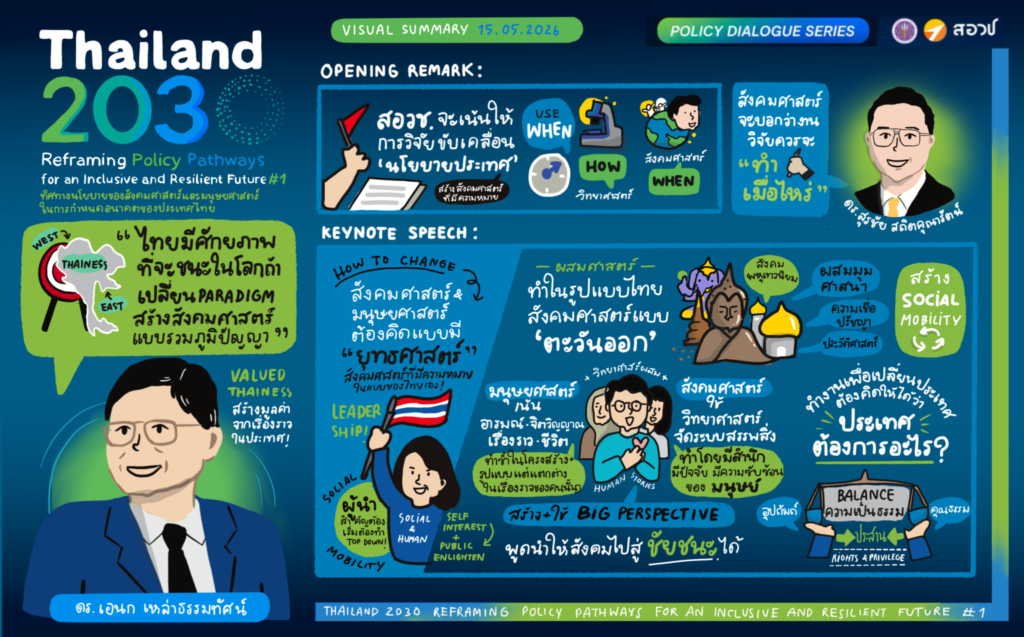
Below visual summary (in Thai) highlights the direction of Thai social sciences and humanities in shaping the country’s future—covering knowledge creation, human-centered policymaking, and the use of Thailand’s cultural and social capital as long-term drivers of national development.
Click below to watch the recorded session.