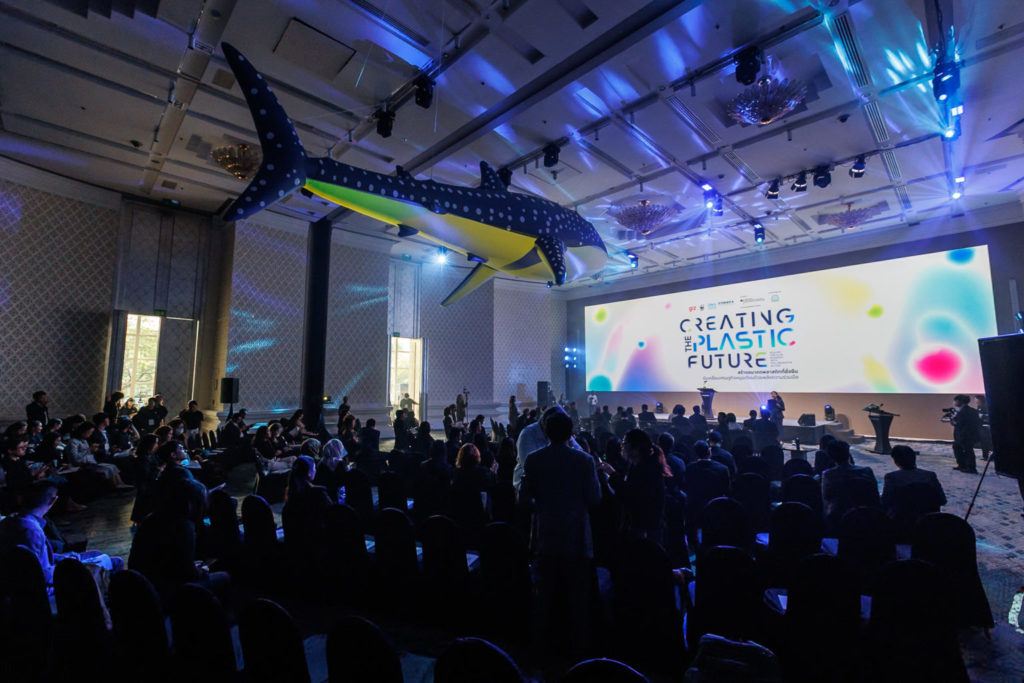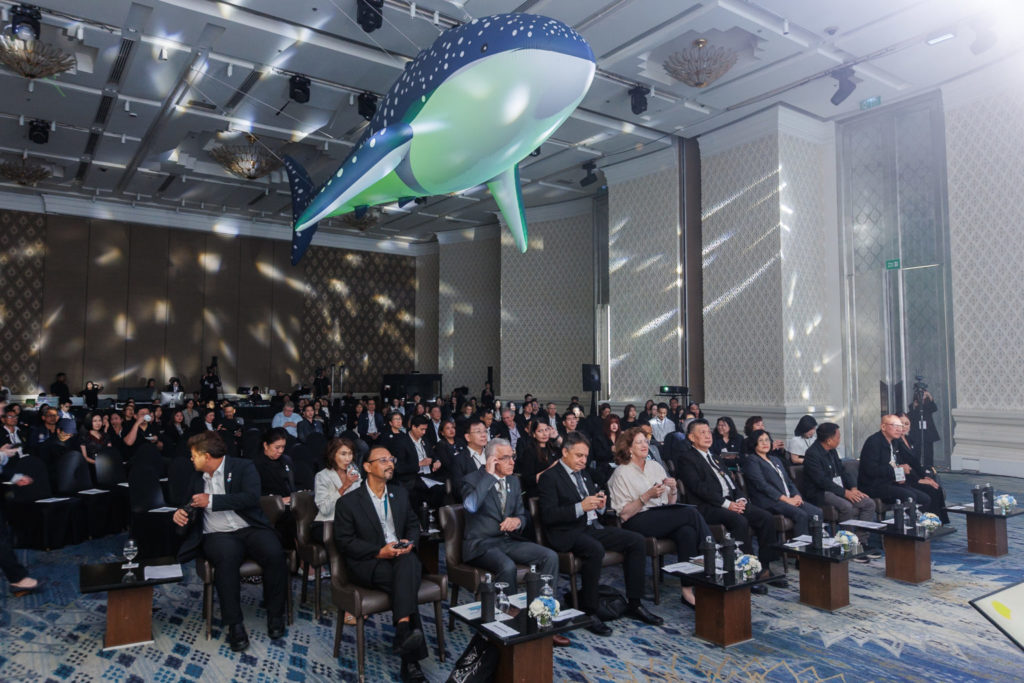
Dr. Saravanee Singtong, Director of the Sustainability Policy Division at NXPO, participated in the closing event of the Marine Litter Prevention through Reduction, Sustainable Design, and Recycling of Plastic Packaging (MA-RE-DESIGN) project at the Pullman Bangkok King Power Hotel. The event, titled “Creating the Plastic Future: Scaling the Circular Economy through Collaborative Action,” was jointly organized by the German Agency for International Cooperation (GIZ), WWF Thailand, and the Coordinating Body on the Seas of East Asia (COBSEA) under the United Nations Environment Programme (UNEP), with the Pollution Control Department (PCD) serving as the main implementing partner and the Department of Marine and Coastal Resources (DMCR) as a key project partner.

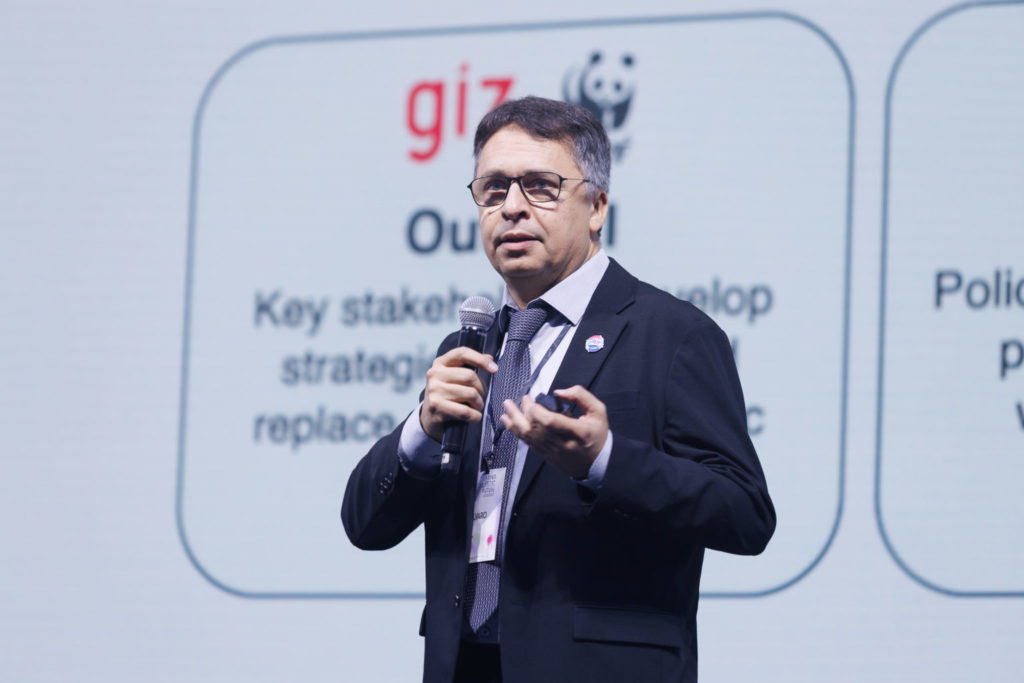
The opening ceremony featured remarks by Ms. Ebba Scholl, Deputy Head of Mission of the Embassy of the Federal Republic of Germany in Bangkok, and Mr. Chirapong Kuhakanchana, Deputy Director-General of PCD. Keynote presentations were delivered by Ms. Sumana Kajonwattanakul, Director of the Marine and Coastal Resources Research and Development Institute of DMCR, and Mr. Taweechai Jiaranaikhajorn, Director of the Waste Minimisation Subdivision of PCD. The project outcomes were jointly presented by Mr. Alvaro Zurita, MA-RE-DESIGN Project Director at GIZ, Mr. Eknarin Ariyavongvivat, Marine Conservation Lead and MA-RE-DESIGN Project Manager at WWF Thailand, and Mr. Mahesh Pradhan, COBSEA Coordinator.
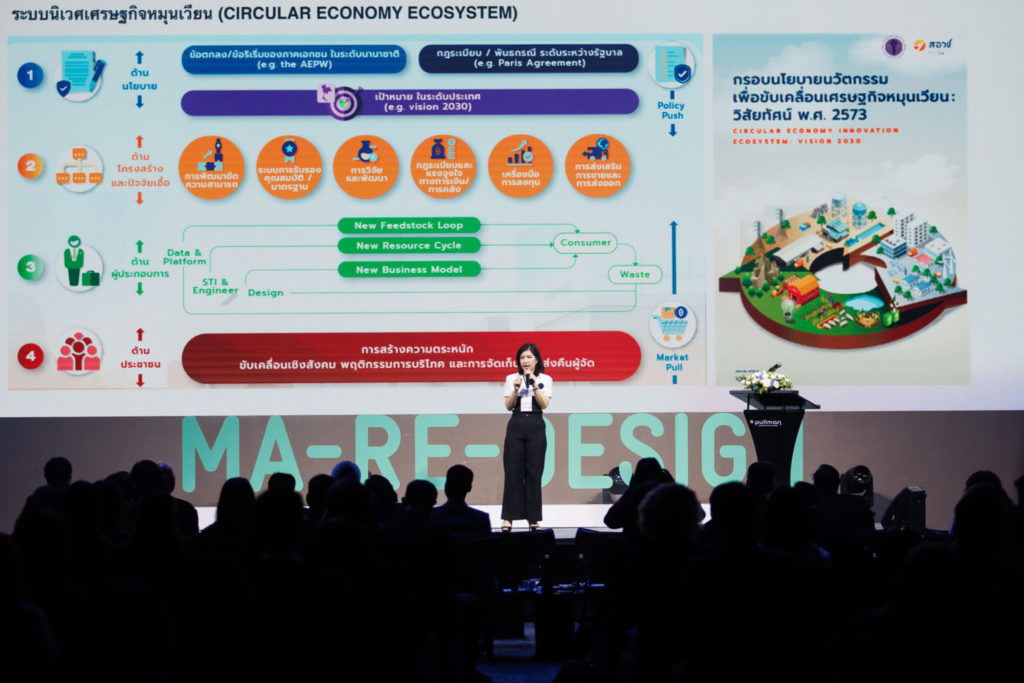
During the “Flash Talks: From Now to Beyond” session, Dr. Saravanee highlighted how MA-RE-DESIGN aligns with current sustainability agenda and demonstrated how the project’s knowledge and practical tools can support SMEs and startups in developing innovative products and services that respond to increasingly stringent environmental regulations and market expectations. She also discussed pathways for advancing Extended Producer Responsibility (EPR) at both the industrial and national policy levels. Dr. Saravanee emphasized that MA-RE-DESIGN represents a practical demonstration of circular economy implementation through pilot initiatives with strong potential for replication in other cities and regions. The project, she noted, can serve as a foundation for regional collaboration, knowledge exchange, policy development, financing mechanisms, and innovation support systems that accelerate Thailand’s transition toward a circular economy.

Dr. Saravanee further introduced the Circular Economy Innovation Ecosystem: Vision 2030, a strategic policy framework developed under Thailand’s Bio-Circular-Green Economy (BCG) agenda. The framework proposes a new innovation ecosystem built on four interconnected pillars: Policy, Enablers, Entrepreneurs, and Consumers.
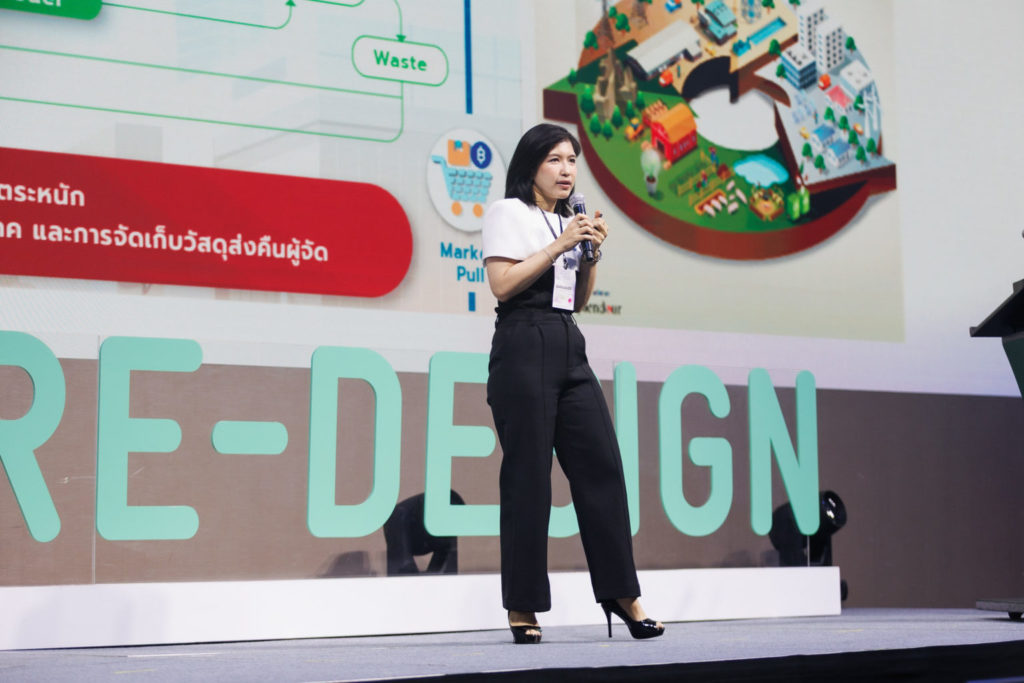
Dr. Saravanee cited China’s Dual Circulation Strategy as an example of how countries can strengthen economic resilience while promoting sustainable growth. The strategy combines Internal Circulation—focused on domestic production, consumption, innovation, and industrial self-reliance—with External Circulation, which supports international trade, outward investment, foreign direct investment (FDI), technology transfer, and global competitiveness.
Dr. Saravanee stressed that green transformation cannot be achieved by any single sector acting alone. It requires coordinated action among the financial sector, which provides capital and risk-sharing mechanisms; the private sector and supply chains, which implement green practices; the innovation sector, which develops and deploys new technologies; and the government, which establishes standards, incentives, and enabling policies. She concluded by highlighting the Green Enterprise Indicator (GEI) as a practical tool for assessing and promoting circular and green economy performance. GEI can serve as a common framework for enhancing credibility, establishing shared standards, connecting stakeholders across the value chain, and accelerating the systematic transition of Thai businesses toward a sustainable green economy while simultaneously supporting the development of new green markets.