NXPO participated in the STS forum Japan–Thailand Symposium 2026, held on 24 April 2026 at the Bangkok Convention Centre at Centara Grand CentralWorld. Convened under the theme “The Great Convergence: AI-Driven Health, Environment and Bio-Economy,” the event was jointly hosted by the National Research Council of Thailand (NRCT) and the Science and Technology in Society (STS) forum, Japan.
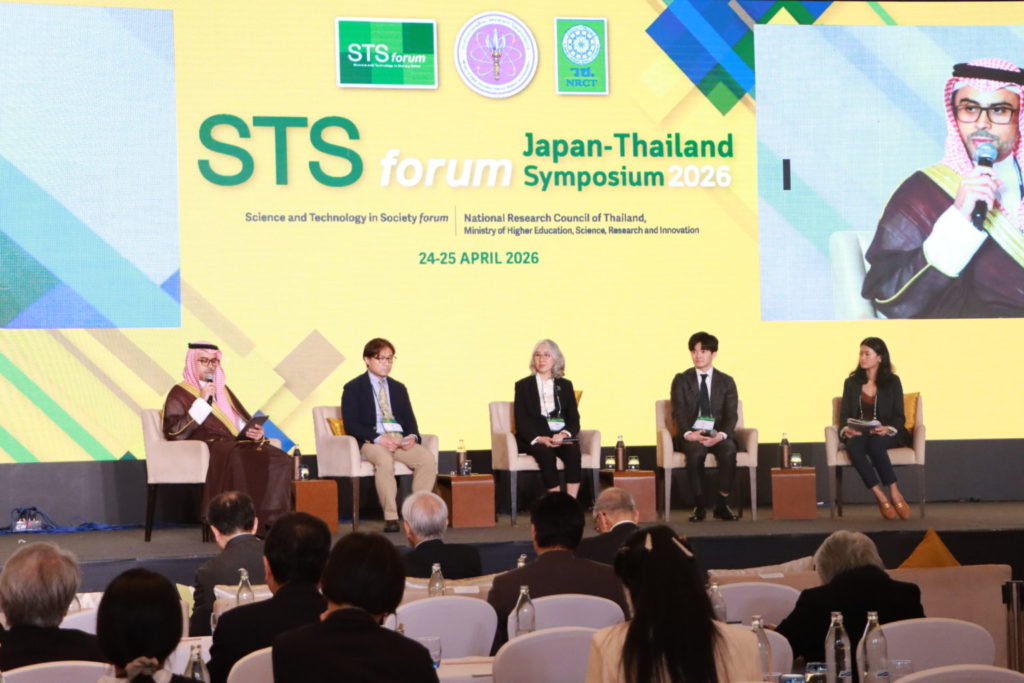
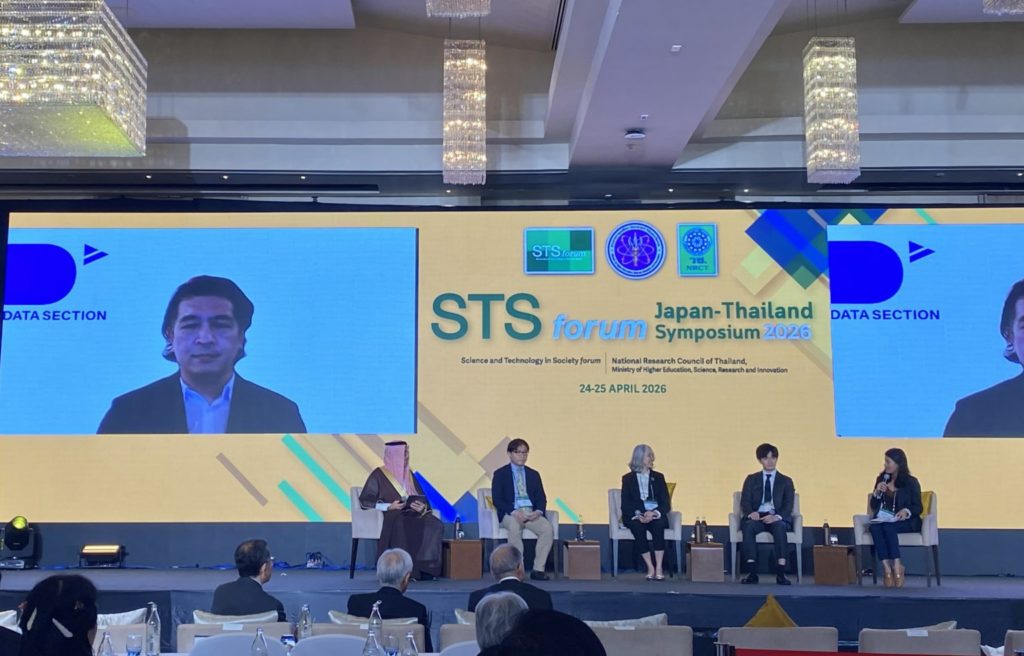
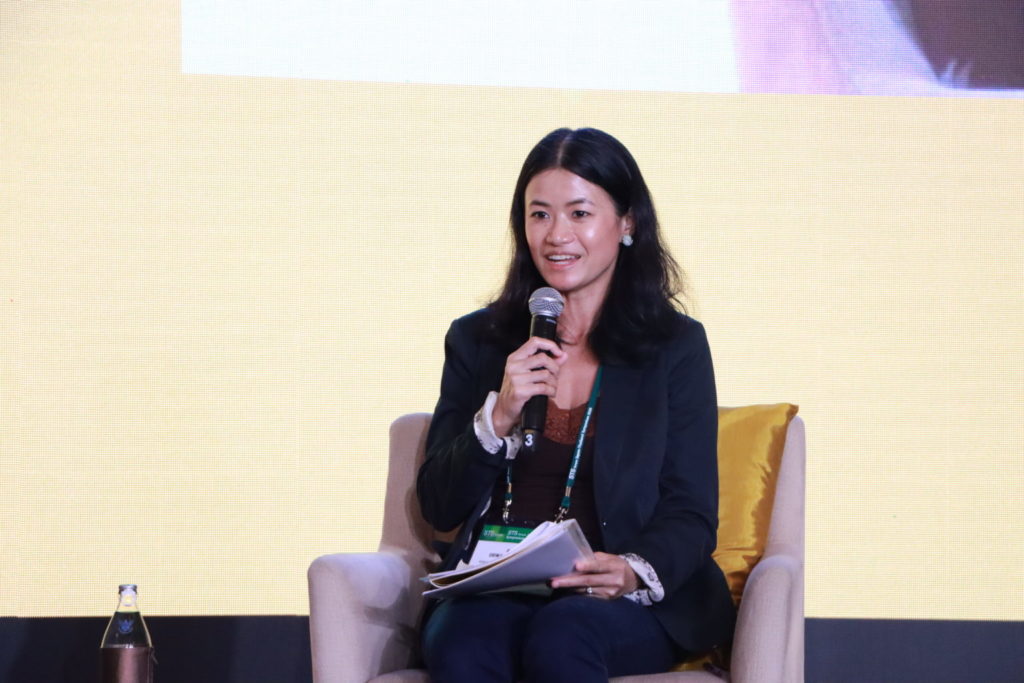
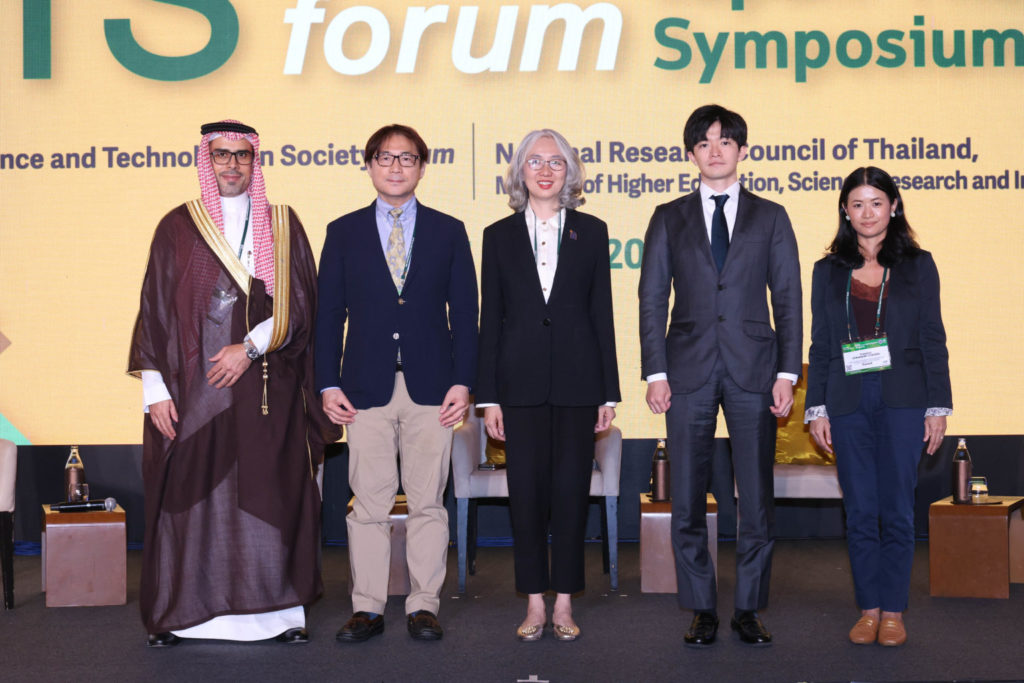
A highlight of the program was the session “The Role of Artificial Intelligence in Modern Society,” which examined the transformative impact of AI across public health, the digital economy, and policy development. The panel brought together representatives from government, academia, and industry from multiple countries. Speakers included Dr. Fahad Algneaer, General Manager for International Cooperation at King Abdulaziz City for Science and Technology (KACST), Saudi Arabia; Prof. Kenji Suzuki, Director of the Biomedical Artificial Intelligence Research Unit (BMAI) at the Institute of Integrated Research (IIR), Institute of Science Tokyo, Japan; Dr. Soontaree Songserm, Senior Executive Vice President of the Big Data Institute (BDI), Thailand; Dr. Yu Hiraoka, CEO of GramEye Inc. and faculty member at the Faculty of Medicine, Osaka University, Japan; and Mr. Norihiko Ishihara, CEO of DataSection Inc., Japan. The session was moderated by Dr. Pranpreya Sriwannawit Lundberg, Senior Director of International Policy Partnership at NXPO.
Panelists underscored AI’s growing role as a foundational technology reshaping modern society. Dr. Fahad Algneaer highlighted key global challenges, including technological disparity, limited diversity in datasets and languages, and regulatory frameworks that struggle to keep pace with rapid technological change. He emphasized the importance of inclusive AI development, investment in skills, and stronger international cooperation for effective governance.
In the healthcare domain, Prof. Kenji Suzuki outlined AI’s potential to enhance diagnostic accuracy—particularly in cancer detection—and to improve medical data analysis. He also noted critical limitations, including a lack of transparency in AI processes, risks of data bias, and insufficient datasets for certain diseases. These challenges are driving the advancement of Explainable AI and Trustworthy AI to ensure safe and effective collaboration between clinicians and AI systems.
Dr. Soontaree Songserm highlighted Thailand’s progress in AI and big data, particularly the implementation of the National AI Strategy and Action Plan (2022–2027). The country is strengthening data infrastructure to support AI applications in the public sector, with the goal of transitioning toward an “AI-driven foresight government.” Parallel efforts are focused on workforce development and cross-agency data integration to support sustainable digital economy growth.
Dr. Yu Hiraoka presented the use of AI in tackling antimicrobial resistance (AMR), a major global health threat. He emphasized the role of AI and robotics in improving detection accuracy and called for the development of shared global databases, supported by international collaboration and standardized frameworks.
From an industry perspective, Mr. Norihiko Ishihara described AI as a core infrastructure of the modern economy. He stressed the importance of robust data infrastructure—including data centers and cloud systems—in strengthening national competitiveness, and highlighted the need for locally tailored digital ecosystems alongside deeper international collaboration to support sustainable regional growth.
The session reaffirmed that AI is not only a technological advancement but a key driver shaping the future of society. Ensuring its benefits will require a strong focus on inclusivity, trust, and international cooperation. While AI offers immense potential, its trajectory will ultimately depend on effective governance, cross-sector collaboration, and human judgment to guide its responsible and inclusive development.