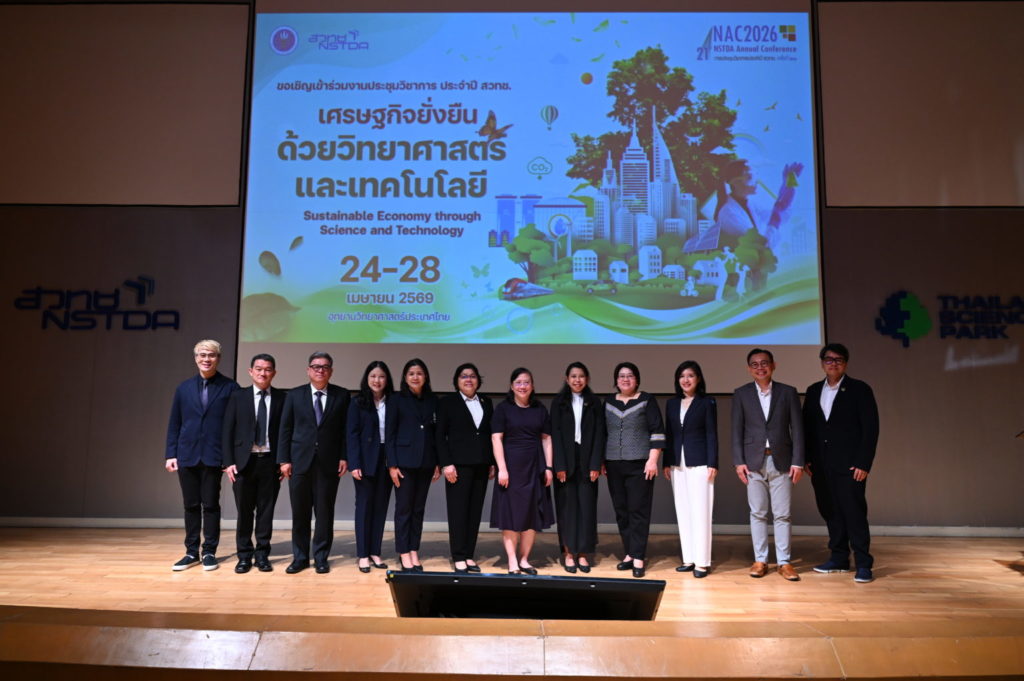
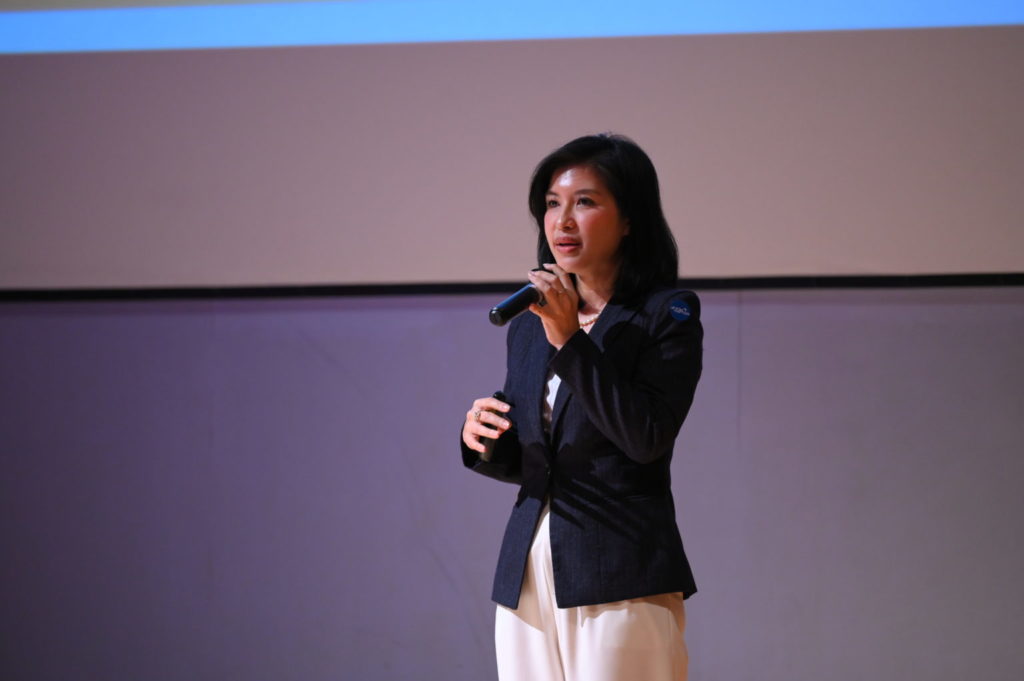
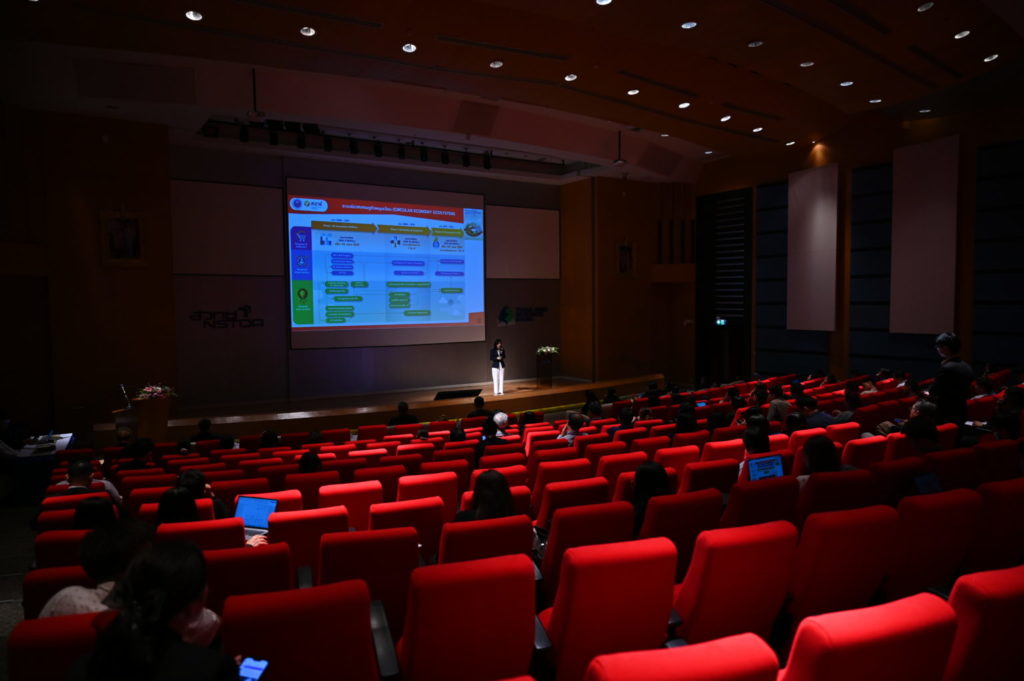
Dr. Saravanee Singtong, Director of the Sustainability Policy Division, participated in the 2026 NSTDA Annual Conference (NAC2026) organized by the National Science and Technology Development Agency (NSTDA). She spoke at the seminar “Circular Economy as a Business Opportunity Drives Economic Growth,” presenting on “STI Policy Direction on Circular Economy and Business Support Mechanisms” on 28 April 2026. The session explored how circular and low-carbon economy concepts can be leveraged as business opportunities to drive national economic growth alongside sustainability, spanning policy, finance, investment, and business operations.
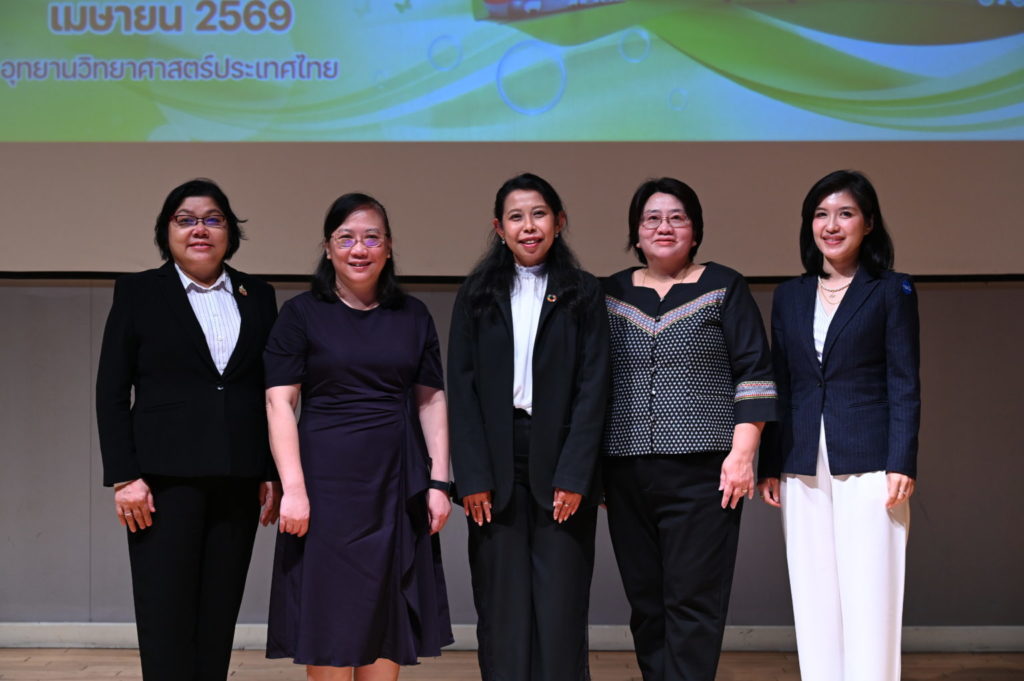
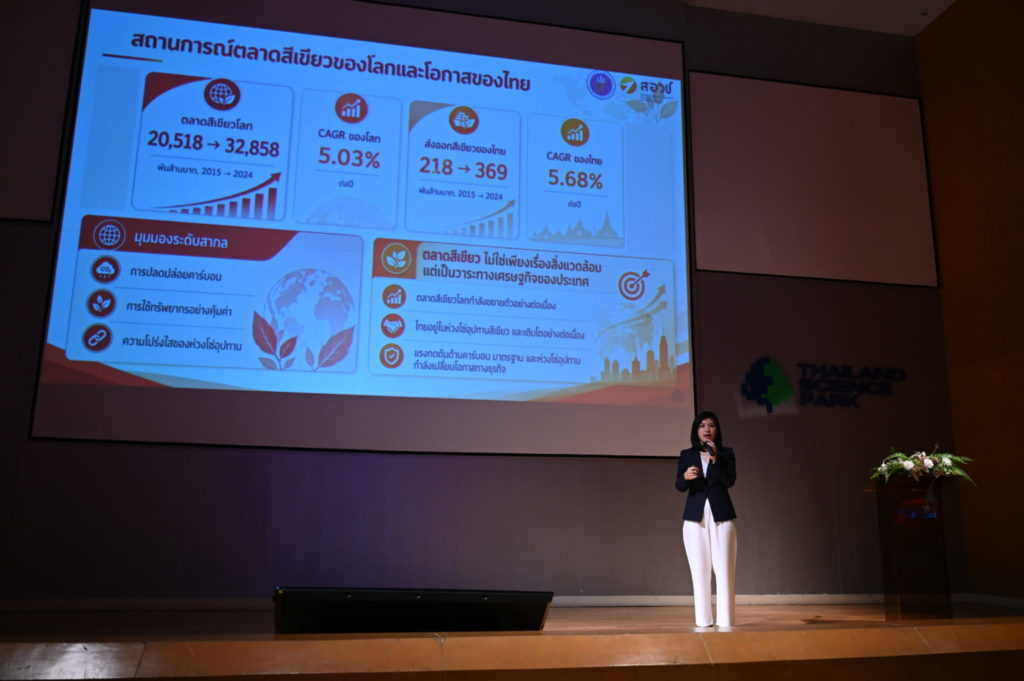
Dr. Saravanee highlighted the global green market landscape and Thailand’s opportunities. The global green market expanded from THB 20.518 trillion in 2015 to THB 32.858 trillion in 2024, reflecting an average annual growth rate of 5.03%. Thailand’s green market also demonstrated strong growth, increasing from THB 218 billion in 2015 to THB 369 billion in 2024, with an average annual growth rate of 5.68%—surpassing the global average. These trends underscore that the green market is not only an environmental concern but a key economic agenda. As global demand continues to rise, Thailand is increasingly integrated into green supply chains. At the same time, businesses face mounting pressures from carbon constraints, evolving standards, and shifting supply chain requirements. Failure to adapt could undermine competitiveness and long-term economic value.
In terms of circular economy opportunities, Dr. Saravanee pointed to the secondary raw materials (SRM) market as a critical segment. Thailand’s cumulative SRM export value during 2015–2024 reached THB 451.69 billion, growing at an annual rate of 1.16%. Globally, cumulative SRM imports over the same period totaled THB 34.371 trillion, accounting for 13.76% of the global green market and growing at 5.04% annually. Thailand’s SRM exports represent 16.41% relative to the global green market, placing the sector among the country’s leading export industries. Key segments include plastics—the dominant SRM market both domestically and globally—along with construction and demolition materials, which show the highest growth in Thailand, and metals and metal products. These trends indicate further potential to strengthen Thailand’s competitiveness in global circular markets.
Dr. Saravanee also emphasized the importance of a well-structured circular economy ecosystem, as outlined in the Circular Economy Innovation Ecosystem: Vision 2030. This ecosystem begins with clear and internationally aligned policy frameworks that set national targets. It is supported by enabling structures, including capacity building, standards and certification systems, research and development, regulatory and fiscal incentives, investment mechanisms, and market promotion. Businesses play a central role in operationalizing the circular economy by adopting new business models and establishing feedstock loops—for example, increasing the use of secondary raw materials in production. At the same time, public participation is essential in driving demand through greater awareness, responsible consumption behavior, and engagement in material return and collection systems.
NXPO has partnered with the Federation of Thai Industries (FTI), the Thai Industrial Standards Institute (TISI), and the Management System Certification Institute (MASCI) to develop a national conformity assessment standard and the Green Enterprise Indicator (GEI) for circular and green economy businesses. These tools facilitate the transition toward circular and green practices across supply chains while supporting small and medium-sized enterprises (SMEs), particularly in addressing Scope 3 greenhouse gas emissions within large corporations pursuing emission reduction and net-zero targets. In addition, NXPO and FTI have collaborated with Tact to deploy the GEI on an AI platform, enabling an AI-based assessment system to recognize and reward BCG entrepreneurs.