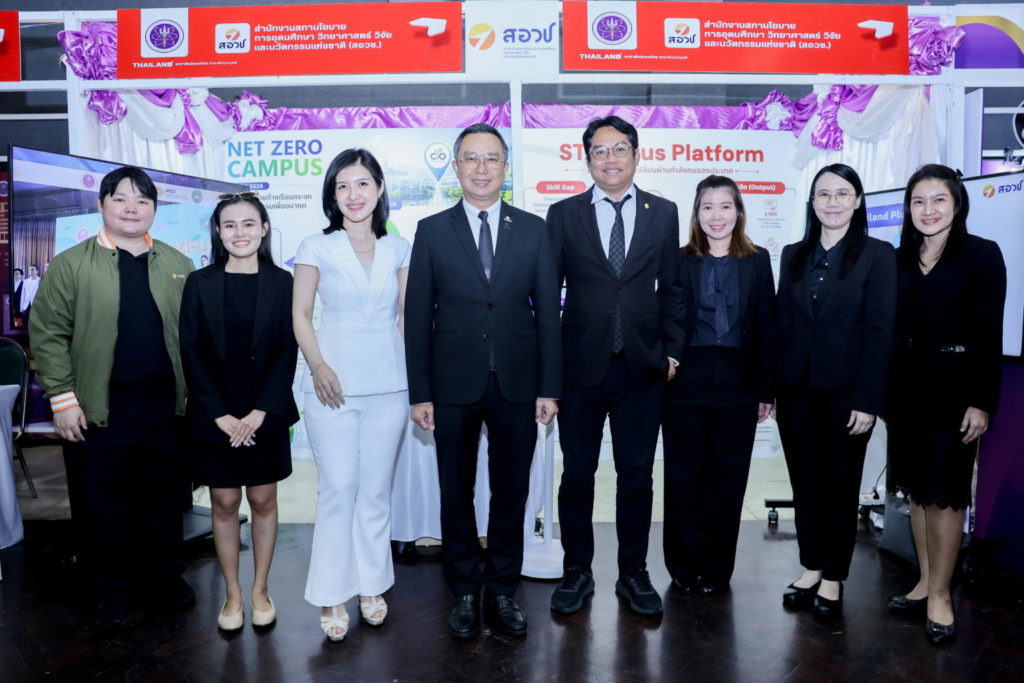
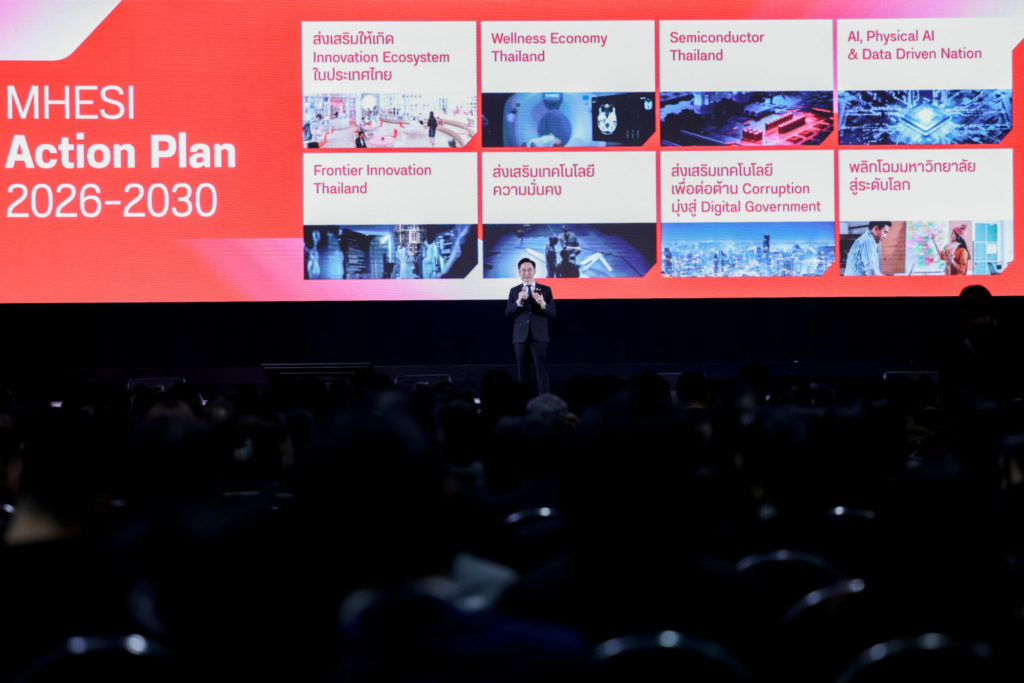
On 21 July 2026, NXPO, led by Dr. Surachai Sathitkunarat, President of NXPO, participated in the “Empowering Human Capital, Empowering Thailand” event, organized by the Ministry of Higher Education, Science, Research and Innovation (MHESI) at Kasetsart University. The event was officially opened by Prime Minister Mr. Anutin Charnvirakul and featured a keynote address by Prof. Dr. Yodchanan Wongsawat, Deputy Prime Minister and MHESI Minister.




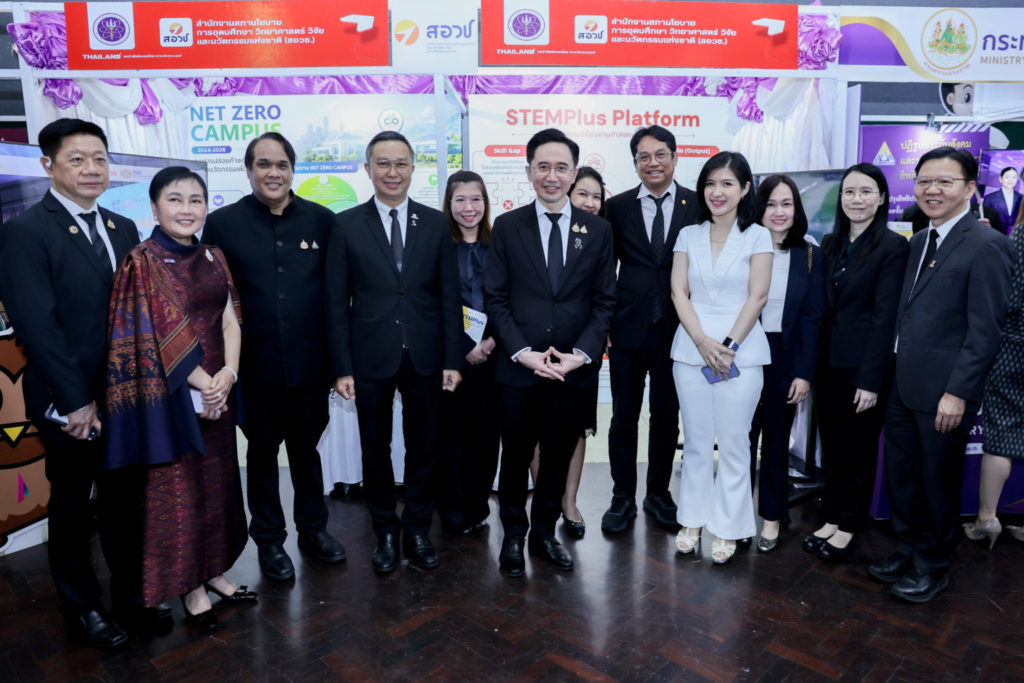
Following the keynote address, Minister Yodchanan visited exhibitions presented by participating agencies. NXPO showcased two key policy initiatives:
1. STEMPlus Platform
The STEMPlus Platform is a national workforce transformation initiative that strengthens collaboration between higher education institutions and industry to develop skills aligned with labor market demand. To date, the platform has trained 543,920 participants, accredited 2,080 courses delivered by 167 certified training providers, and facilitated the creation of 15,389 new STEM jobs across 209 organizations. It also promotes collaborative innovation, encourages the use of tax incentives for workforce development, and supports the establishment of a national workforce ecosystem. Together, these efforts have enhanced labor productivity, attracted investment, strengthened Thailand’s competitiveness, and generated an estimated THB 4.438 billion in annual income from newly created STEM jobs. Planning is underway for the platform to connect Thai professionals with global career opportunities, introduce AI-powered career guidance tailored to individual capabilities and labor market needs, and evolve into an integrated national workforce intelligence platform that supports evidence-based policy and business decision-making.
NXPO is also advancing the Thailand Skill Bridge / BOI STEM++ Program, a collaborative initiative between MHESI-NXPO, and the Thailand Board of Investment (BOI) to accelerate the development of highly skilled talent for advanced technology and future industries. The program focuses on reskilling, upskilling, and new-skilling both the existing workforce and new entrants to the labor market, with a target of developing 100,000 highly skilled workers. By systematically aligning workforce development with industry demand, the initiative helps close critical skill gaps, supports investment in strategic industries, expands access to quality training, enhances employment opportunities, and strengthens Thailand’s long-term competitiveness as an innovation-driven economy.
2. Net Zero Campus 2024–2026
The the Net Zero Campus Plan 2024–2026 aims to transform universities into low-carbon campuses, living laboratories for climate innovation, and hubs for developing the workforce required to support Thailand’s transition to net-zero emissions. The plan comprises three strategic components: 1) Standardizing university carbon accounting by aligning institutional greenhouse gas accounting with Thailand’s national carbon accounting framework, 2) Strengthening policy integration through coordinated national strategies, inter-ministerial collaboration, and stronger linkages with government budget and funding mechanisms to advance net-zero implementation, and 3) Expanding the Net Zero Campus network by encouraging more universities to commit to net-zero targets and develop institutional transition pathways through a university mentoring system, enabling campuses to serve as demonstration sites and testbeds for climate technologies and innovation.