The NXPO delegation, led by Assoc. Prof. Wongkot Wongsapai, Vice President of NXPO, participated in the 128th Session of the Committee for Scientific and Technological Policy (CSTP), organized by the Organisation for Economic Co-operation and Development (OECD). The session was held in both virtual and in-person formats in Paris.
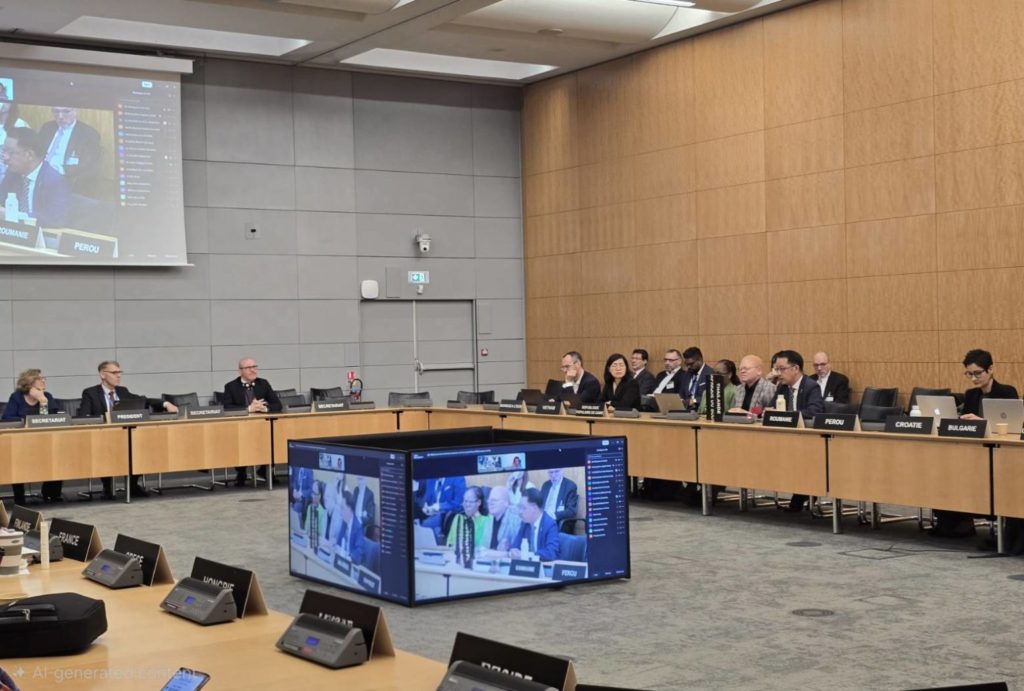
The virtual meeting took place online on 24 March and 7 April, with additional participation from Dr. Kommate Jitvanichphaibool, Assistant to the President; Dr. Pranpreya Sriwannawit Lundberg, Senior Division Director; Ms. Vipaporn Asavapisit, Senior Policy Specialist; and Mr. Parinand Varnasavang, Senior Policy Specialist.
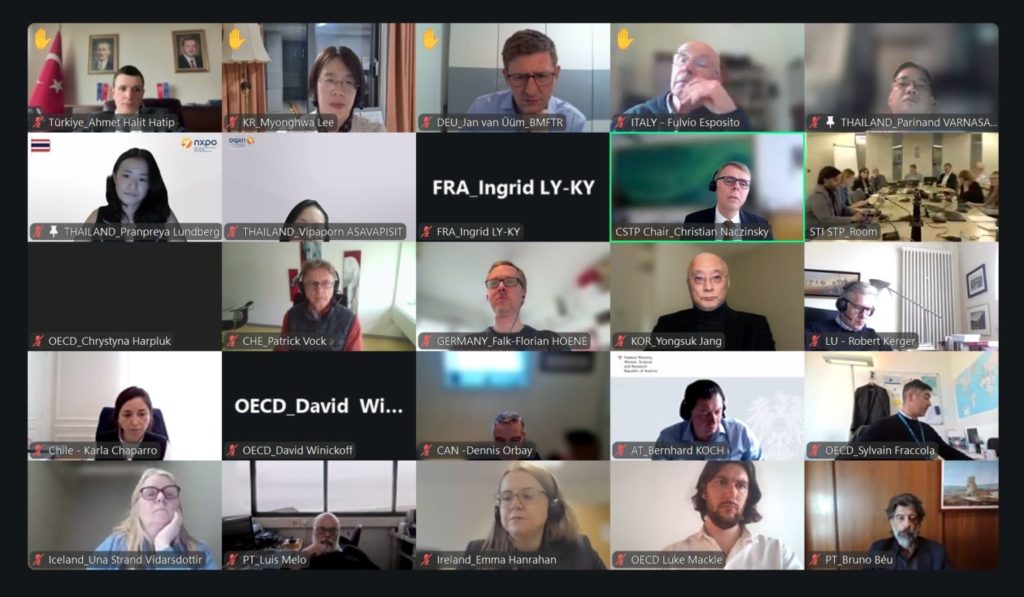
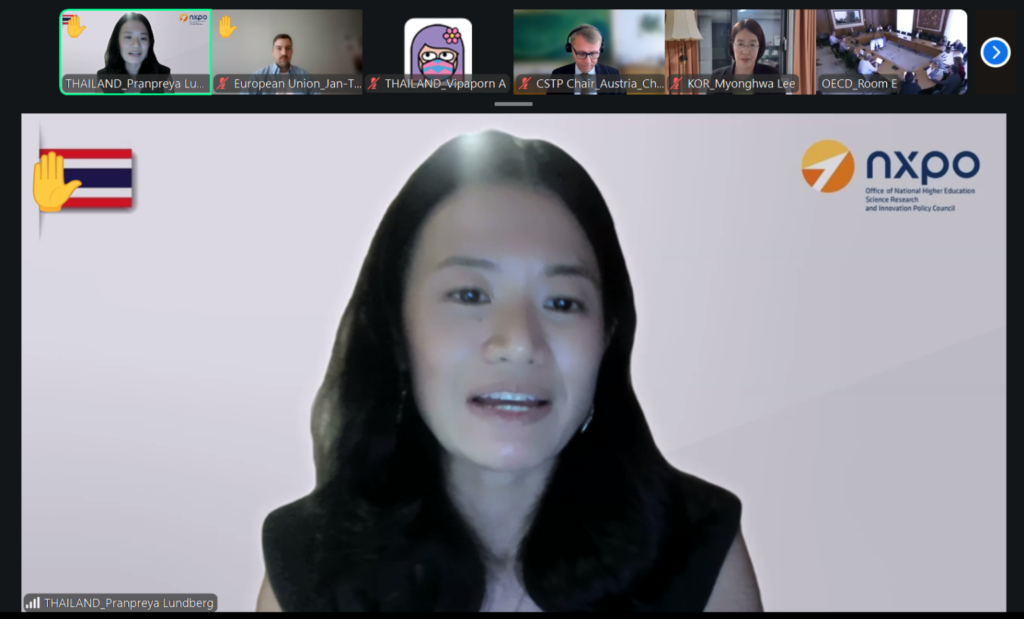
During the virtual sessions—focused on preparing the Programme of Work and Budget (PWB) 2027–2030—Dr. Pranpreya raised questions on the prioritization process, particularly how inputs from non-member countries—collected through surveys and consultations—are incorporated into decision-making. She also expressed support for the development of the STIP Compass, highlighting its integration of artificial intelligence and advanced data visualization, and inquired about mechanisms to ensure timely updates of thematic portals for effective policy analysis.
The in-person meeting was held from 14–16 April at OECD Headquarters in Paris. Assoc. Prof. Wongkot contributed to several agenda items, including preparations for the STI Outlook 2027. He emphasized two key issues: the increasing securitisation of science, technology, and innovation (STI), and its implications for international collaboration; and the role of STI in accelerating progress toward the Sustainable Development Goals (SDGs). He also expressed appreciation to the CSTP Secretariat for co-organizing the “OECD–Thailand Seminar: STI Outlook 2025 & STIP Compass,” which saw strong engagement and enhanced the accessibility and policy relevance of the tool. In addition, he supported the advancement of Mission-Oriented Innovation Policies (MOIP), sharing Thailand’s ongoing efforts to reform its STI system and the development of the 5-year Higher Education, Science, Research and Innovation Policy Framework (2028–2032). The framework integrates MOIP approaches to address national challenges while strengthening inter-agency collaboration, private sector engagement, regional innovation ecosystems, workforce development, and monitoring and evaluation systems.
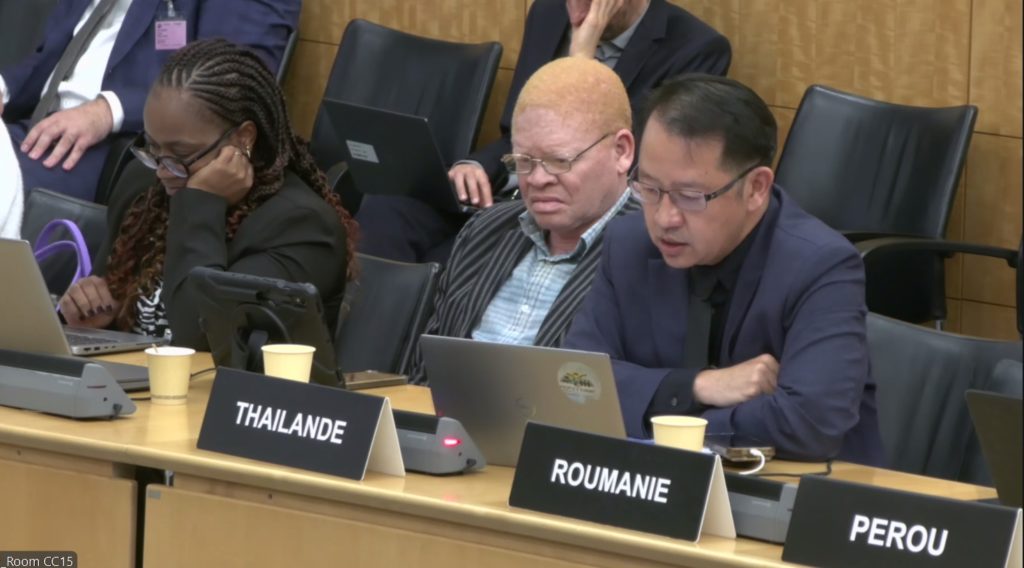
On international STI collaboration, Assoc. Prof. Wongkot highlighted the importance of strengthening partnerships with Southeast Asia by aligning regional frameworks such as ASEAN and APEC with OECD initiatives. He also proposed enhancing cooperation through the integration of policy tools—including STIP Compass and MOIP—and strengthening regional capacity through knowledge-sharing platforms on key topics such as artificial intelligence and the circular economy.
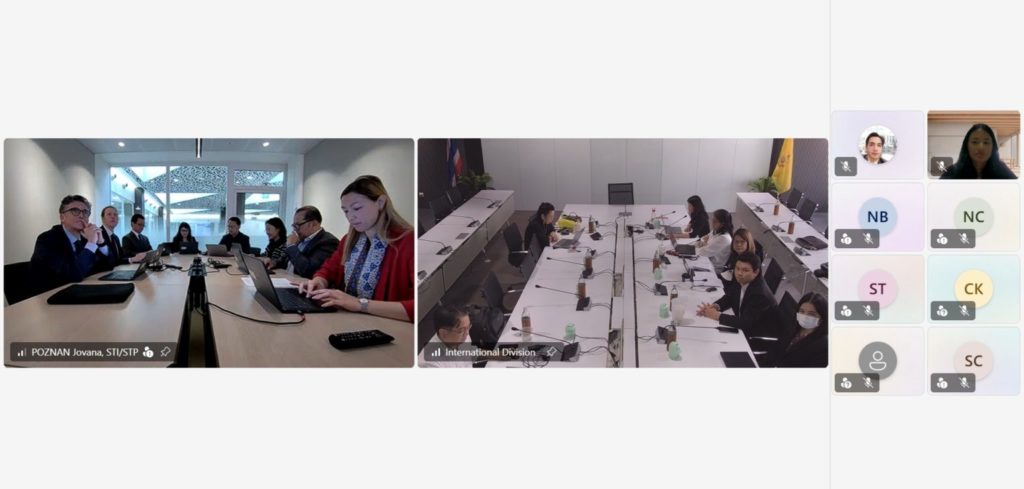
In addition to the CSTP meeting, Assoc. Prof. Wongkot and Ms. Vipaporn participated in the CSTP–Canada Workshop on Open Science and Innovation Partnerships (OSIPs). The workshop aimed to explore pathways for translating research into market outcomes through OSIPs. It brought together policymakers, academic researchers, industry leaders, and representatives from philanthropic organizations, non-profit organizations, and OECD. Discussions covered the economic and social value of open innovation, best practices in managing intellectual property and related data, and the role of governments in providing financial and policy support.
They also attended a hybrid consultation meeting to exchange updates on Thailand’s OECD accession process during the technical review phase, together with representatives from the OECD, the Office of the Permanent Secretary of the Ministry of Higher Education, Science, Research and Innovation, and the National Science and Technology Development Agency (NSTDA).
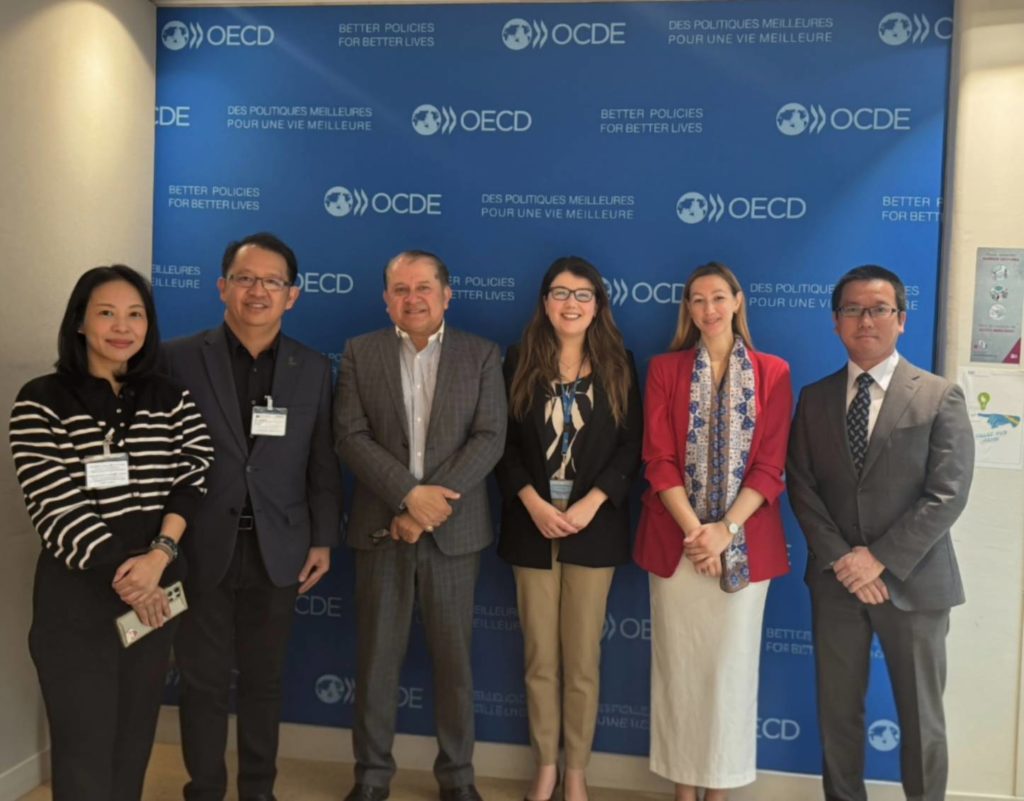
Participation in the CSTP session and related activities provided a valuable platform to exchange approaches to STI policy development—particularly in strengthening innovation ecosystems and international collaboration to address global challenges—while also contributing to the advancement of Thailand’s OECD accession process.