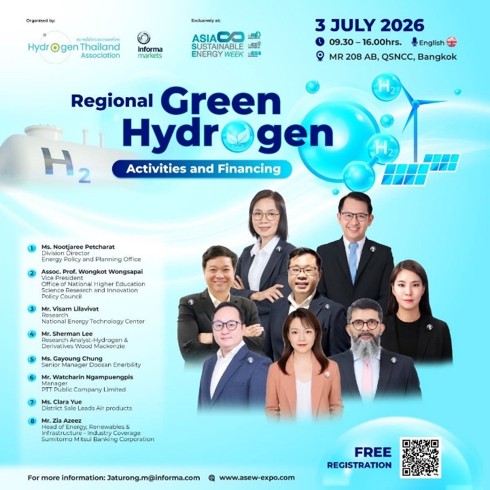
Assoc. Prof. Wongkot Wongsapai, Vice President of NXPO, recently participated in two major events held as part of Asia Sustainable Energy Week 2026 (ASEW 2026) at the Queen Sirikit National Convention Center (QSNCC). ASEW 2026 highlighted the importance of regional collaboration in accelerating the energy transition and advancing sustainable development across Asia.
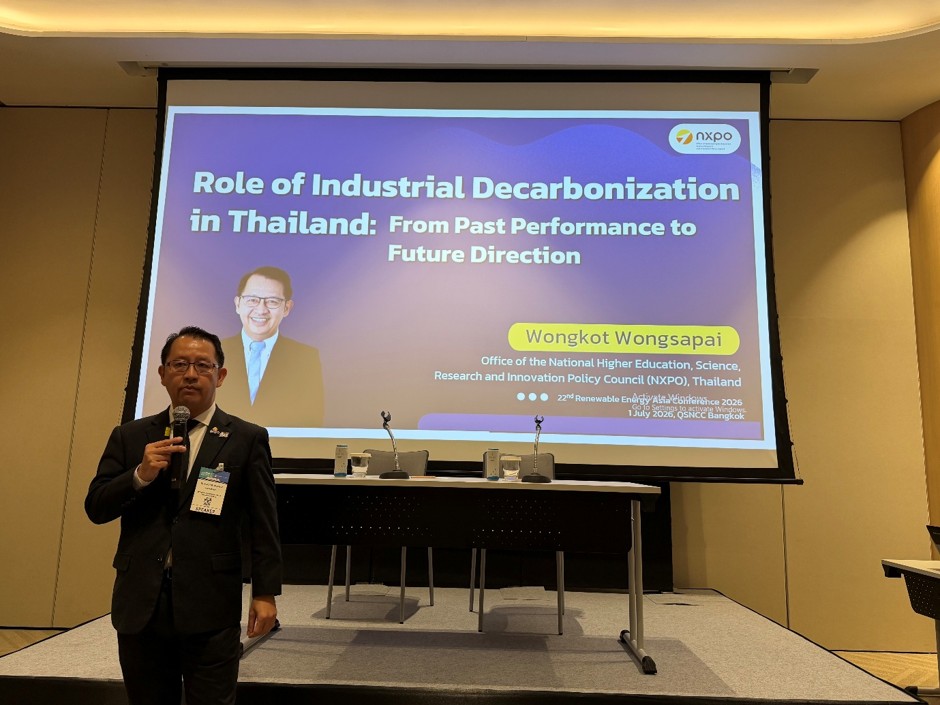
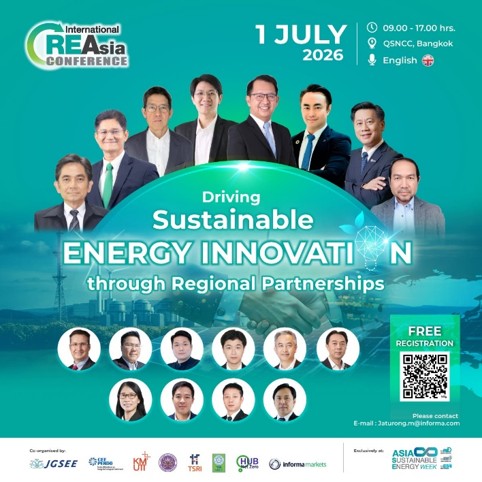
At the 22nd Renewable Energy Asia Conference 2026, organized by the Joint Graduate School of Energy and Environment (JGSEE), King Mongkut’s University of Technology Thonburi (KMUTT), on 1 July 2026, Assoc. Prof. Wongkot delivered a presentation entitled “Role of Industrial Decarbonization in Thailand: From Past Performance to Future Direction.” He reviewed Thailand’s progress in reducing greenhouse gas emissions—particularly carbon dioxide emissions—from the industrial sector and emphasized the need to transform both the country’s policy landscape and technology ecosystem to turn climate challenges into opportunities for sustainable economic growth. He noted that Thailand is preparing its Nationally Determined Contribution (NDC) 3.0 (2031–2035) and highlighted industrial decarbonization as a key pillar of the country’s roadmap toward achieving net-zero greenhouse gas emissions by 2050. Assoc. Prof. Wongkot also explained that industry is Thailand’s second-largest final energy-consuming sector after transportation and is regulated under the Energy Conservation Promotion Act, which applies to designated factories and buildings. In addition, he presented Thailand’s cumulative measurement framework and rigorous greenhouse gas accounting methodology designed to prevent double counting of emission reductions, before outlining emerging technologies expected to play a pivotal role in the country’s long-term net-zero transition.
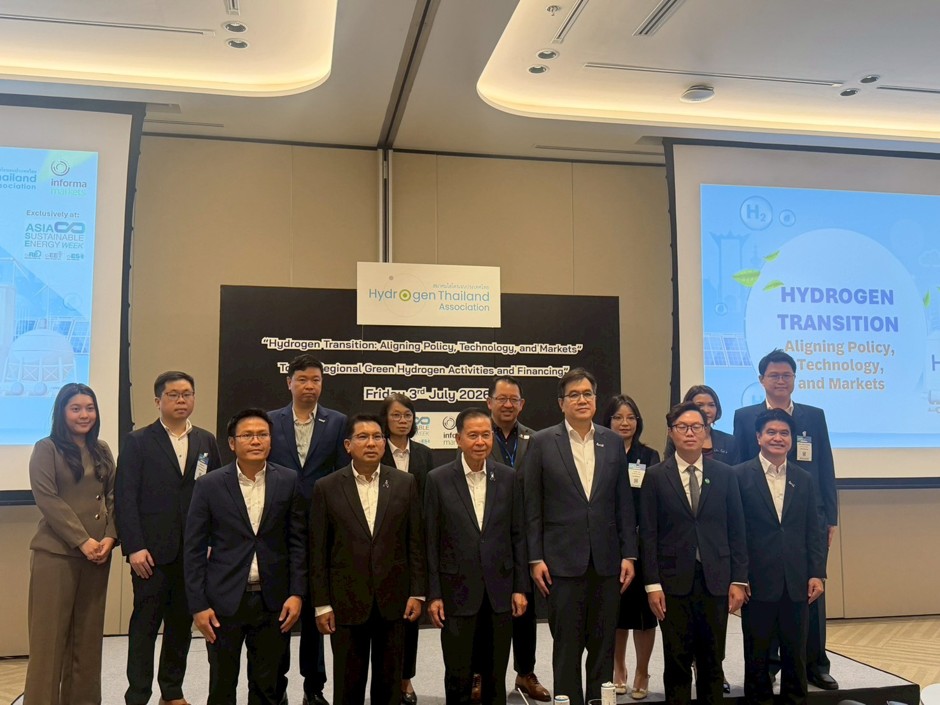
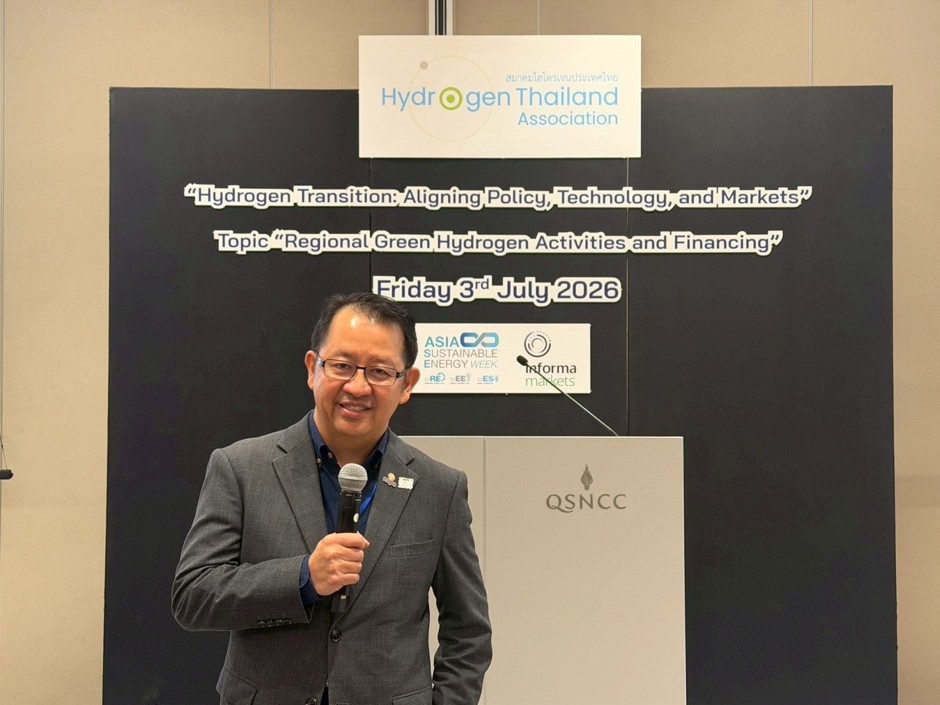
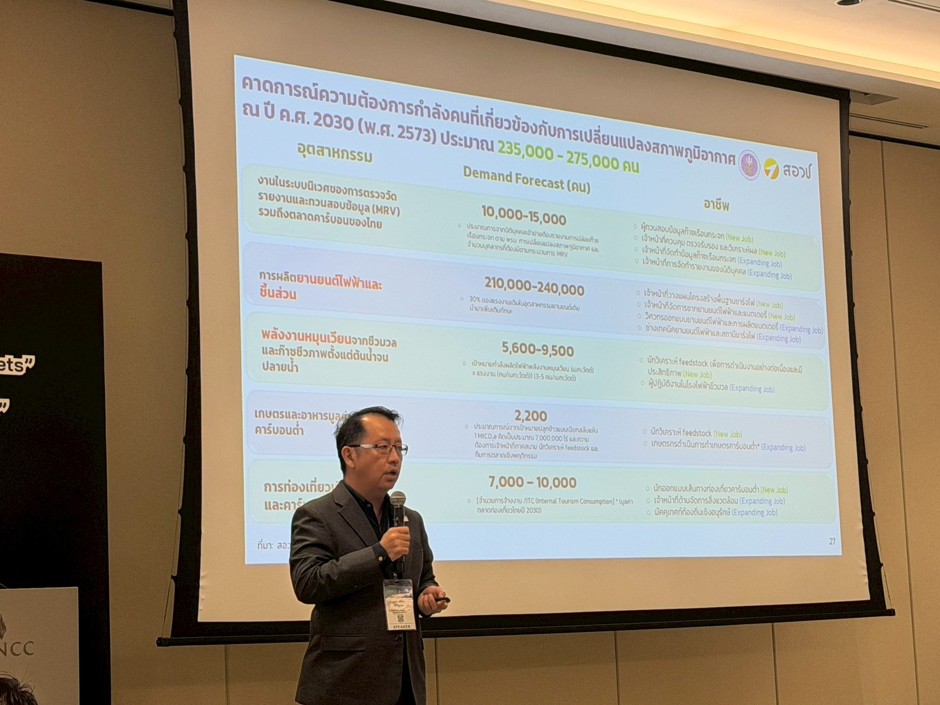
At the Regional Green Hydrogen Activities and Financing seminar, organized by the Hydrogen Thailand Association on 3 July 2026, Assoc. Prof. Wongkot presented “Hydrogen for Energy: Building Thailand’s High-Skill Workforce and Innovation Ecosystem.” His presentation outlined policy directions for advancing Thailand’s hydrogen economy, emphasizing the importance of developing a highly skilled workforce alongside technology development and transfer through the country’s innovation ecosystem. He also highlighted the enabling factors needed across the hydrogen value chain to support the energy transition, particularly talent development and the establishment of hydrogen-related standards aligned with the National Energy Plan (NEP 2050). The presentation drew on NXPO’s policy study on Thailand’s hydrogen strategy, conducted with support from the Technical Assistance Program of the Climate Technology Centre and Network (CTCN) under the United Nations Framework Convention on Climate Change (UNFCCC). It also incorporated findings from NXPO’s Green Skills study and the Thailand Talent Landscape, which assess future workforce demand for the hydrogen sector, including both emerging occupations and the upskilling needs of the existing workforce to strengthen Thailand’s long-term competitiveness.
As Thailand’s National Designated Entity (NDE) for the CTCN, NXPO works closely with the Department of Climate Change and Environment (DCCE) under the UNFCCC framework to facilitate climate technology development and transfer. In this role, NXPO coordinates national engagement on climate technology cooperation and negotiations while promoting the deployment of clean energy technologies—particularly renewable energy and energy efficiency—as key drivers of Thailand’s transition toward net-zero greenhouse gas emissions.