Through its close collaboration with industry, government agencies, and regional stakeholders across strategic sectors—including future food, synthetic biology, electric vehicles (EVs), semiconductors and advanced electronics, and the creative economy—NXPO has observed clear structural signals that Thailand is beginning to transition from an efficiency-driven economy toward an innovation-led economy. Four key signals illustrate this transformation:
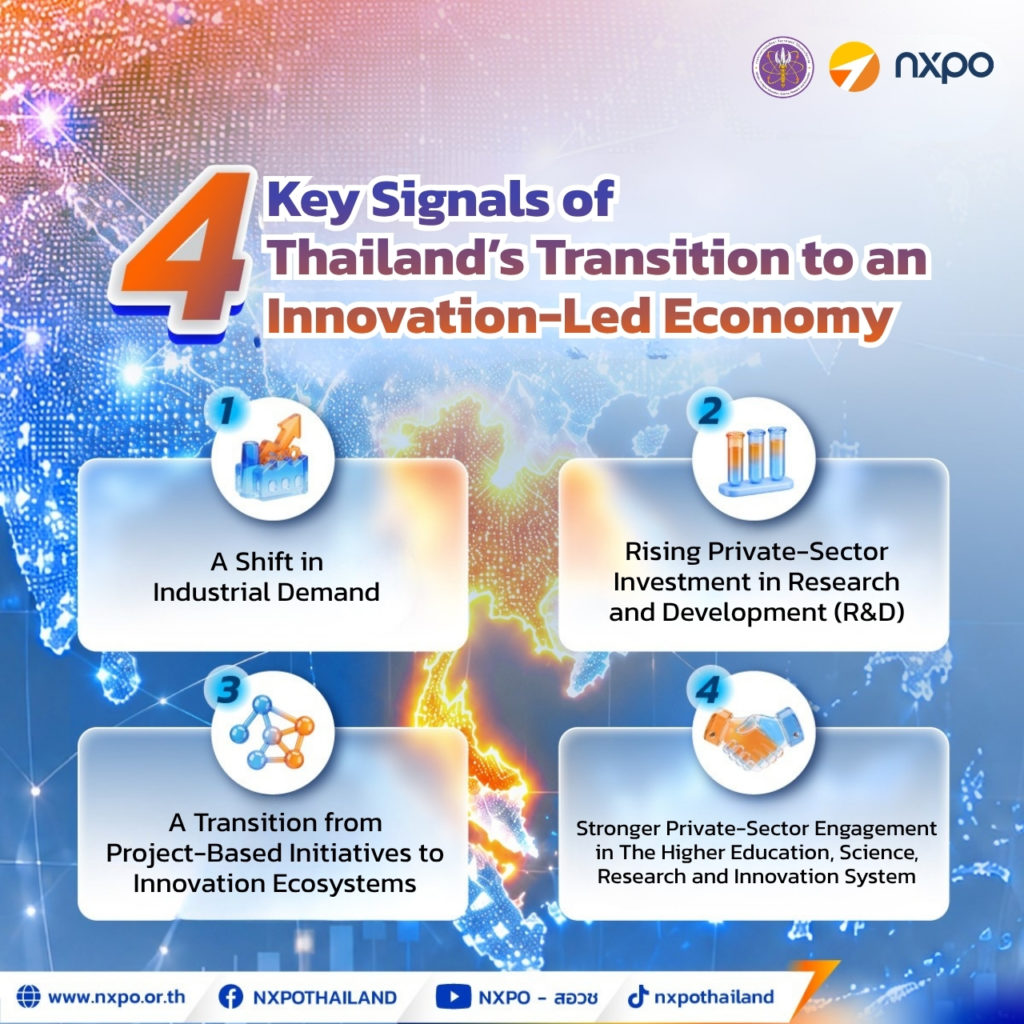
💡1. A shift in industrial demand
Thai industries are increasingly competing through innovation-driven value creation rather than cost advantages alone. Businesses are placing greater emphasis on developing deep technologies, generating intellectual property (IP), and moving up the global value chain. This shift is evident in the food sector’s focus on functional foods, personalized nutrition, and high-value ingredients; the application of synthetic biology in the biotech and healthcare industries; the evolution of the EV and semiconductor sectors from manufacturing and assembly toward design, testing, and software development; and the growing emphasis on IP and branding in the creative industries.
💡2. Rising private-sector investment in research and development (R&D)
The private sector is increasingly partnering with universities and research organizations to undertake R&D projects involving deep technologies, long development timelines, and high technological risk. Rather than treating R&D as a short-term expense, businesses are increasingly recognizing research and innovation as strategic investments that strengthen long-term competitiveness.
💡3. A transition from project-based initiatives to innovation ecosystems
Development efforts are moving beyond fragmented, stand-alone projects toward integrated innovation ecosystems that connect universities, research institutes, entrepreneurs, startups, investors, and government agencies through central platforms. These collaborative ecosystems provide the foundation for building innovation-driven regional economies.
💡4. Stronger private-sector engagement in the higher education, science, research and innovation system
The private sector is assuming a more strategic role within Thailand’s higher education, science, research and innovation system. This reflects a broader structural transformation—from a government-led innovation model to a public–private co-creation model. Such collaborative governance is a defining feature of successful innovation-led economies.
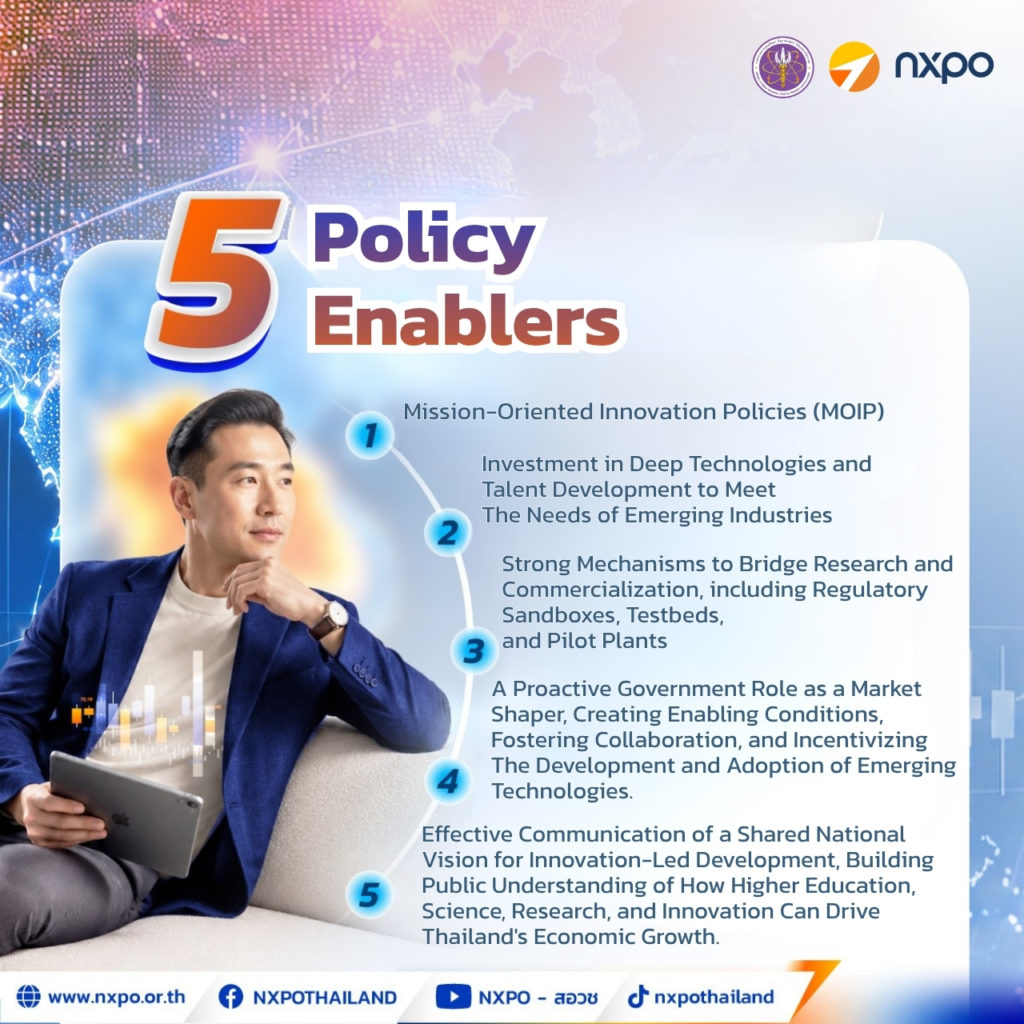
While these developments are encouraging, Thailand’s transition to an innovation-led economy requires stronger and more coordinated policy support. Five policy enablers are particularly critical:
- Mission-oriented innovation policies (MOIP) that define clear national missions and strategic industrial priorities while aligning budgets and implementation mechanisms toward shared goals.
- Investment in deep technologies and talent development to meet the needs of emerging industries.
- Strong mechanisms to bridge research and commercialization, including regulatory sandboxes, testbeds, and pilot plants.
- A proactive government role as a market shaper, creating enabling conditions, fostering collaboration, and incentivizing the development and adoption of emerging technologies.
- Effective communication of a shared national vision for innovation-led development, building public understanding of how higher education, science, research, and innovation can drive Thailand’s economic growth.