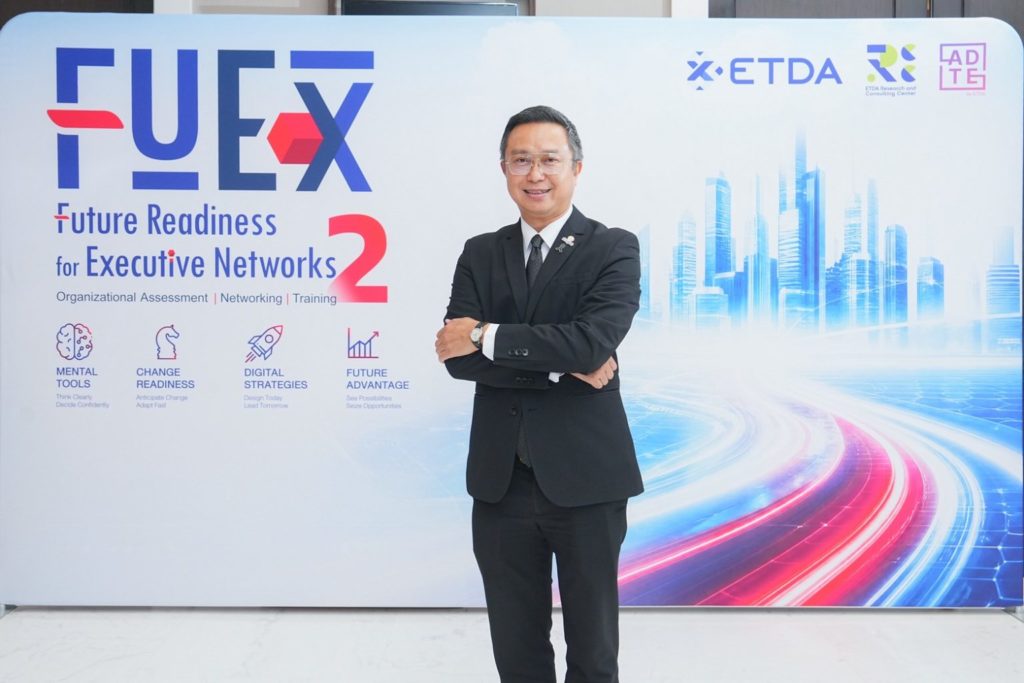
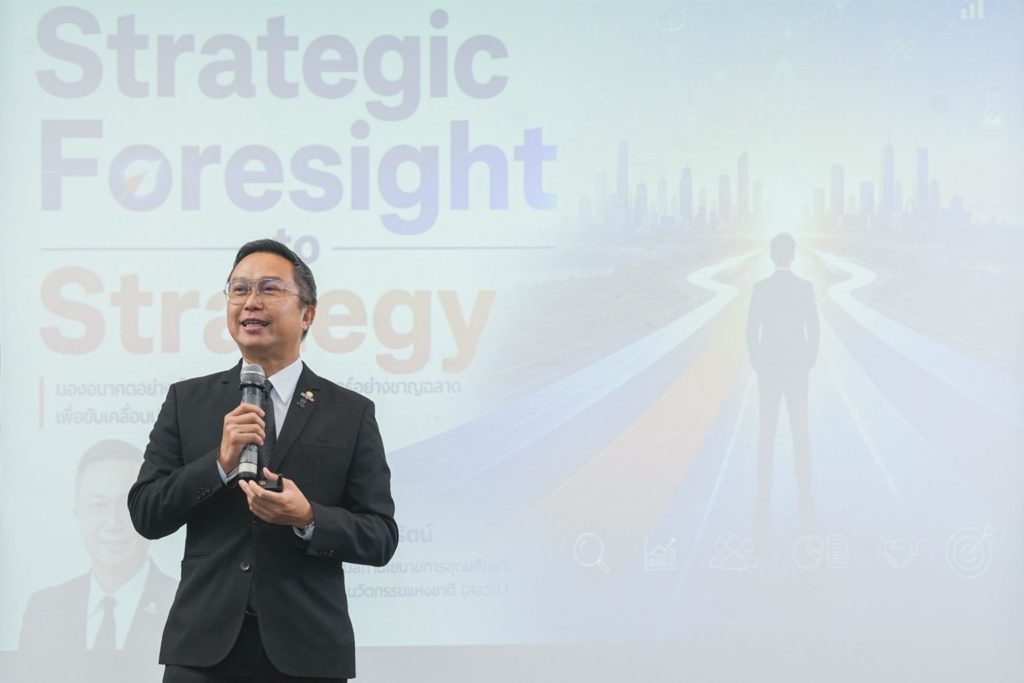
On 29 May 2026, Dr. Surachai Sathitkunarat, President of NXPO, delivered a lecture entitled “Foresight to Policy and the Twin Transition Strategy” as part of the FuEx 2: Future Readiness for Executive Networks, Cohort 2, organized by the Academy of Digital Transformation by ETDA. The program is designed to equip senior executives with the capabilities needed to lead organizations in the digital era, enabling them to formulate proactive digital strategies and effectively manage technology-related risks.
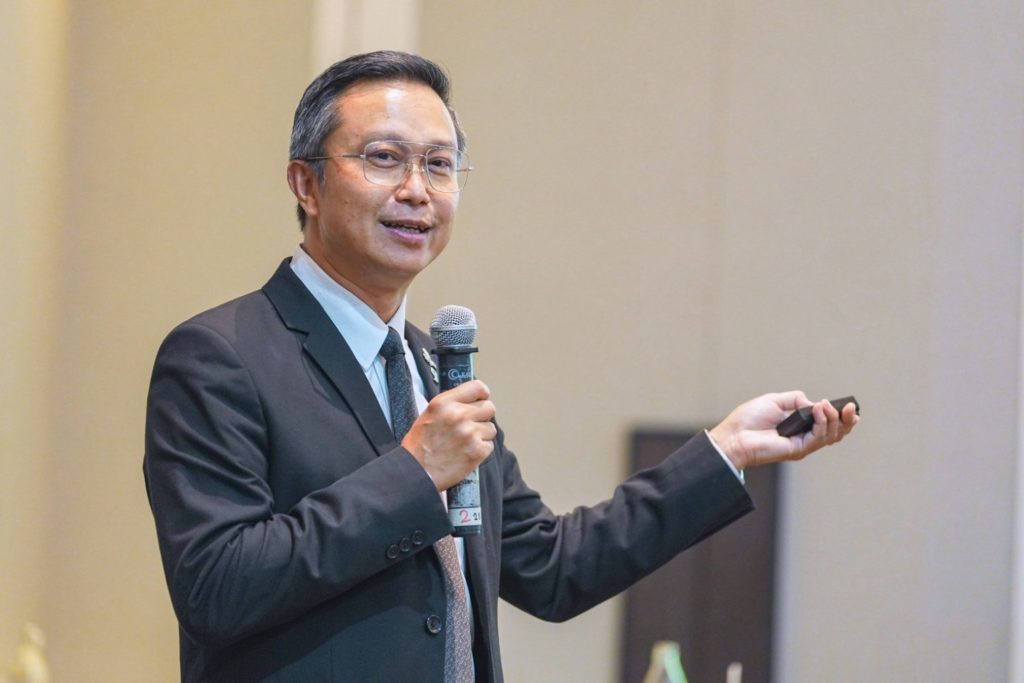
Dr. Surachai highlighted the role of NXPO as the policy agency responsible for higher education, science, research and innovation under the Ministry of Higher Education, Science, Research and Innovation (MHESI). He also noted that NXPO hosts the APEC Center for Technology Foresight (APEC CTF), established in 1998. APEC CTF is the first and only institution in Thailand officially recognized by both APEC and the Royal Thai Government as a specialized center dedicated to applying foresight methodologies to policymaking.
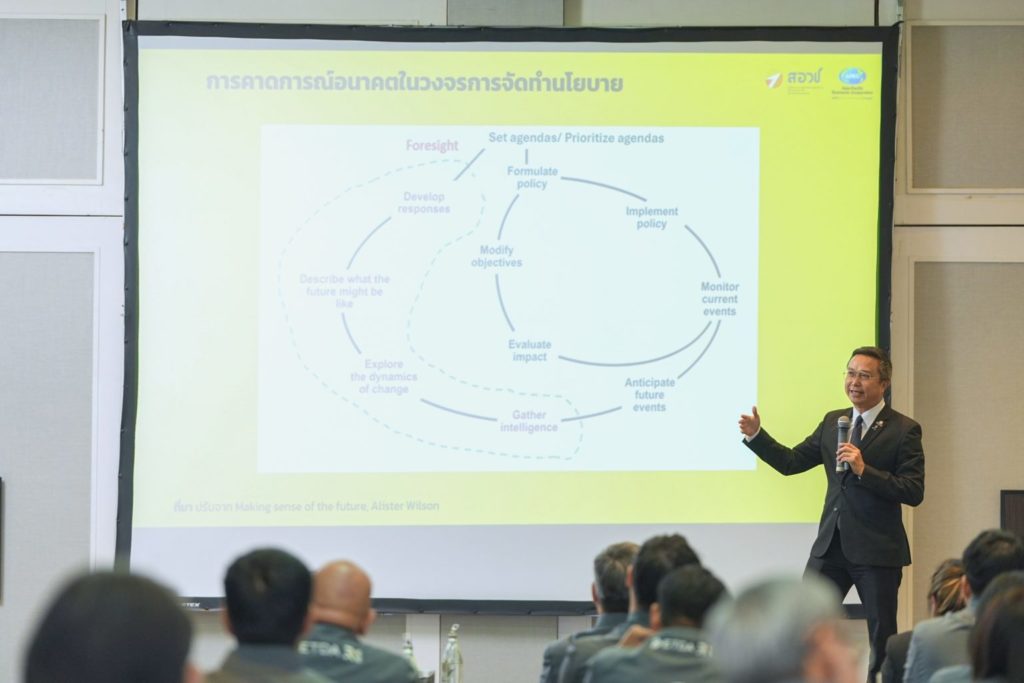
Dr. Surachai explained that foresight is a systematic process for analyzing emerging trends and anticipating future changes to enhance preparedness and resilience. Rather than predicting the future, foresight provides a structured approach to exploring possibilities and preparing for uncertainty. He outlined four key dimensions for selecting foresight tools: evidence-based approaches, which rely on empirical data and statistical analysis; creativity-based approaches, which stimulate imagination and innovative thinking; expertise-based approaches, which draw on specialized knowledge and experience; and interaction-based approaches, which engage stakeholders and promote participation, openness, and consensus-building.
He further described the foresight process, which begins with horizon scanning to identify signals of change and emerging trends across multiple dimensions. This is followed by scenario development based on key driving forces, leading to the formulation of strategies informed by scenario analysis. The horizon-scanning process starts with defining the objectives and scope of the study, assembling a team with relevant expertise, identifying information sources, and systematically collecting signals. These signals are then analyzed and interpreted to generate deeper insights and assess their strategic implications.
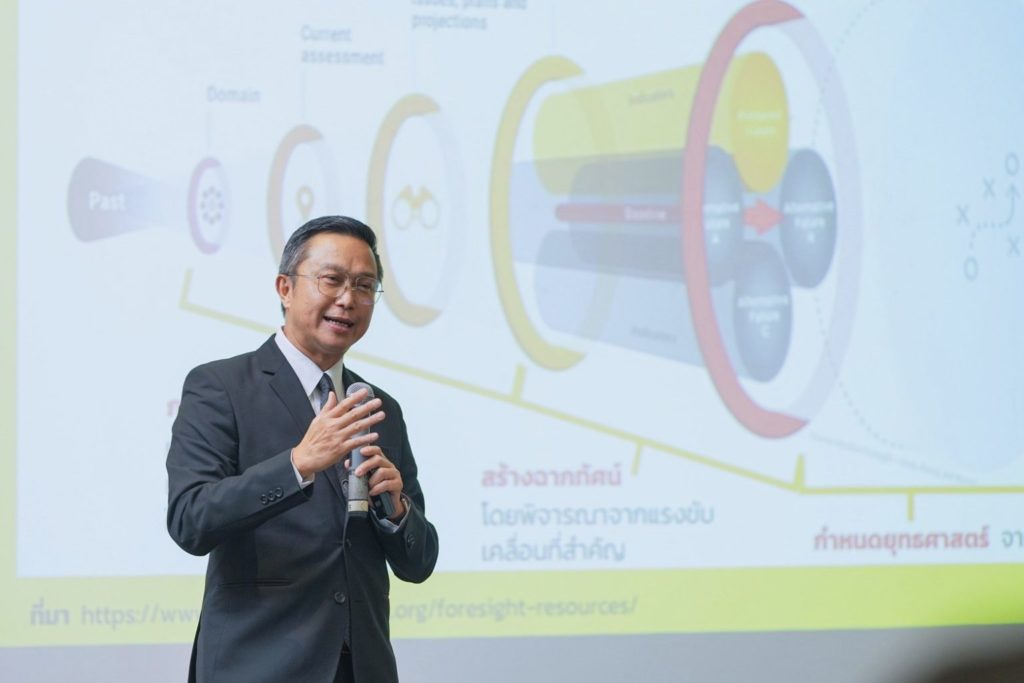
Examples of scenario development and strategic planning methodologies presented during the lecture included the 2×2 Scenario Method, which identifies critical uncertainties by selecting driving forces with both high impact and high uncertainty; the Future Triangle, which explores how possible futures emerge from the interaction of competing forces; the Mont Fleur Scenarios approach, which develops alternative futures by systematically examining key drivers of change; and the Spiderweb Scenarios approach, which incorporates multiple driving forces to capture greater complexity and interconnectivity.
Dr. Surachai also shared examples of how foresight tools have been applied to strategic planning in practice. These included the development of future visions and long-term institutional development plans for universities, helping organizations identify emerging trends and define strategic directions over the next decade. He also highlighted initiatives aimed at developing future scenarios and strengthening collaboration on carbon neutrality and net-zero emissions within APEC. The insights generated through these foresight exercises are intended to support future cooperation among APEC member economies. Various foresight methodologies have been employed in these efforts, including the Delphi Survey, Future Triangle, and other analytical tools.
Concluding his presentation, Dr. Surachai introduced the Thailand Foresight Alliance (TFA), established to foster a national foresight ecosystem that supports evidence-based strategic planning and long-term policymaking. Through this alliance, participating organizations collaborate on foresight initiatives addressing a wide range of national challenges, encompassing not only science, technology, and innovation but also broader social dimensions.