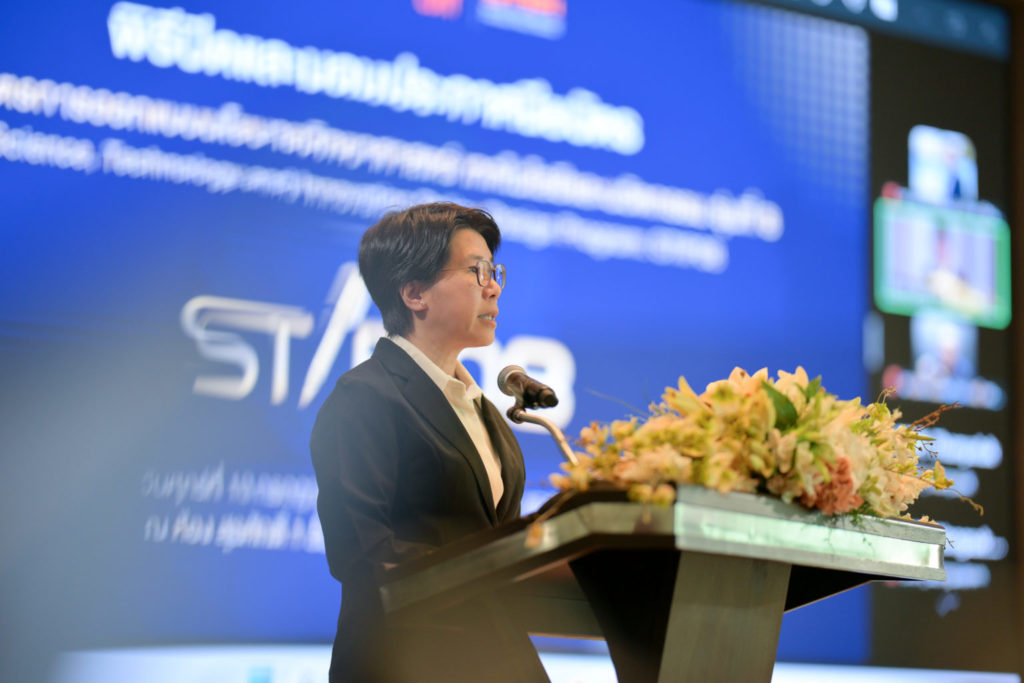
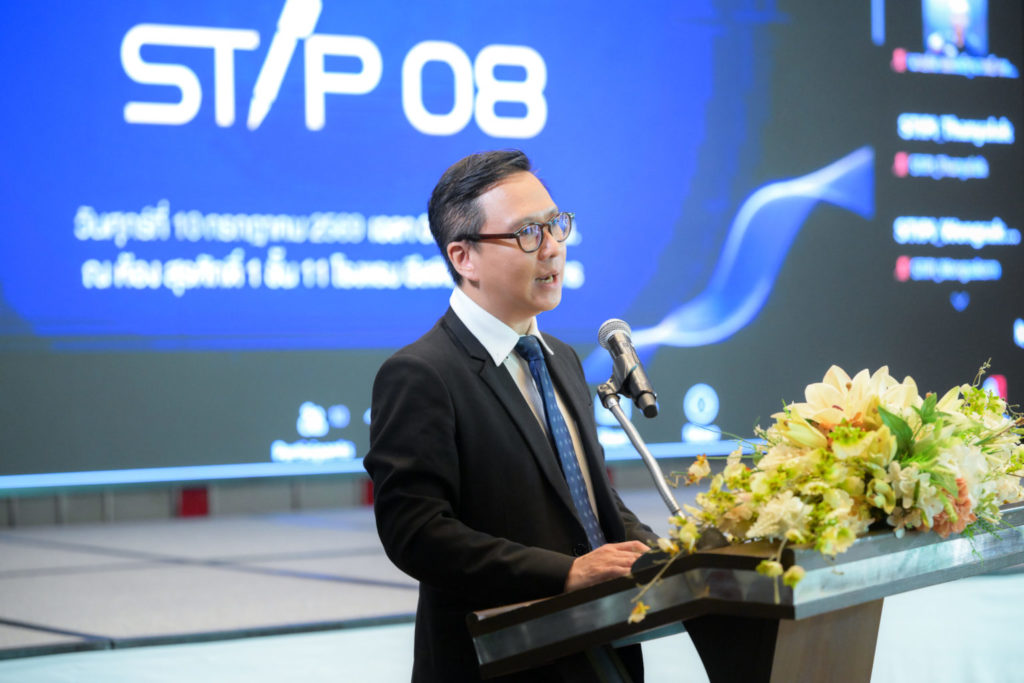
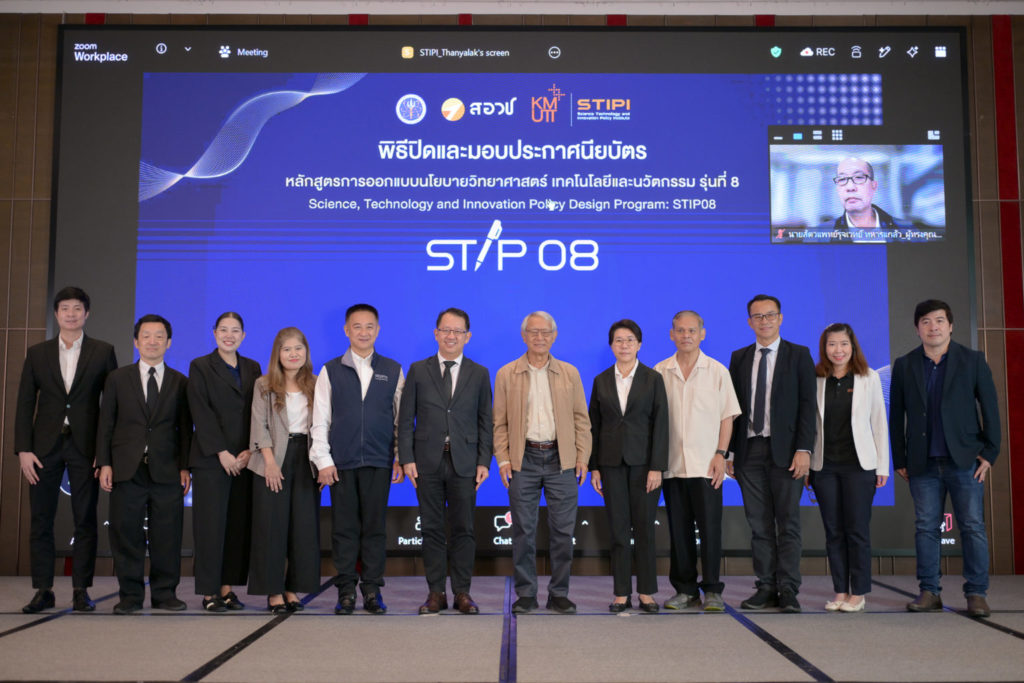
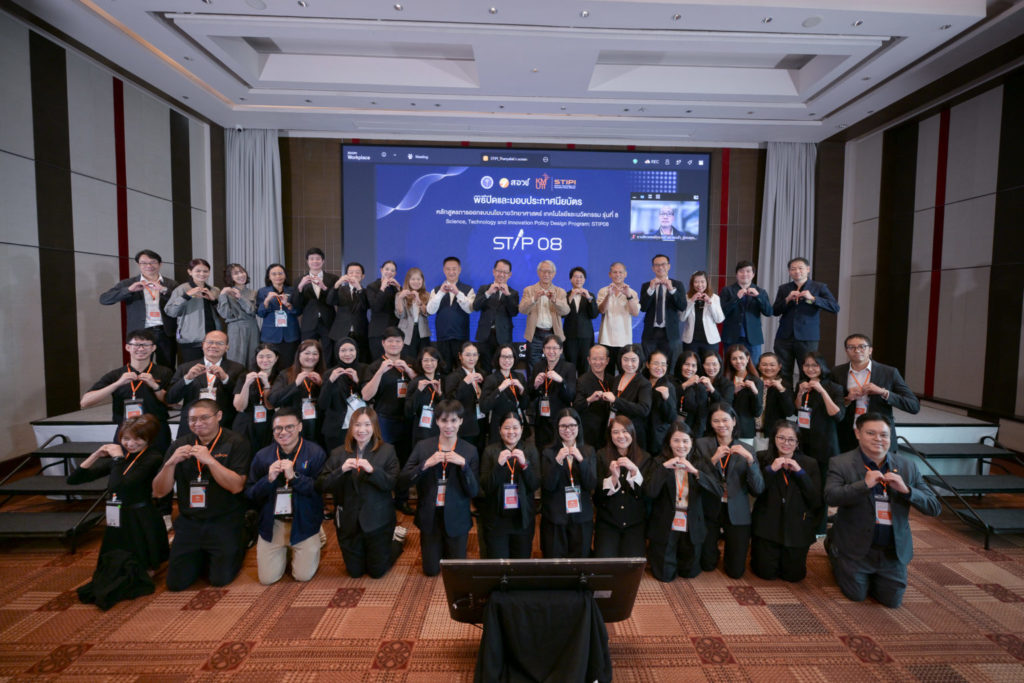
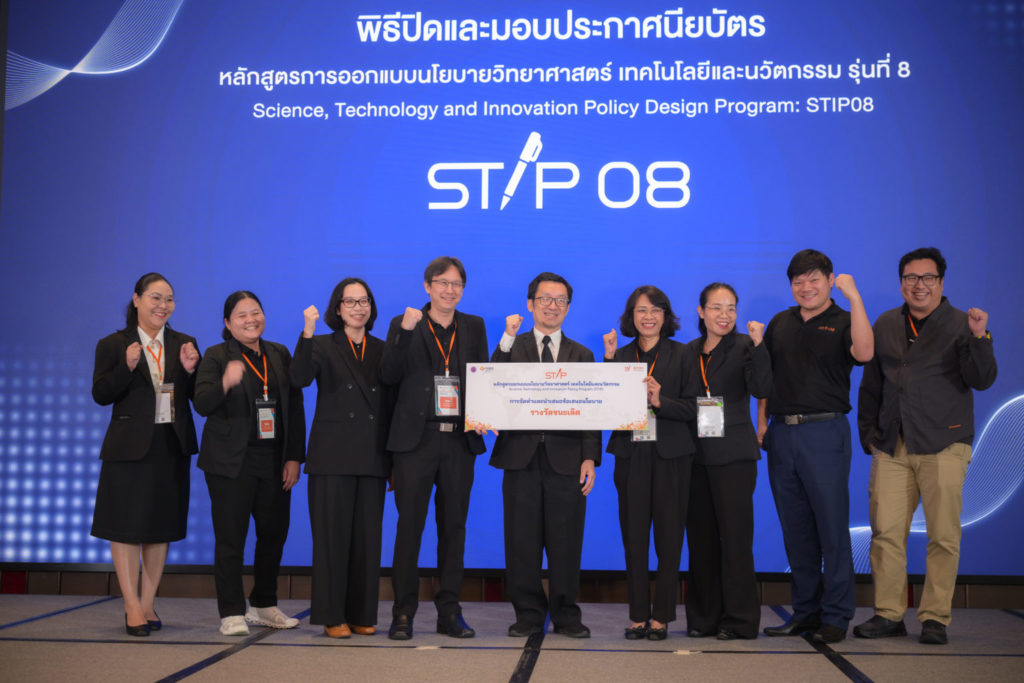
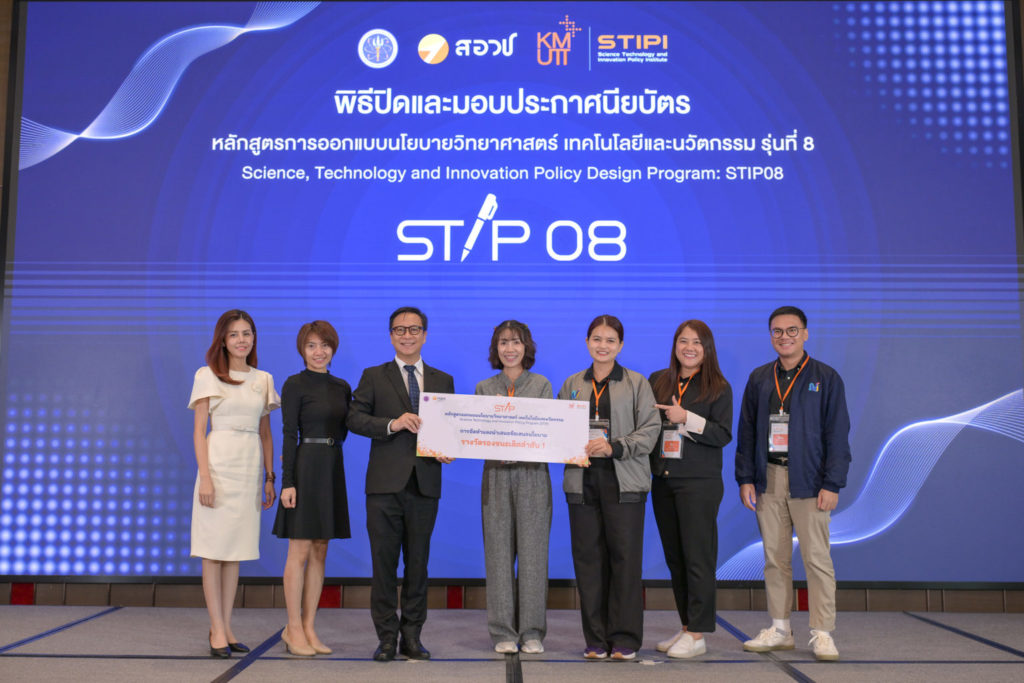
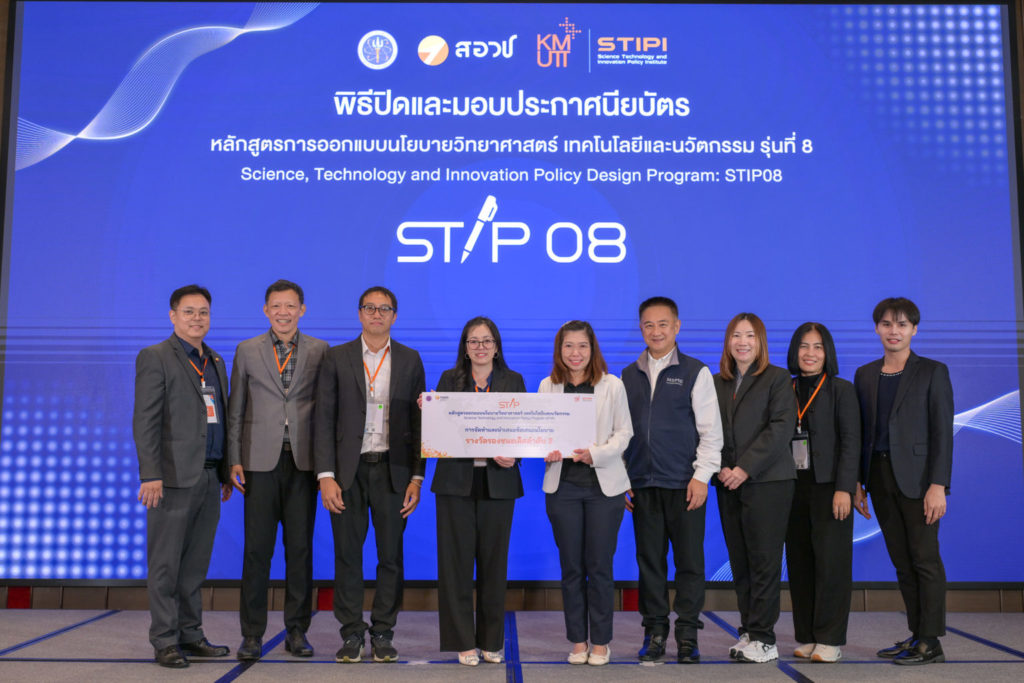
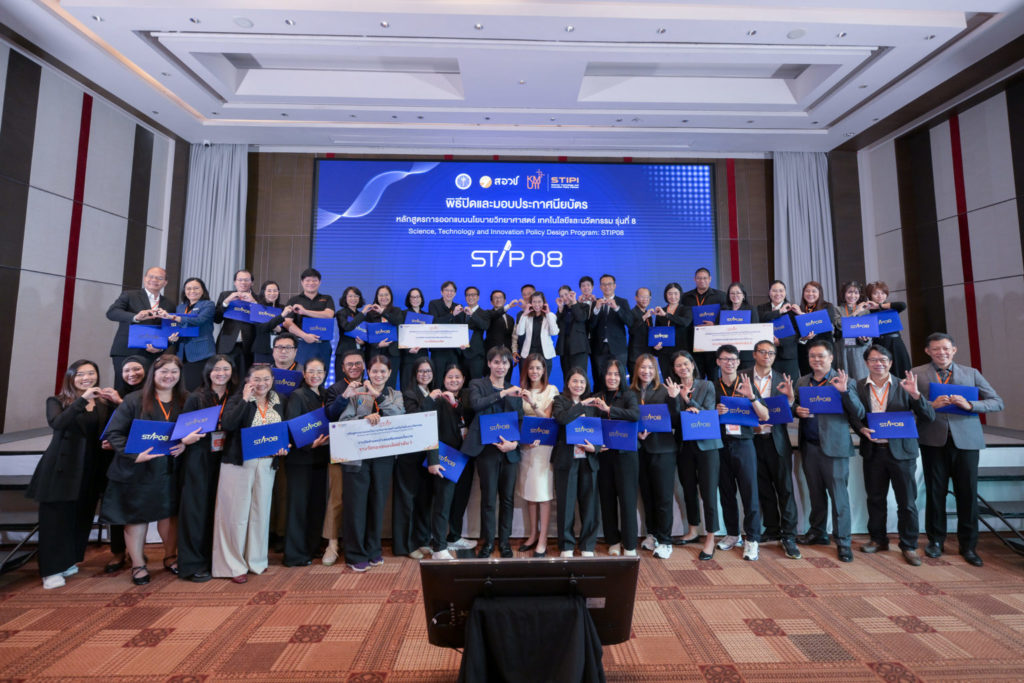
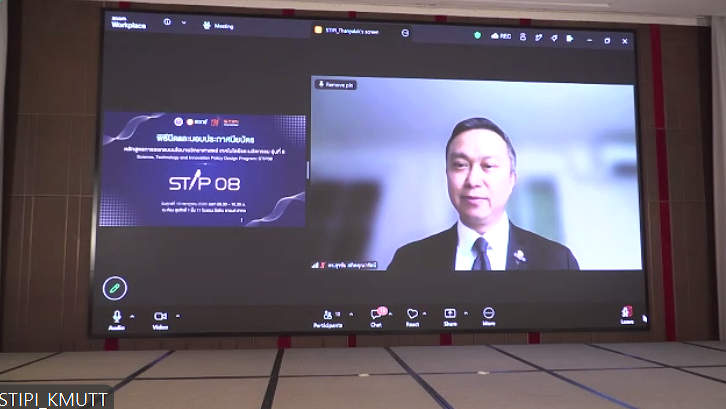
NXPO, in collaboration with the Science, Technology and Innovation Policy Institute (STIPI) of King Mongkut’s University of Technology Thonburi (KMUTT), held the closing ceremony and certificate presentation for participants of the Science, Technology and Innovation Policy Design Program, Cohort 8 (STIP08) on 10 July 2026 at the Eastin Grand Hotel Sathorn Bangkok. The ceremony was presided over by Dr. Surachai Sathitkunarat, President of NXPO, and Dr. Kanyawim Kirtikara, Senior Vice President for Research and Innovation at KMUTT.
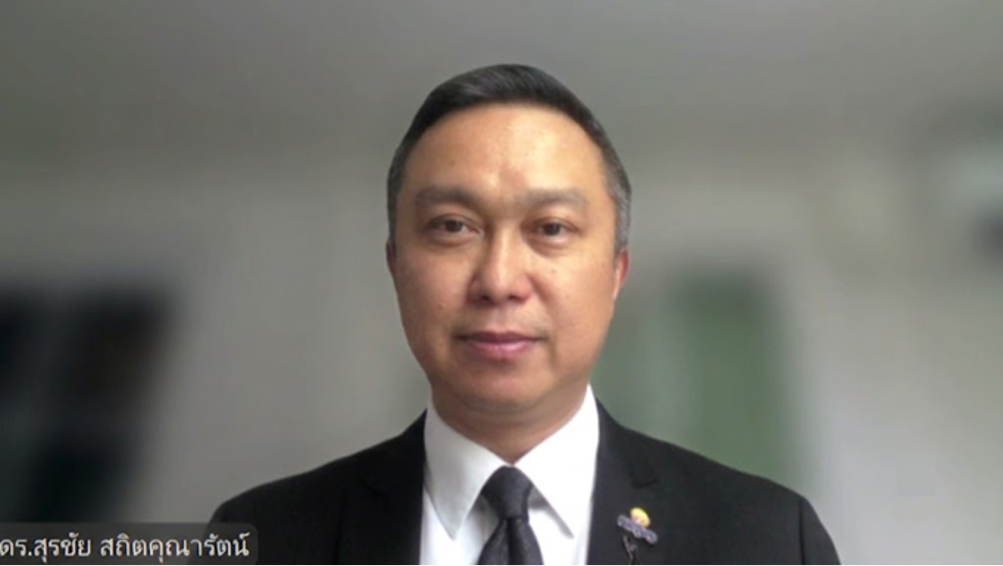
Dr. Surachai congratulated the 41 participants from more than 30 organizations, both within and outside the Ministry of Higher Education, Science, Research and Innovation (MHESI), on successfully completing the program. He commended their commitment, dedication, and collaborative efforts throughout the course, noting that the policy proposals developed by the participants demonstrated significant growth in their policy design capabilities. The five group proposals addressed strategic issues of national importance, responding to both global challenges and Thailand’s development priorities while reflecting current socioeconomic and technological transformations. Dr. Surachai emphasized that the program provided participants with far more than academic knowledge. It strengthened their practical experience, expanded their professional networks, and equipped them with the skills needed to formulate and advance public policies. The program also cultivates policy professionals capable of applying systems thinking, analyzing and synthesizing complex information, and translating it into practical, actionable policy recommendations.
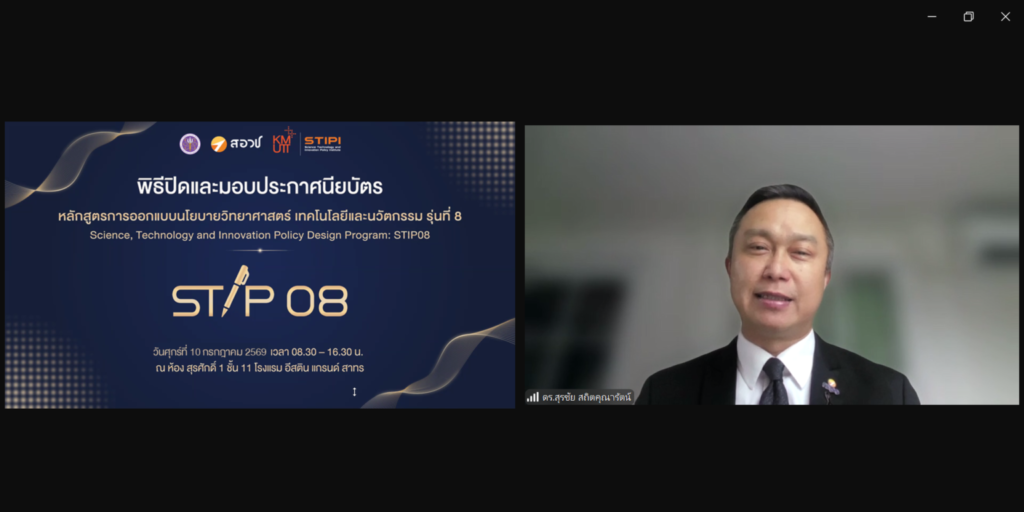
“STIP represents a strong and sustained collaboration between NXPO and STIPI-KMUTT. Its ultimate objective is to develop public policy design professionals in higher education, science, research and innovation—known as STIPERs—who possess both the knowledge and professional networks needed to become effective policy developers. We believe this network will serve as a vital driving force in coordinating, proposing, and advancing policies that can be successfully implemented for the benefit of the country,” said Dr. Surachai.
Dr. Surachai highlighted that the capabilities, knowledge, and professional networks gained through STIP08 provide participants with a strong foundation for developing impactful policies within their respective organizations. He also encouraged all graduates to continue working with NXPO to help shape Thailand’s future by applying the knowledge and practical experience gained through the program to support policymaking.
This year’s participants presented policy proposals across five strategic themes:
• Group 1 – Health, Wellness, and Biomedical Innovation: Thailand Healthy Longevity Sandbox (First Runner-up)
• Group 2 – Digital Technologies and Artificial Intelligence: Udon Thani Smart Tourism Sandbox
• Group 3 – Green Industry and Sustainable Development: H2 Revolution Policy: (Winner)
• Group 4 – Human Capital Development: Skill Security Thailand
• Group 5 – Food Innovation: Thailand Cocoa Flavanols (Second Runner-up)