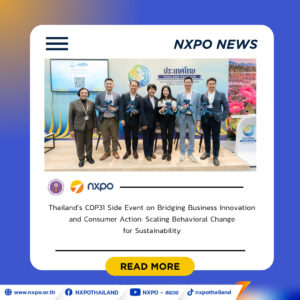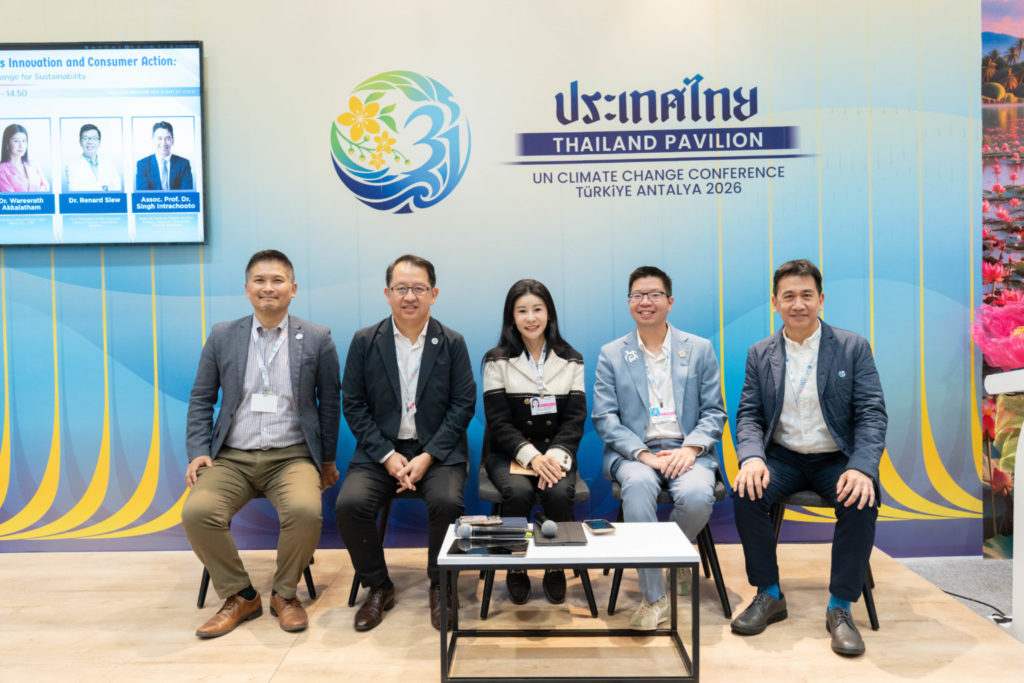
NXPO participated in the 31st Conference of the Parties to the United Nations Framework Convention on Climate Change (COP31) in Antalya, Türkiye. As part of its participation, NXPO organized a side event at the Thailand Pavilion under the theme “Bridging Business Innovation and Consumer Action: Scaling Behavioral Change for Sustainability.” The event provided a platform for the private sector and government representatives to exchange insights on sustainable business innovations and explore how business-to-business (B2B) collaboration can help drive changes in consumer behavior. These efforts aim to accelerate the transition to a low-carbon, resource-efficient economy.
The panel featured Assoc. Prof. Wongkot Wongsapai, Vice President of NXPO; Dr. Wareerath Akkalatham, Chief Executive Officer of Titan Metal; Dr. Renard Siew, First President of the Malaysia Carbon Market Association (MCMA); and Assoc. Prof. Dr. Singh Intrachooto, Head of the Creative Center for Eco-Design at Kasetsart University and Chief Sustainability Advisor to Siam Piwat. The discussion was moderated by Mr. Makoto Kato, Board Member of Japan’s Overseas Environmental Cooperation Center (OECC).
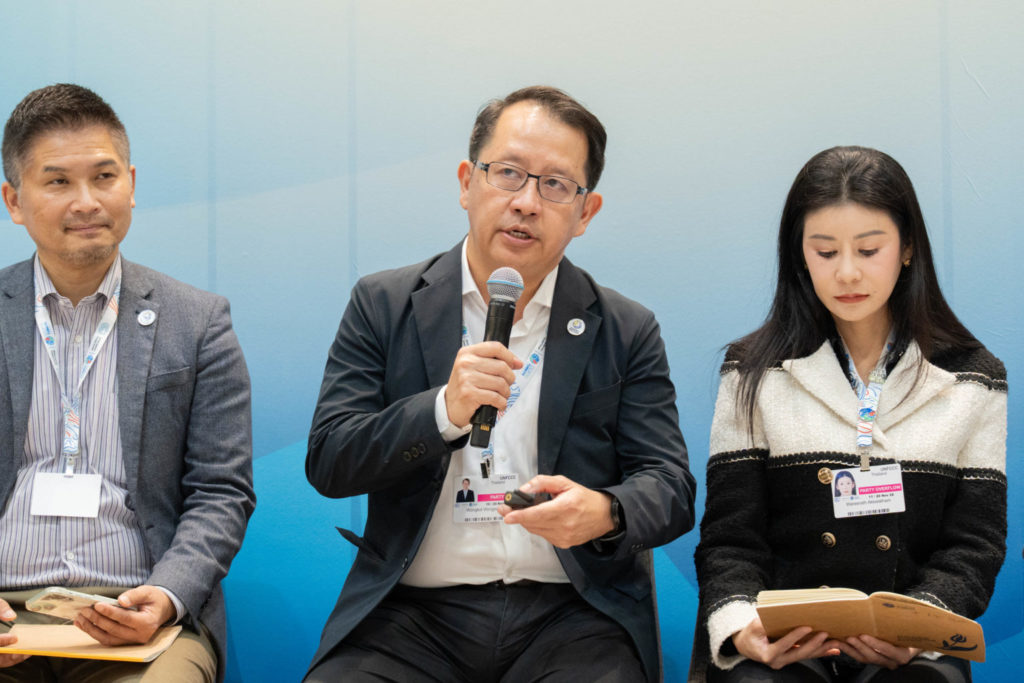
Assoc. Prof. Wongkot presented the draft Higher Education, Science, Research and Innovation Policy and Strategy Framework for 2028–2032, which adopts the Mission-Oriented Innovation Policy (MOIP) approach. The framework identifies five key missions: (1) strengthening the competitiveness of green industries; (2) developing and advancing strategic technologies; (3) strengthening SMEs and the grassroots economy through research and innovation; (4) driving the health and wellness economy; and (5) developing livable cities and regions. He also highlighted NXPO’s efforts to advance the country’s circular economy through the development of the Circular Economy (CE) Vision 2030. The framework outlines four levels of mechanisms to the development of a circular economy: the policy level, which aligns national policies with global goals; the infrastructure and support mechanisms level; the business level, which promotes material recycling loops and new business models; and the public level, which fosters greater awareness and encourages changes in consumer behavior.
Dr. Renard Siew highlighted four key considerations for raising awareness and fostering innovation. First, awareness-raising must translate into practical action, taking into account consumers’ needs and constraints. Second, innovations must address real-world needs and be accessible to consumers. Third, urban mining and resource recovery should be promoted to create added value and minimize resource losses. Finally, governments should facilitate the transition through incentives, subsidies, and other enabling mechanisms.
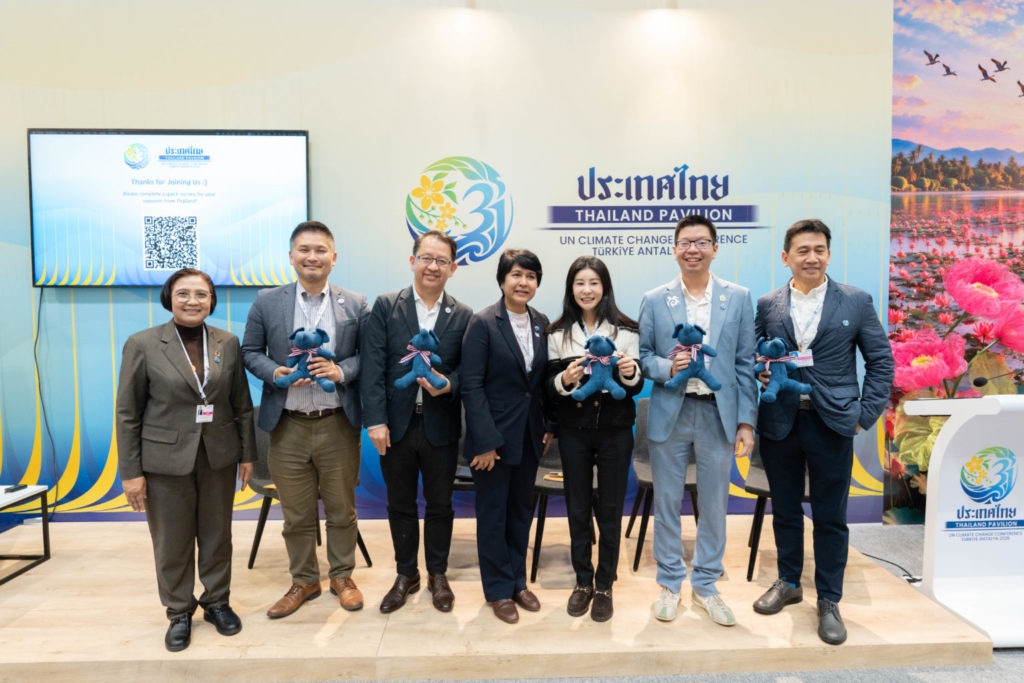
The panel discussion highlighted several important points. Raising awareness alone is not enough; a deeper understanding of consumer behavior and needs is essential to driving meaningful change. Businesses must also recognize sustainability as a business opportunity. Achieving this transition therefore requires collaboration among the government, the private sector, and the public to create an enabling ecosystem. The successful transition to a circular economy depends not only on developing environmentally friendly technologies and products, but also on establishing an integrated system that connects every stage of the value chain, from design and production to consumption, product returns, and resource recovery and reuse. Appropriate policies and support mechanisms are equally important to making sustainable consumption an everyday norm.