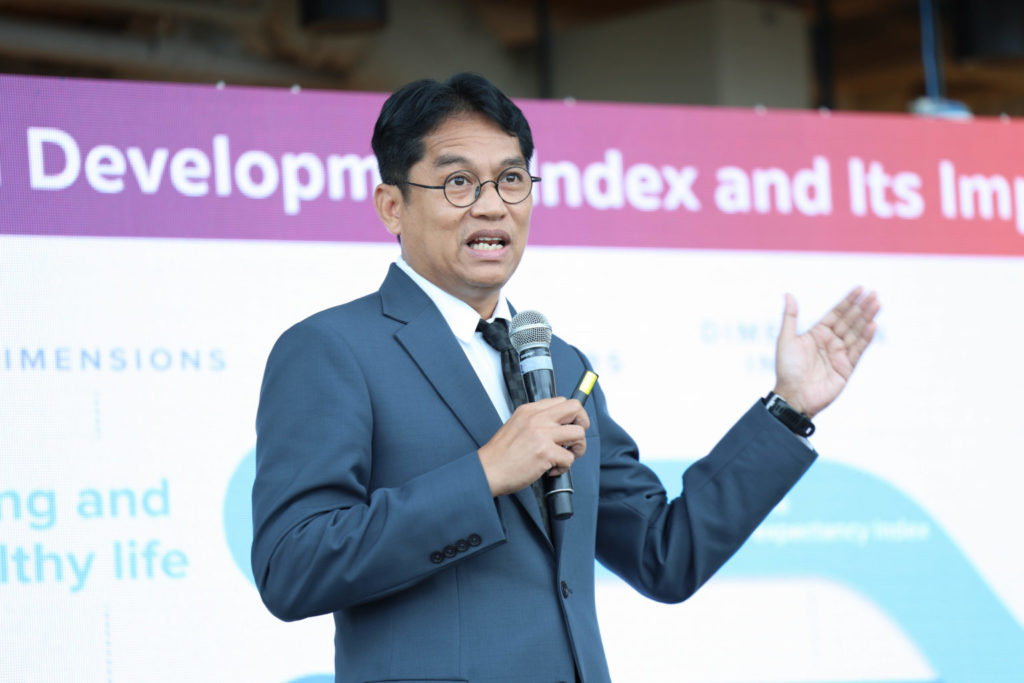
Prof. Dr. Surin Khomfoi, Vice President of NXPO, has outlined a vision for reforming Thailand’s workforce development system to address profound changes in demographics, technology, and the global economy. He noted that Thailand faces a major demographic challenge, with the birth rate remaining below the death rate, resulting in a projected decline in the future workforce even as demand for highly skilled workers continues to rise rapidly.

Prof. Surin emphasized that Thailand’s solution is not to expand the size of its workforce, but to increase labor productivity by upgrading workers’ skills and leveraging technology to enhance the capabilities of people across all age groups.
“According to 2025 statistics, Thailand has a labor force of approximately 40.13 million people, of whom only 4.45 million, or 13.6%, are highly skilled workers. NXPO has set a target of increasing the proportion of highly skilled workers to 25%. In the longer term, we aim to see at least half of Thailand’s workforce classified as highly skilled. This will help increase incomes, improve quality of life, and strengthen the country’s competitiveness,” Prof. Surin said.
Prof. Surin further explained that AI and digital technologies should not be viewed primarily as threats that will displace workers, but as powerful tools for increasing productivity. Younger generations, in particular, can use technology to generate income through multiple occupations, perform diverse roles, and continuously develop their skills. It is therefore essential to establish support systems that enable people to reskill and upskill throughout their lives.
In the education sector, Prof. Surin noted that Thailand’s education system has not failed, but has not yet adapted quickly enough to the rapid pace of technological change. This has contributed to a skills gap between the capabilities learners possess and those demanded by the labor market. Curricula therefore need to become more flexible, accompanied by stronger collaboration among schools, universities, families, and businesses to develop skills that meet the demands of the modern economy.
“To address this challenge, NXPO has developed a high-skilled workforce development platform and established a Skill Mapping mechanism in collaboration with universities. Using AI and Big Data, the platform analyzes global labor-market data to connect learners’ existing skills with those required for future occupations, while identifying skill gaps. This enables individuals, universities, and businesses to plan workforce development in real time. The system also helps universities adjust their curricula to align with labor-market needs, strengthening both hard and soft skills. At the same time, individuals can use the platform to plan their own reskilling and upskilling pathways and identify career paths that best match their capabilities,” Prof. Surin said.
In addition, NXPO conducts a Talent Landscape survey to assess demand for highly skilled personnel across 10 target industries and analyze workforce trends and future employment opportunities. This information can help students and parents understand labor-market trends before selecting faculties and fields of study, encouraging students to pursue disciplines aligned with the country’s future workforce needs.
Prof. Surin also highlighted Skill Bridge, an initiative designed to facilitate the transition of workers from traditional industries into emerging industries. AI can be used to identify groups of workers at risk of job displacement and determine potential pathways into other industries, while tailored training programs can be developed to address specific skill gaps.
For example, workers in the automotive industry whose jobs are associated with internal combustion engines may be affected by technological transitions, while the electronics industry is experiencing rapidly growing demand for workers. An effective Skill Bridge could facilitate the transition of workers into emerging industries, helping reduce unemployment while enabling the workforce to adapt more efficiently to structural changes in the economy.
NXPO has also proposed tax incentives to encourage greater private-sector participation in workforce development. These measures include support for employee training, joint curriculum development with universities, and the employment of workers who have completed reskilling or upskilling programs. The objective is to encourage businesses to invest proactively in human capital rather than address workforce displacement only after unemployment occurs.
Prof. Surin proposed broadening the concept of Lifelong Learning to Long Life Learning to respond to Thailand’s aging society and increasing life expectancy. Older people should have opportunities to continue learning, developing new skills, and working according to their capabilities. This approach reflects practices in many countries where the experience and expertise of older people are recognized as valuable assets for economic development.
NXPO is therefore working with universities nationwide to establish a learning marketplace that brings together high-quality courses from universities on an online platform. This will give people of all ages free access to knowledge and learning opportunities throughout their lives, covering areas such as health, technology, engineering, robotics, and other specialized fields.
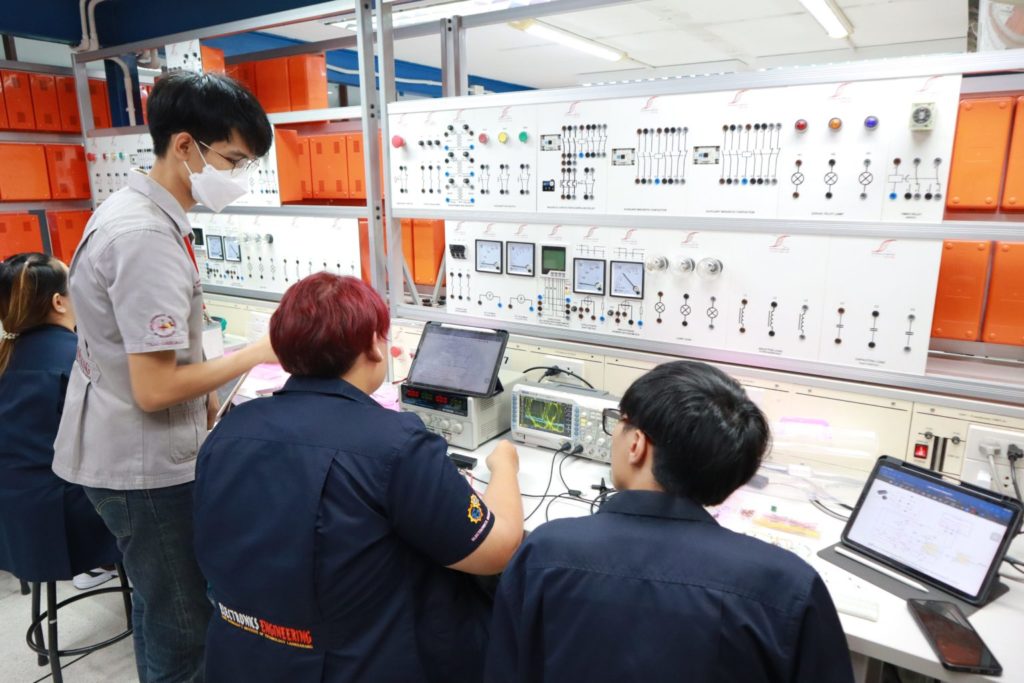
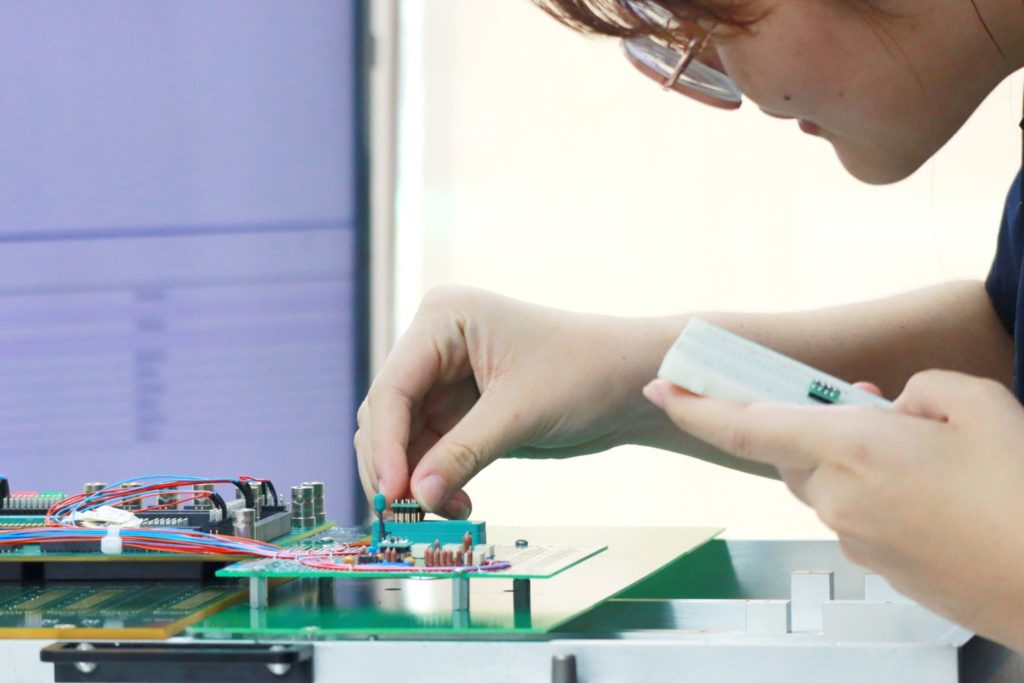
Another important initiative is the Higher Education Sandbox, which brings together networks of experts from multiple universities to jointly develop curricula in fields where Thailand urgently needs to accelerate workforce development. The initiative began with semiconductor programs, with 13 universities currently participating in the network, to accelerate talent development for the semiconductor industry, where Thailand continues to face a significant workforce shortage. The initiative is expected to expand into food, agriculture, and other strategic industries.
In research and development, NXPO conducts policy research and develops recommendations to promote the training of master’s- and doctoral-level researchers in alignment with target industries. The objective is to strengthen the research workforce needed to support technology investment and enable universities to sustain research capacity. In the longer term, research outcomes can be advanced toward patents, technology transfer, and revenue generation through licensing.


At the same time, NXPO is promoting the University Holding Company mechanism, which enables universities to legally co-invest in startups founded by students and faculty members. This mechanism can accelerate the commercialization of research outputs and foster stronger innovation ecosystems within universities.
Prof. Surin also highlighted the “School in the Factory” program, which gives students opportunities to gain practical work experience in industrial establishments from their second or third year of study. Students acquire skills through real-world work situations before returning to the university to further develop their capabilities. This approach creates a stronger and more direct connection between education and the actual needs of industry.

“The ultimate goal of all these efforts is to use higher education, science, research, and innovation as mechanisms to improve people’s quality of life. If Thailand can systematically develop a highly skilled workforce, it will help increase people’s incomes, strengthen the country’s competitiveness, and build a sustainable, innovation-driven economy in the future,” Prof. Surin concluded.