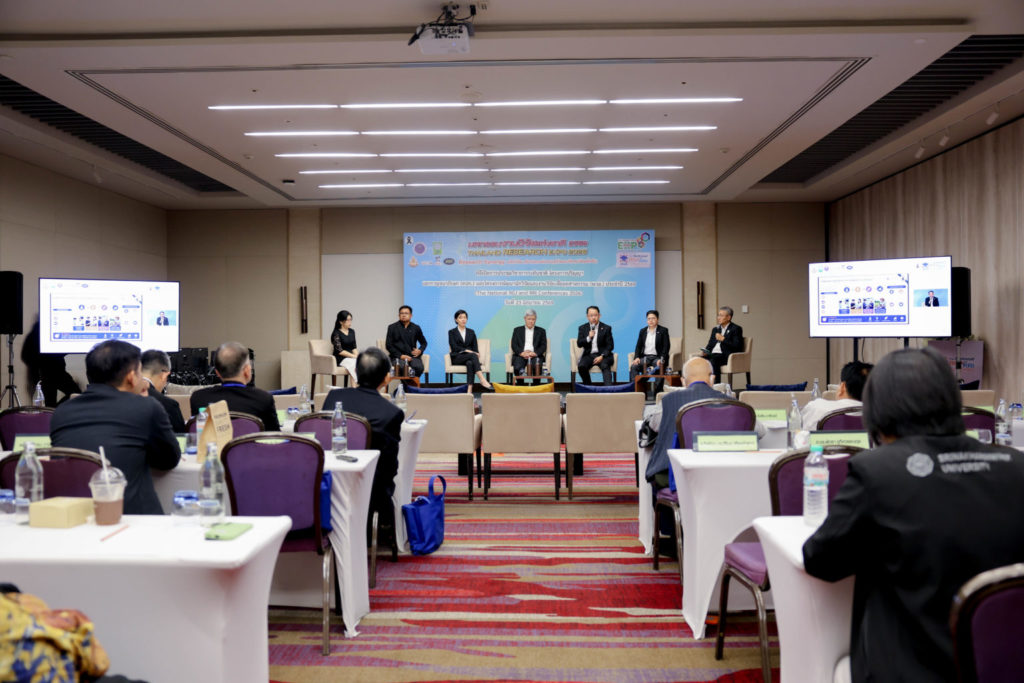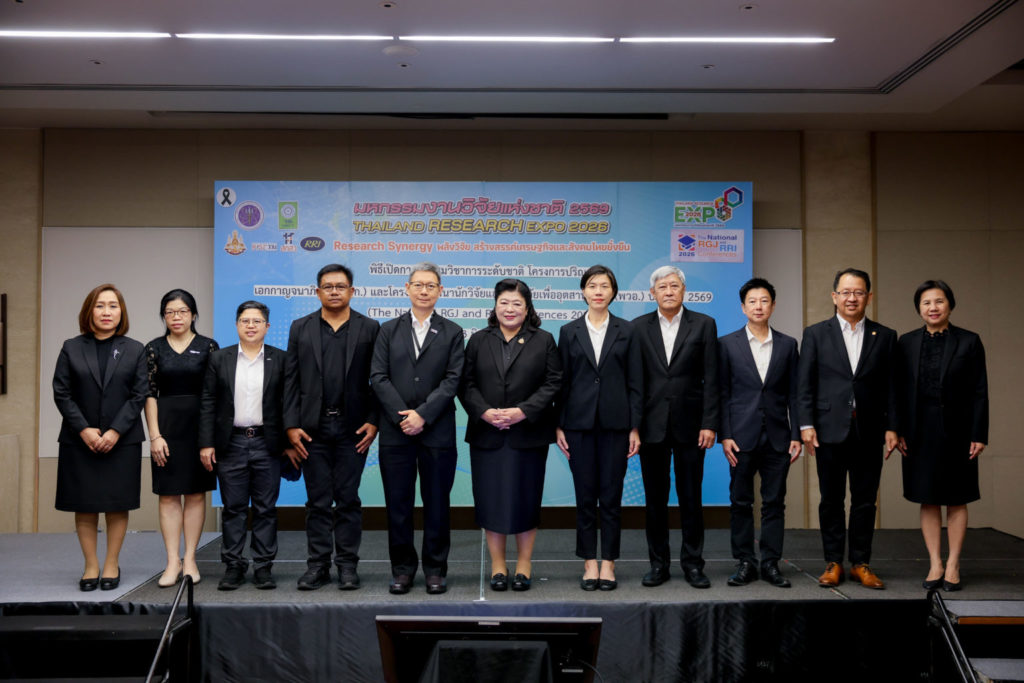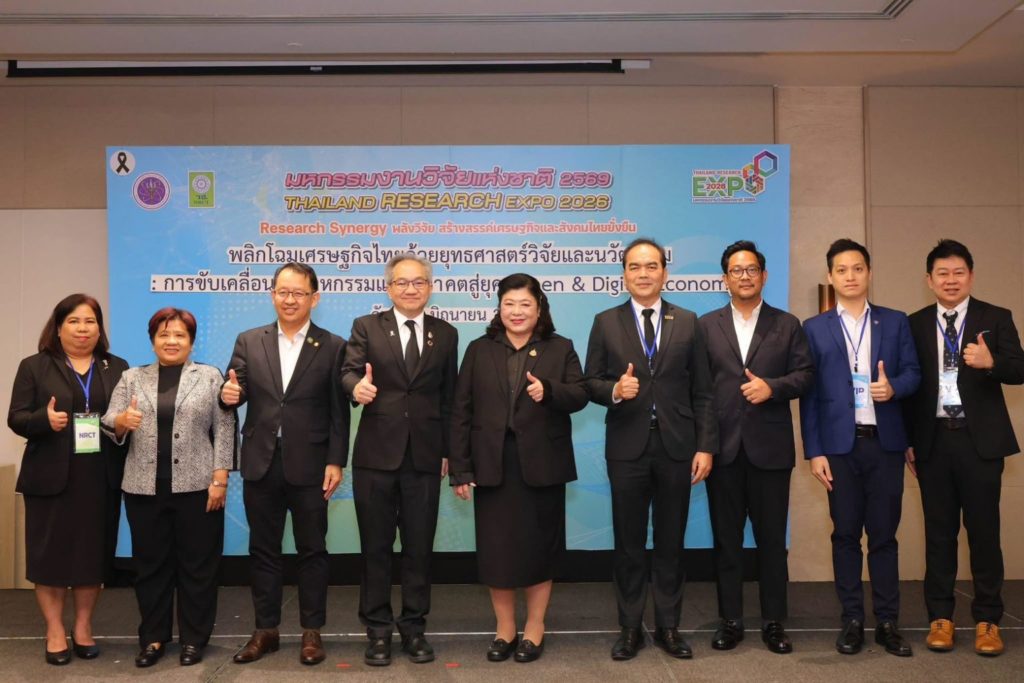
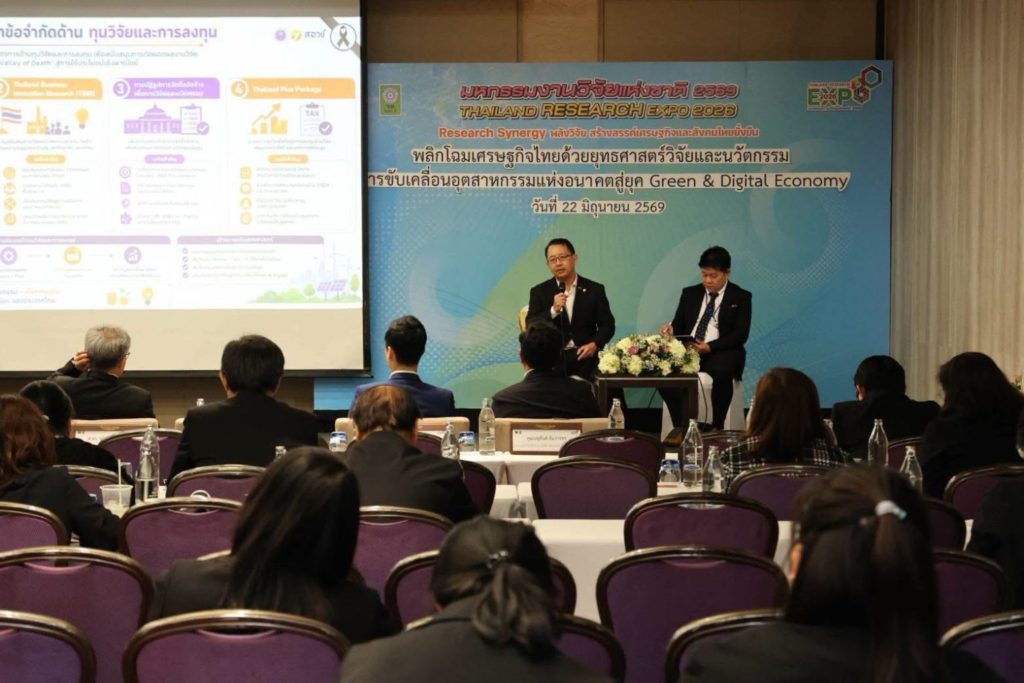
On 22 June 2026, Assoc. Prof. Wongkot Wongsapai, Vice President of NXPO, participated as a speaker in the panel discussion entitled “Transforming Thailand’s Economy through Strategic Research: Driving Future Industries toward a Green and Digital Economy” at Thailand Research Expo 2026, organized by the National Research Council of Thailand (NRCT) at Centara Grand & Bangkok Convention Centre at CentralWorld.
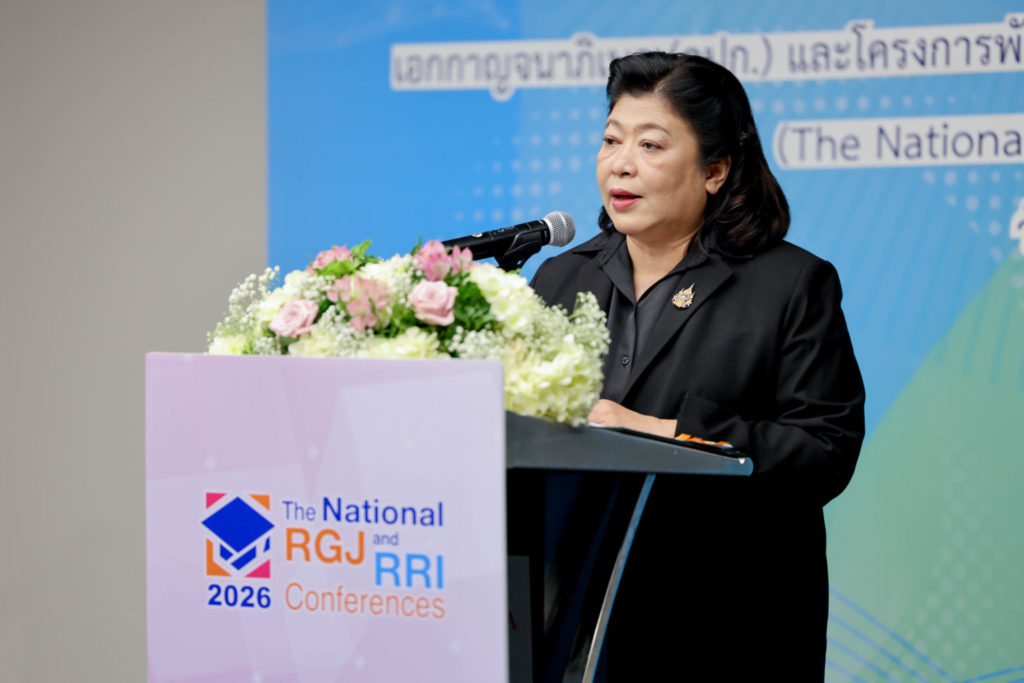
The event was officially opened by Dr. Wiparat De-Ong, Executive Director of NRCT, who emphasized the importance of steering research and innovation toward the Twin Transition—the integration of green and digital transformation—to strengthen Thailand’s competitiveness, support future industries, and foster sustainable economic growth.
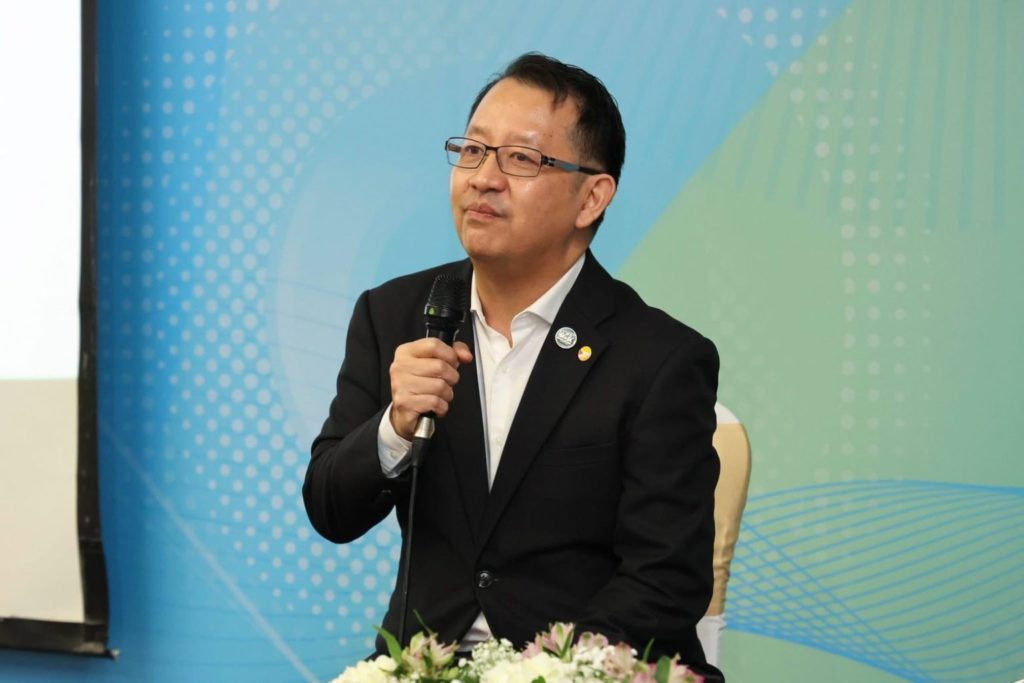
The forum brought together representatives from government agencies, the science and technology community, academia, and industry to exchange perspectives on the future direction of Thailand’s research, innovation, and economic development. The first session, “Research and Innovation Strategy and Future Outlook,” featured Assoc. Prof. Wongkot Wongsapai of NXPO, Prof. Dr. Sukit Limpijumnong of the National Science and Technology Development Agency (NSTDA), and Dr. Kasititorn Pooparadai of the Digital Economy Promotion Agency (depa). The second session, “Challenges Facing Thailand’s Science, Technology, and Economy,” included Mr. Kriengkrai Thiennukul of the Federation of Thai Industries (FTI), Mr. Supachai Koonsad of the Electricity Generating Authority of Thailand (EGAT), and Mr. Narusan Dhanvarjor of InnoSpace (Thailand) Co., Ltd. The discussions were moderated by Assoc. Prof. Dr. Anak Khantachawana of King Mongkut’s University of Technology Thonburi (KMUTT).
During the discussion, Assoc. Prof. Wongkot outlined the strategic direction of Thailand’s higher education, science, research and innovation system and highlighted policy mechanisms aimed at removing legal and funding barriers to accelerate the Twin Transition. He noted that NXPO’s policy priorities focus on three goals: strengthening economic competitiveness, accelerating digital transformation, and supporting the transition toward net-zero emissions. These priorities are complemented by efforts to foster advanced technologies, smart industries, the circular economy, and the development of a highly skilled workforce.
Assoc. Prof. Wongkot also stressed the importance of translating research outcomes into real-world applications and economic value. Key enablers include regulatory reform, increased investment in research and innovation, and stronger technology transfer mechanisms. He further presented policy recommendations for advancing climate action through science, research and innovation during 2027–2032, including the establishment of dedicated research frameworks and programs, the development of high-skilled talent for a low-carbon economy, and the promotion of the Net Zero Campus initiative. The initiative aims to transform universities into living laboratories for greenhouse gas mitigation, climate innovation testbeds, and hubs for talent development.
Assoc. Prof. Wongkot noted that artificial intelligence (AI), the Internet of Things (IoT), and big data analytics are becoming critical tools for climate action and the circular economy. These technologies can enhance environmental monitoring, energy management, disaster preparedness, waste management, and resource efficiency. However, their successful deployment must be accompanied by workforce development, support for entrepreneurs, and preparedness for evolving international trade regulations.
“Removing legal constraints, increasing investment in research and innovation, and strengthening human capital development are critical to translating knowledge into practical solutions, scaling innovations for industrial application, and enabling Thailand’s transition toward a green and digital economy,” Assoc. Prof. Wongkot said.
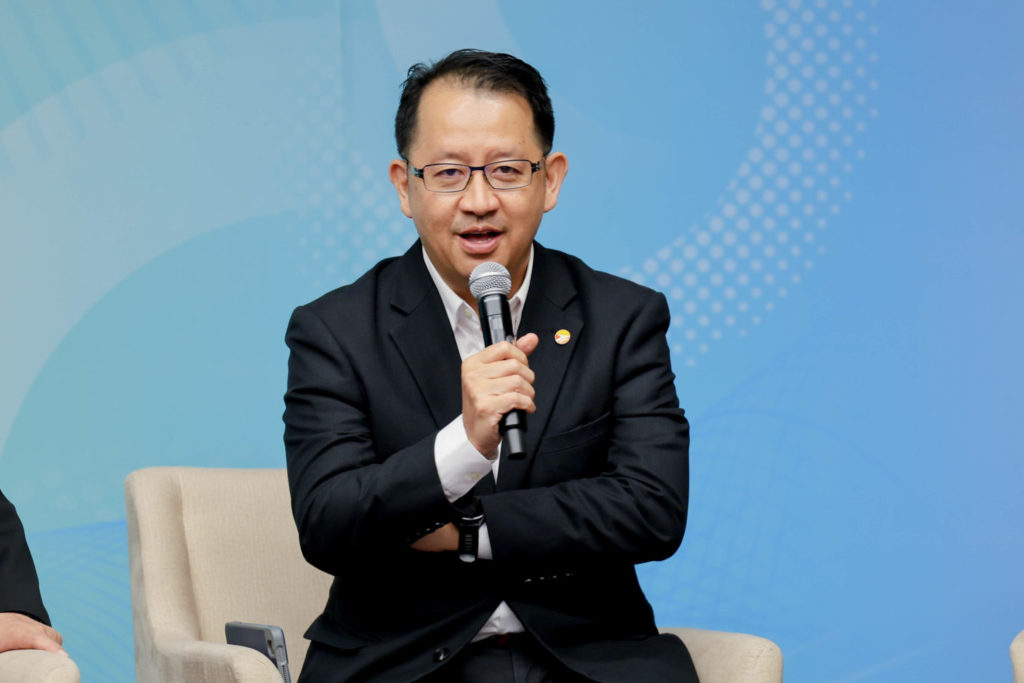
On 23 June 2026, Assoc. Prof. Wongkot participated in the opening ceremony of the National Academic Conference of the Royal Golden Jubilee PhD Program (RGJ-PhD) and the Research and Researchers for Industry (RRi) Program, held as part of Thailand Research Expo 2026. He joined a panel discussion entitled “Research to Utilization: Unlocking Thai Potential through Science, Research and Innovation,” alongside distinguished experts: 1) Dr. Krithpaka Boonfueng, Executive Director of the National Innovation Agency (NIA); 2) Assoc. Prof. Dr. Peeradet Tongumpai, Committee Member of the Research and Innovation Promotion Board and President of Muban Chombueng Rajabhat University Council; 3) Assoc. Prof. Dr. Ganda Boonsothonsatit, Director of the Program Management Unit for Competitiveness; 4) Dr. Ek-Anong Tangrukwaraskul, Director of Program Development, Technology and Innovation-Based Enterprise Development (TED) Fund; and 5) Dr. Namchoke Somapa, Chief Executive Officer of InnoZus Co., Ltd. The discussion was moderated by Mr. Ekapong Musikacharoen, Director of Division of Research and Innovation Funding Management 3 at NRCT.
In his presentation, Assoc. Prof. Wongkot highlighted key policy instruments and legal frameworks jointly advanced by NXPO and agencies under MHESI to strengthen Thailand’s research and innovation ecosystem. These include the Thailand Research and Innovation Utilization Promotion Act B.E. 2564 (2021), which facilitates ownership and commercialization of research outputs; the promotion of University Holding Companies (UHCs), enabling universities to bring research and innovation to market; and tax incentive measures under the Thailand Plus Package to support the recruitment and development of highly skilled personnel. Together, these measures seek to create an enabling environment where research outcomes can be effectively translated into innovations that generate economic and social value.
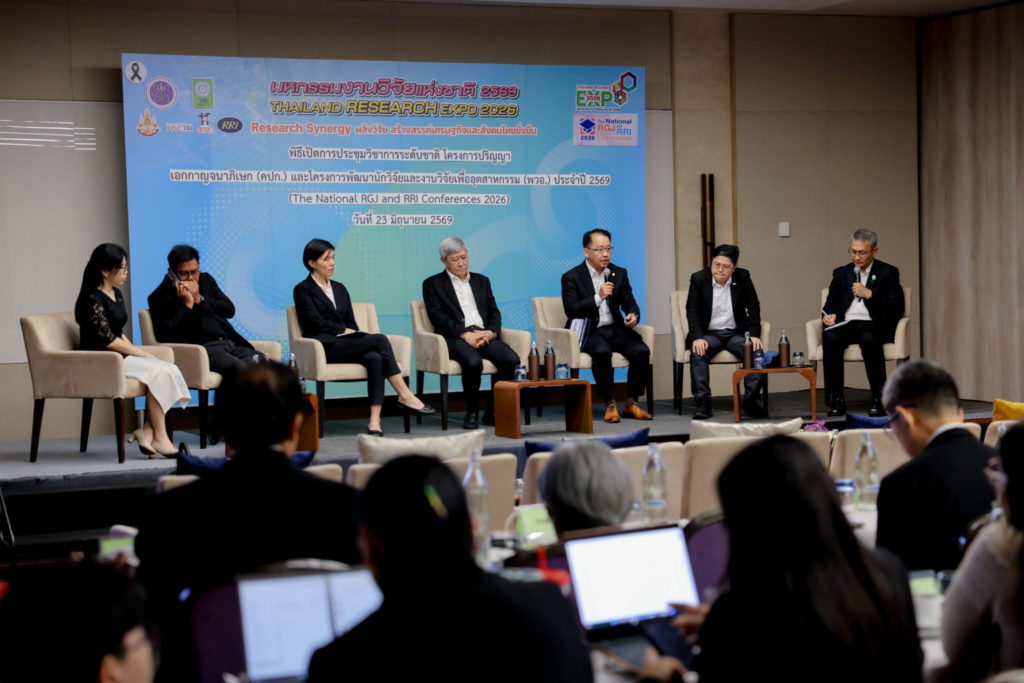
“Unlocking research is not solely the responsibility of researchers. It requires collaboration across the entire science, research and innovation ecosystem to transform knowledge into innovations that create economic value and contribute to the sustainable development of Thai society,” Assoc. Prof. Wongkot concluded.