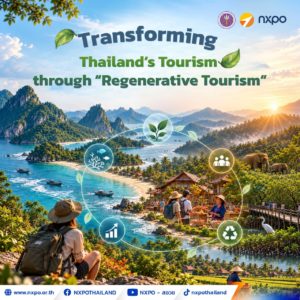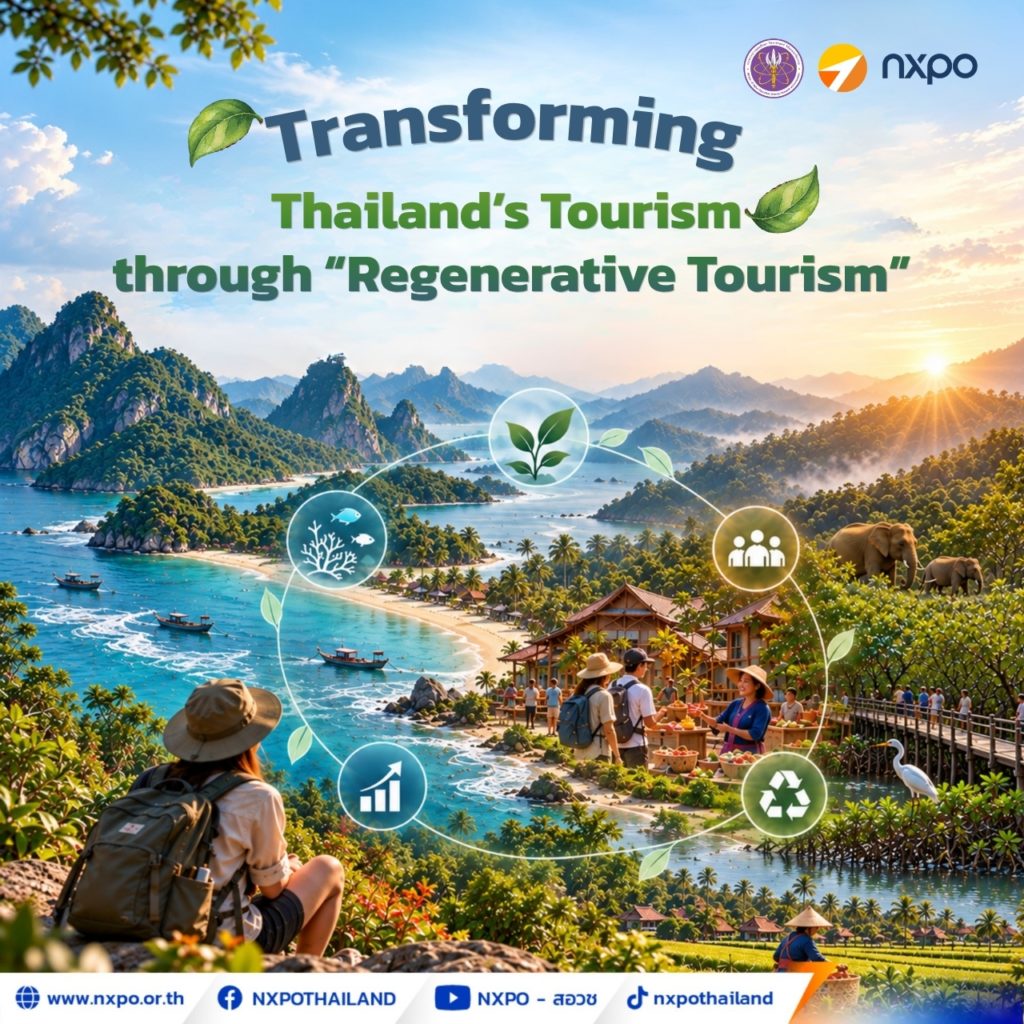
Amid growing challenges, including the degradation of natural resources and the erosion of traditional ways of life and cultural heritage, many local destinations are becoming increasingly vulnerable. Thailand’s tourism industry must therefore look beyond conventional conservation-based tourism and embrace a new approach: “Regenerative Tourism.” This approach focuses on restoring and enhancing ecosystems and revitalizing community ways of life, while positioning Thailand as a “Meaningful & High Value Destination.”
Regenerative Tourism represents a new paradigm in tourism management that views a destination as a “living system.” Unlike conventional tourism, which often prioritizes visitor numbers and economic returns, this approach shifts the focus from “quantity” to “value creation.” Rather than simply minimizing negative impacts, it seeks to generate positive outcomes that foster balance and shared growth across ecosystems, society, and the economy. Tourists, in turn, become active participants in co-creating and contributing to the destinations they visit.
This concept aligns with emerging global priorities, including increasing the value generated by tourism and conserving biodiversity. It also supports the Nature Positive policy promoted by the Ministry of Natural Resources and Environment and the Biodiversity-Based Economy Development Office (BEDO). Furthermore, it is in line with global trends such as biodiversity credits, which are gaining recognition alongside carbon credits, and the growing emphasis on natural capital and the ecosystem services it provides to support economic activity.
To advance Regenerative Tourism, NXPO and the Designated Areas for Sustainable Tourism Administration (DASTA) have established a partnership through a memorandum of understanding (MOU). NXPO contributes its expertise in higher education, science, research, and innovation to support policy design, curriculum development, and the development of science-based assessment tools. It also helps bring research and innovation into local areas through four key areas of collaboration:
- Developing standards and assessment criteria: Establishing standards and assessment criteria tailored to Thailand’s local context and aligned with international sustainable tourism standards set by the Global Sustainable Tourism Council (GSTC).
- Transferring knowledge and innovation to pilot areas: Applying tourism-related knowledge and innovations in DASTA’s designated areas for sustainable tourism. These include the Koh Chang Archipelago and Vicinity Designated Area, the Songkhla Lagoon Designated Area, the Chiang Rai Designated Area, and the Khung Bangkachao Designated Area.
- Translating policy into local action: Mobilizing resources and mechanisms within the higher education, science, research, and innovation system to develop high-value tourism services that generate positive impacts. This also involves integrating the concept into national plans and promoting relevant initiatives, such as the STEMPlus Platform, which offers tax incentives for human resource development.
- Building partnerships and networks: Strengthening collaboration and developing networks at regional and international levels to extend the approach to other tourist destinations and facilitate the exchange of knowledge and best practices.
Advancing Regenerative Tourism can generate tangible benefits for Thailand across three key dimensions. Economically, it can foster a quality-driven, knowledge-based economy, promote more equitable income distribution, and strengthen local economies. Tourists and business operators will also shift from being resource users to becoming “co-creators” and “contributors to regeneration,” actively participating in the care and protection of tourist destinations. Environmentally, the approach can help restore biodiversity and mangrove ecosystems, while promoting circular waste management and a Zero Waste approach to give back to nature. At the community and cultural level, it can improve local well-being, strengthen community participation in decision-making, and revitalize traditional ways of life and cultural heritage.
Scaling up Regenerative Tourism nationwide will require building on the successful models and lessons learned from pilot areas and incorporating them into national policies and plans. Partnerships across all sectors must also be strengthened, alongside the development of standards that meet international benchmarks while reflecting Thailand’s specific context. Achieving these goals would mark a major turning point for Thailand’s tourism industry, helping transform the country’s tourism model and advance an economy that grows in harmony with nature.