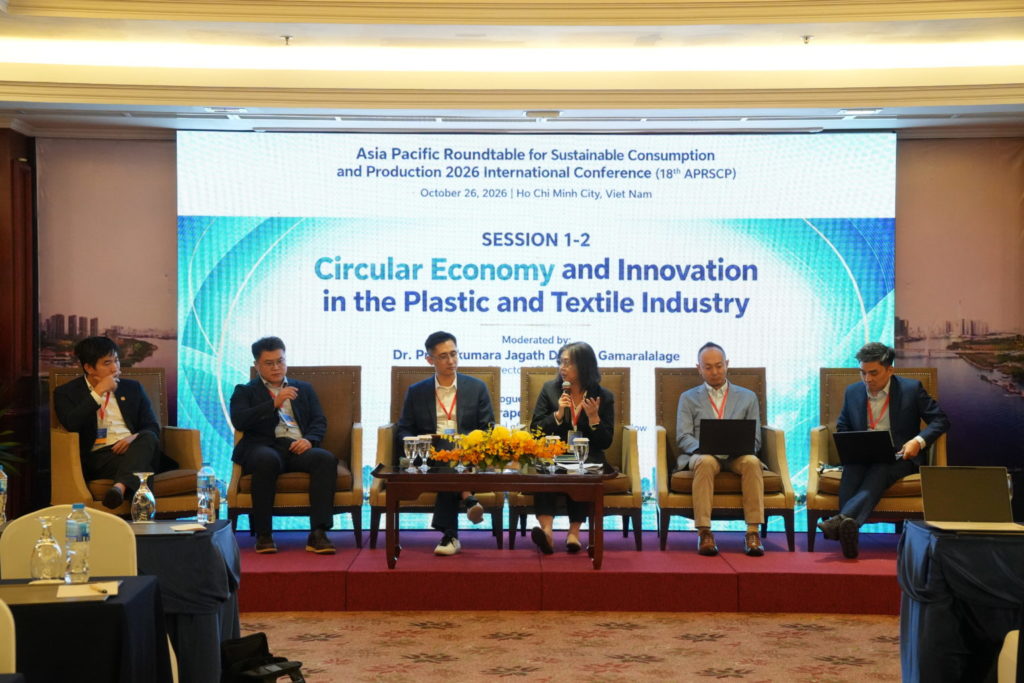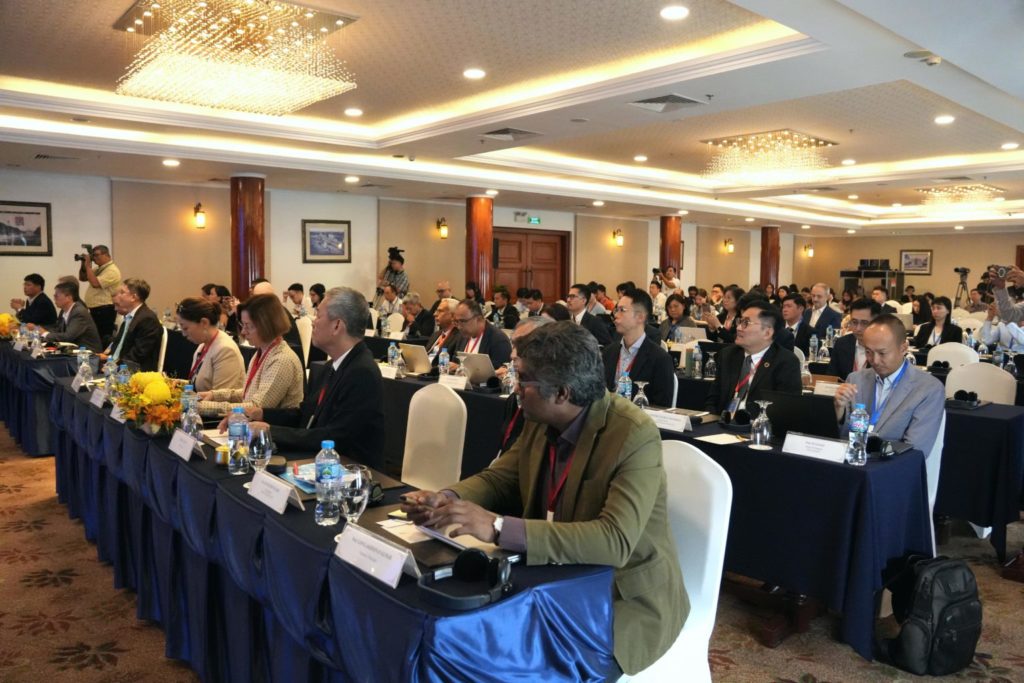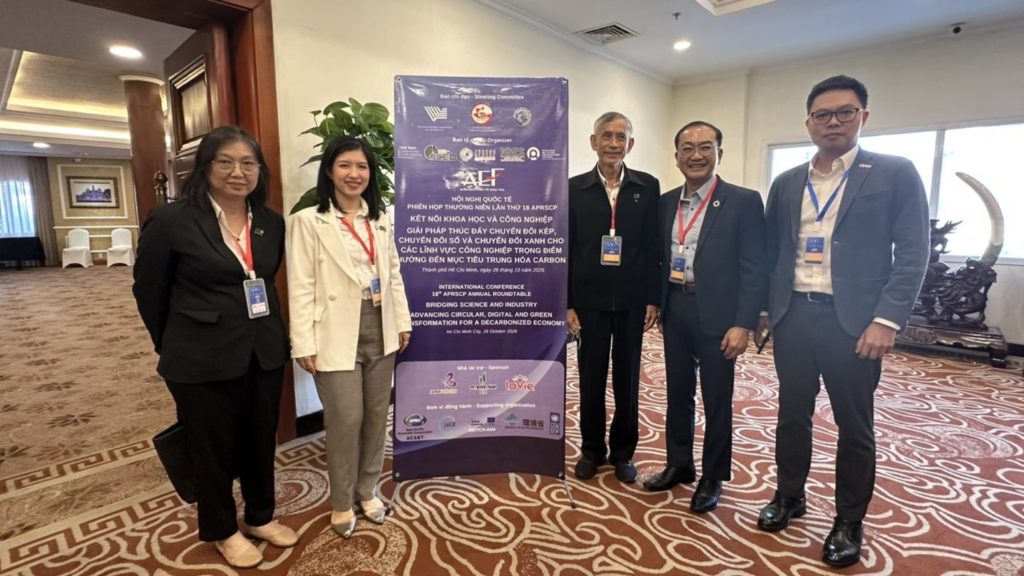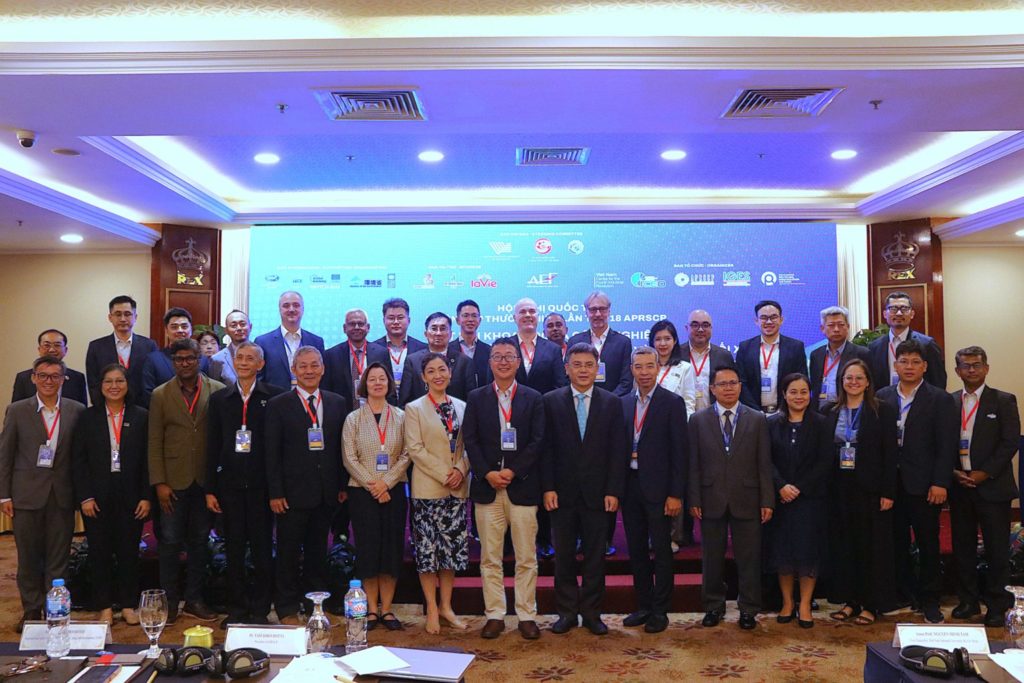
On 26 October 2026, Dr. Saravanee Singtong, Director of the Sustainability Policy Division at NXPO, participated in the 18th Asia Pacific Roundtable for Sustainable Consumption and Production (APRSCP 2026), held in Ho Chi Minh City, Viet Nam. The conference was organized by the Institute for Circular Economy Development (ICED), the Asia-Pacific Roundtable for Sustainable Consumption and Production (APRSCP), Viet Nam’s Ministry of Industry and Trade (MOIT), Vietnam National University Ho Chi Minh City (VNU-HCM), the Viet Nam Centre for the Fourth Industrial Revolution, SWITCH-Asia, the Institute for Global Environmental Strategies (IGES), and the Thailand Sustainable Consumption and Production Network.
The conference brought together international experts, government officials, and business representatives from ASEAN member states to exchange knowledge and perspectives on emerging technologies that can reduce carbon emissions, advance the circular economy, and generate positive impacts on nature, while addressing social and economic considerations. Discussions centered on three key areas: (1) fostering social innovation through collaboration among industry, academia, and government; (2) identifying priorities for sustainable consumption and production in the post-Sustainable Development Goals (SDGs) era; and (3) defining priority areas for cooperation between ASEAN and international partners.
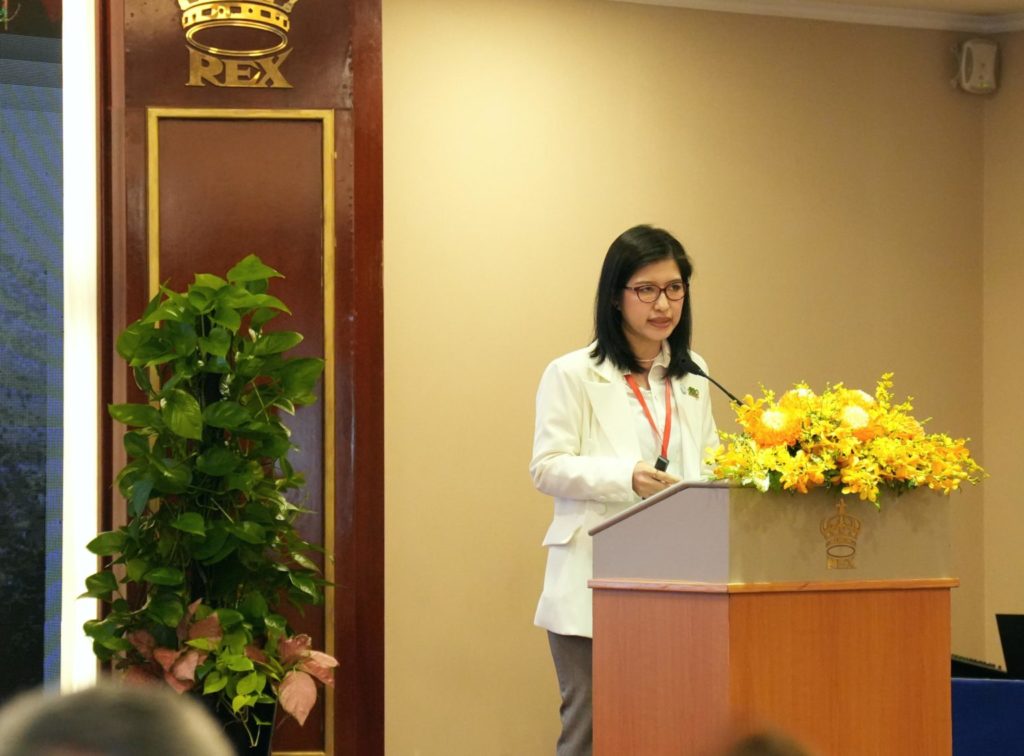
During the conference, Dr. Saravanee shared Thailand’s experience in advancing the low-carbon and circular economies. She highlighted that developing green innovations requires the involvement of diverse stakeholders, including government agencies, researchers, entrepreneurs, investors, businesses, incubators, and skilled workers. While each group plays a distinct role, effective collaboration and strong connections among them are essential to driving innovation. Thailand is applying the concept of Mission-Oriented Innovation Policy (MOIP) to guide policy directions and establish a strategic framework for higher education, science, research, and innovation for 2028–2032.
NXPO has also introduced several initiatives to support the transition to a green economy. These interventions follow an approach that begins with identifying national challenges and building partnerships, followed by developing practical measures that can be implemented in the short term and deliver significant impact. Lessons learned from these initiatives are then incorporated into subsequent policy development. One example is a joint initiative involving NXPO, the Thailand Institute of Scientific and Technological Research (TISTR), and Saraburi Province to strengthen the Tan Diao Model, a waste management and upcycling initiative under the Saraburi Sandbox. The project also involves developing a digital platform to track waste flows, demonstrate the value of material exchanges among stakeholders, and monitor reductions in greenhouse gas emissions. The platform is expected to enhance data transparency and enable traceability of revenue generated through material exchanges, as well as materials recovered for remanufacturing. Another initiative highlighted at the conference was the development of the Green Enterprises Indicator (GEI) by NXPO in collaboration with the Thai Industrial Standards Institute (TISI), the Management System Certification Institute (Thailand) (MASCI), and the Federation of Thai Industries (FTI). The indicators are designed to facilitate collaboration between large companies and small and medium-sized enterprises (SMEs) across supply chains, making the transition to a green economy more accessible, measurable, and financially viable for businesses.
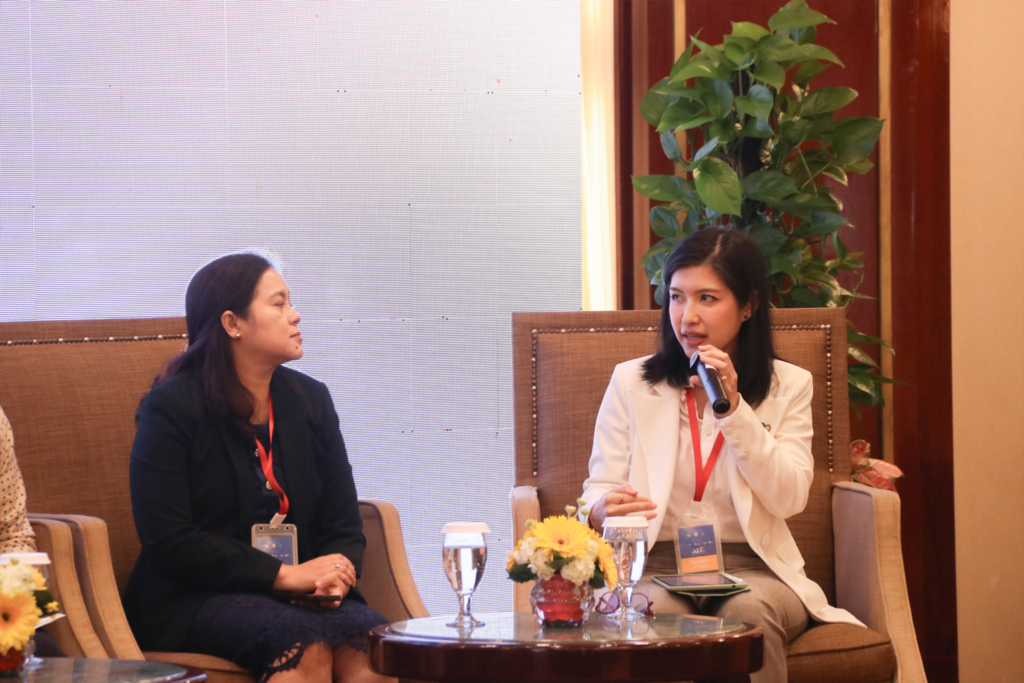
Dr. Saravanee also emphasized that international collaboration is essential to strengthening national innovation capabilities and fostering joint technology development.
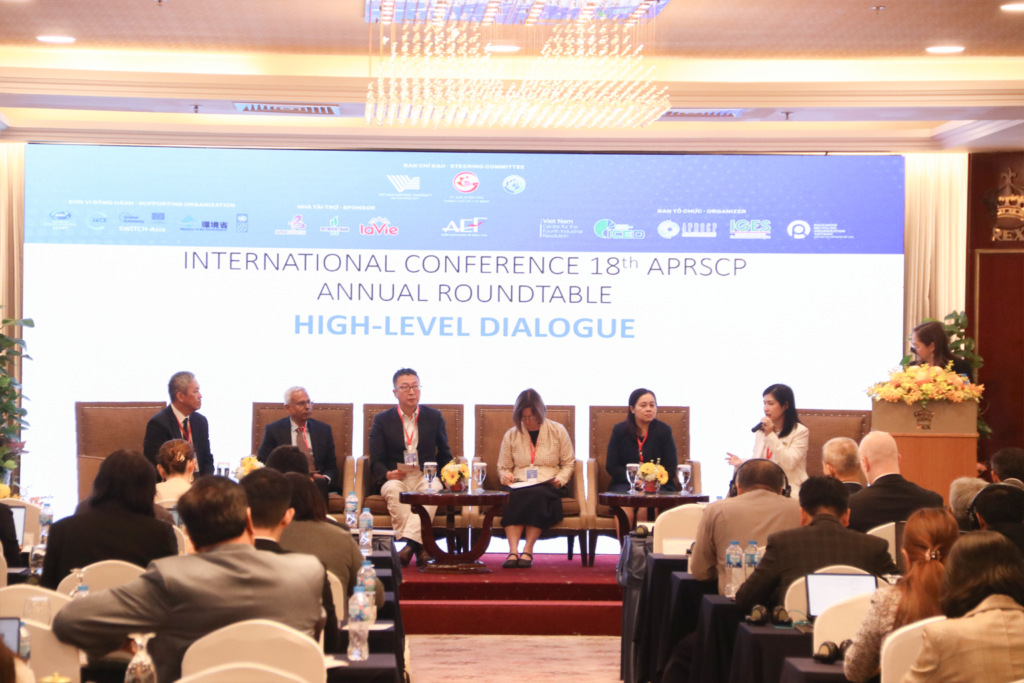
She further explained the complementary roles of different components within the innovation system: policy provides direction, science generates evidence, technology delivers solutions, businesses create markets, and finance supports investment. However, the national innovation system is what connects these components and translates shared commitments into concrete action.
In this context, NXPO serves as a connecting mechanism that brings together policy, science, technology, business, and finance through shared missions, local pilot projects, the development of green enterprise indicators, and international partnerships. These efforts aim to translate national commitments into tangible progress toward a circular and low-carbon economy in Thailand.