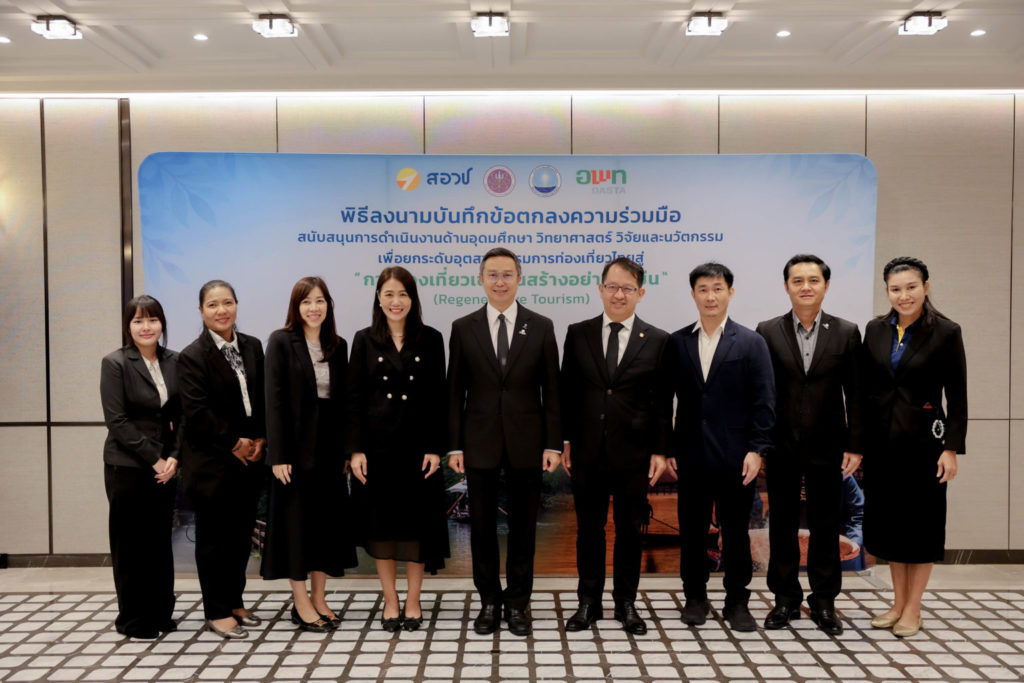
On 11 September 2026, NXPO and the Designated Areas for Sustainable Tourism Administration (DASTA) signed a Memorandum of Understanding (MoU) to leverage higher education, science, research and innovation to transform Thailand’s tourism industry toward “Regenerative Tourism.” The signing ceremony was presided over by Dr. Panpermsak Aruni, Deputy Permanent Secretary of the Ministry of Higher Education, Science, Research and Innovation (MHESI), and Ms. Wanida Phansa-ard, Deputy Permanent Secretary of the Ministry of Tourism and Sports (MOTS). The MoU was signed by Dr. Surachai Sathitkunarat, President of NXPO, and Mr. Siripakorn Cheawsamoot, Director-General of DASTA.
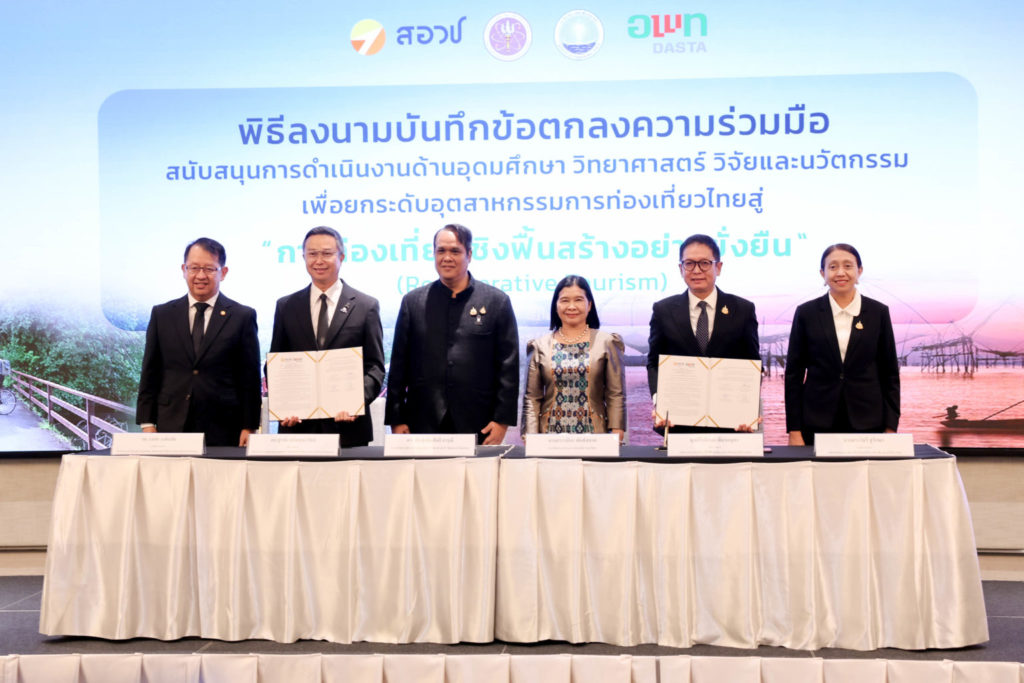
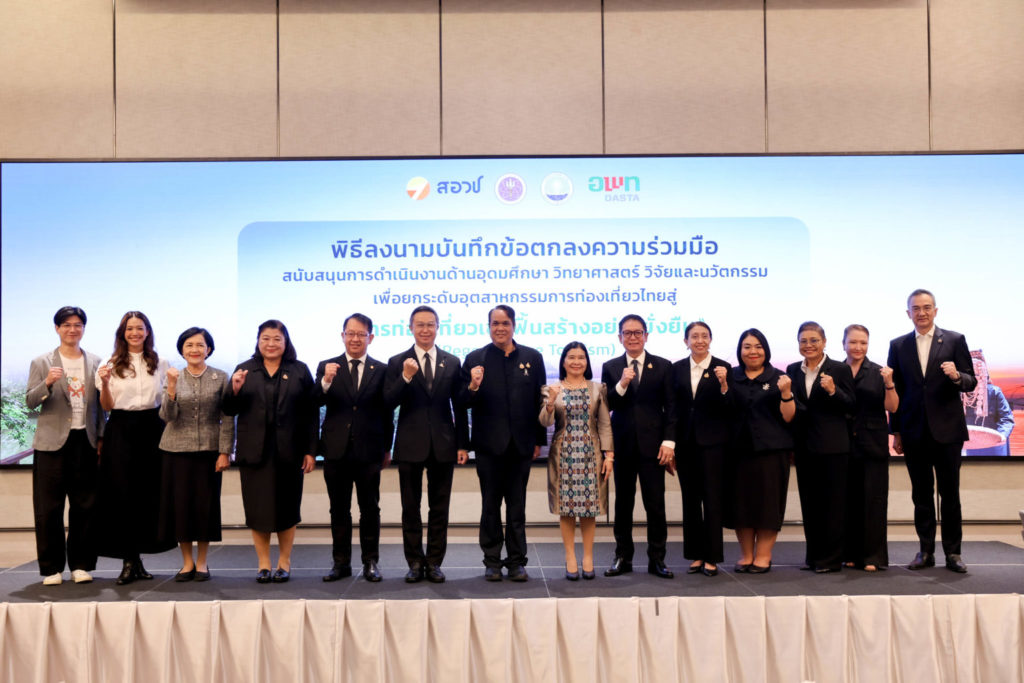
The collaboration aims to jointly develop and advance Thailand’s regenerative tourism policy by integrating research, knowledge and innovation with area-based implementation mechanisms and supporting the development of local communities and stakeholders in DASTA’s designated areas. The partners will also work together to establish standards and measurement approaches aligned with international standards.
The collaboration also represents an important step in positioning Thailand as a “Meaningful & High Value Destination.” Regenerative tourism will be applied to restore and enhance ecosystems and community ways of life while shaping an important strategic direction for the country’s tourism sector. The partnership between DASTA and NXPO will serve as a key mechanism for applying knowledge in line with MHESI’s “Future Link” concept, while strengthening communities and tourism businesses and building a strong and sustainable grassroots economy.
The event also featured a special talk titled “ECOLIFE in C and Sustainable Regenerative Tourism” by Ms. Siraphan Wattanajinda and Mr. Piphat Apiraktanakorn, founders of ECOLIFE. They discussed the application of the ECOLIFE Platform as a tool for promoting sustainability engagement and connecting tourists, businesses and communities through activities that encourage behavioral change and generate positive impacts in local areas. This approach aligns with regenerative tourism, which seeks to ensure that tourism contributes to the restoration and enhancement of ecosystems and community ways of life.
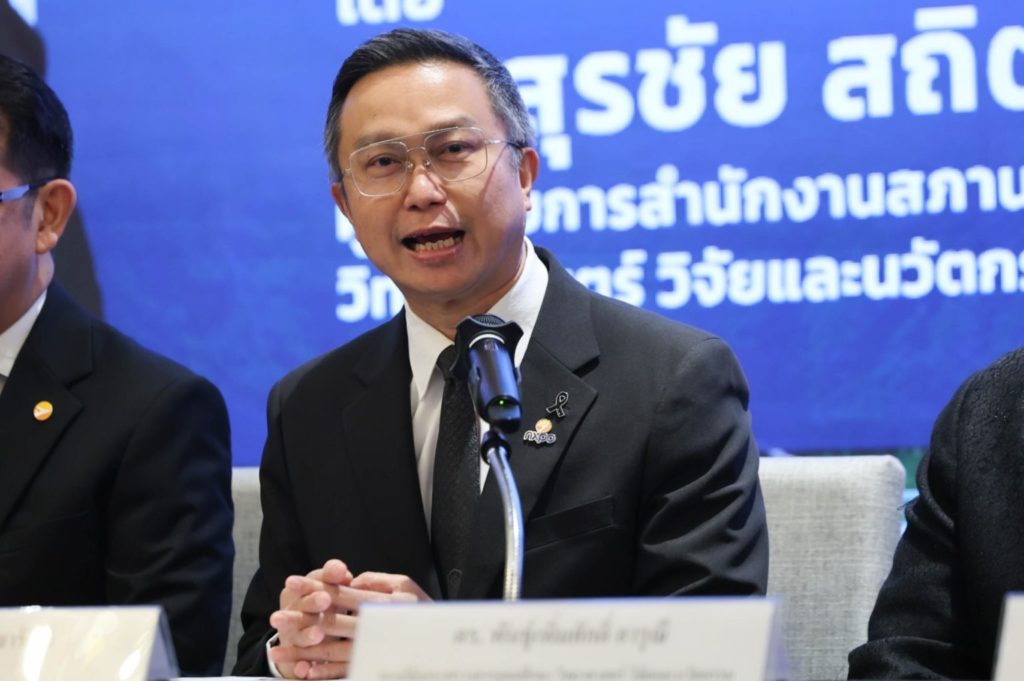
Dr. Surachai Sathitkunarat said the collaboration represents an important step toward transforming Thailand’s tourism sector, with NXPO playing an active role in co-developing policies to advance tourism through MHESI’s mechanisms. These mechanisms will connect knowledge, research and innovation with practical applications in DASTA’s designated areas, while engaging academic networks and relevant organizations to develop science-based curricula and measurement tools for generating new tourism knowledge and innovations. The outcomes of the collaboration are expected to support the development of tourism area prototypes that integrate natural resource conservation, community participation and income generation through environmentally friendly tourism activities. Knowledge and findings from these areas will also inform policies and practices suited to Thailand’s context, while enhancing the economic, social and environmental value of tourism destinations and supporting long-term benefits for local communities.
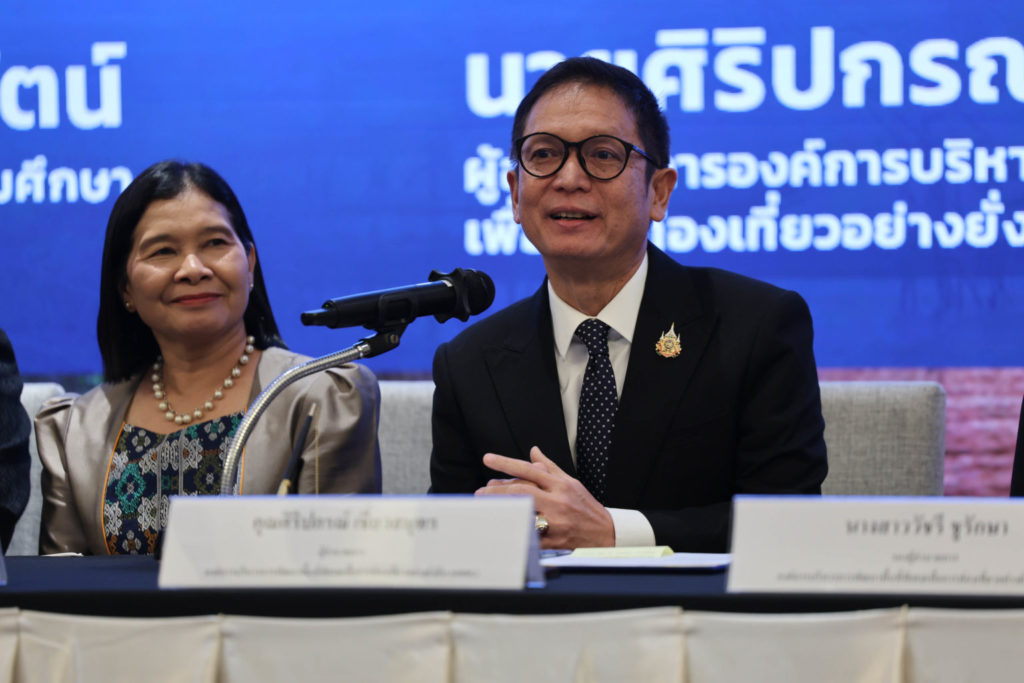
Mr. Siripakorn Cheawsamoot said the partnership marks an important step in establishing strategic cooperation among network partners and integrating science and knowledge to advance regenerative tourism in Thailand. Beyond creating economic value, the initiative will help establish directions and mechanisms for restoring natural resources, the environment, culture, ways of life, biodiversity and community well-being. These efforts will provide an important foundation for Thailand’s future economic development and natural resource restoration. Four areas have been proposed as pilot “Living Labs”: the Koh Chang Archipelago and Vicinity Designated Area, the Songkhla Lagoon Designated Area, the Chiang Rai Designated Area, and the Khung Bangkachao Designated Area.
Under the MoU, NXPO and DASTA have identified four key areas of cooperation:
- Policy development, design and implementation: Supporting the transition from resource conservation toward the restoration of natural, social and cultural ecosystems, using higher education, science, research and innovation as key drivers. This includes developing high-value regenerative tourism, products and services that meet the needs of quality tourists, and incorporating successful outcomes and concepts into national policies and strategies.
- Structural and policy implementation: Coordinating cooperation and developing networks among higher education institutions, research organizations, government agencies and the private sector to advance evidence-based structural policies. This includes selecting and developing designated areas as “Regenerative Tourism Labs” to pilot tourism models suited to local contexts and developing Nature-based Solutions (NbS) frameworks.
- Development of tools, ecosystems and measurement systems: Developing science-based standards for assessing regenerative impacts in alignment with global standards, such as the Global Sustainable Tourism Council (GSTC) criteria.
- Capacity building: Developing the capabilities of personnel, tourism businesses, academics and communities through academic programs and knowledge transfer, with the aim of strengthening human capital and preparing stakeholders to adapt to a new model of the tourism economy.