On 27 July 2026, Prof. Dr. Yodchanan Wongsawat, Deputy Prime Minister and Minister of Higher Education, Science, Research and Innovation (MHESI), chaired the NXPO Executive Board Meeting. Dr. Surachai Sathitkunarat, President of NXPO, served as Board Member and Secretary to the meeting.
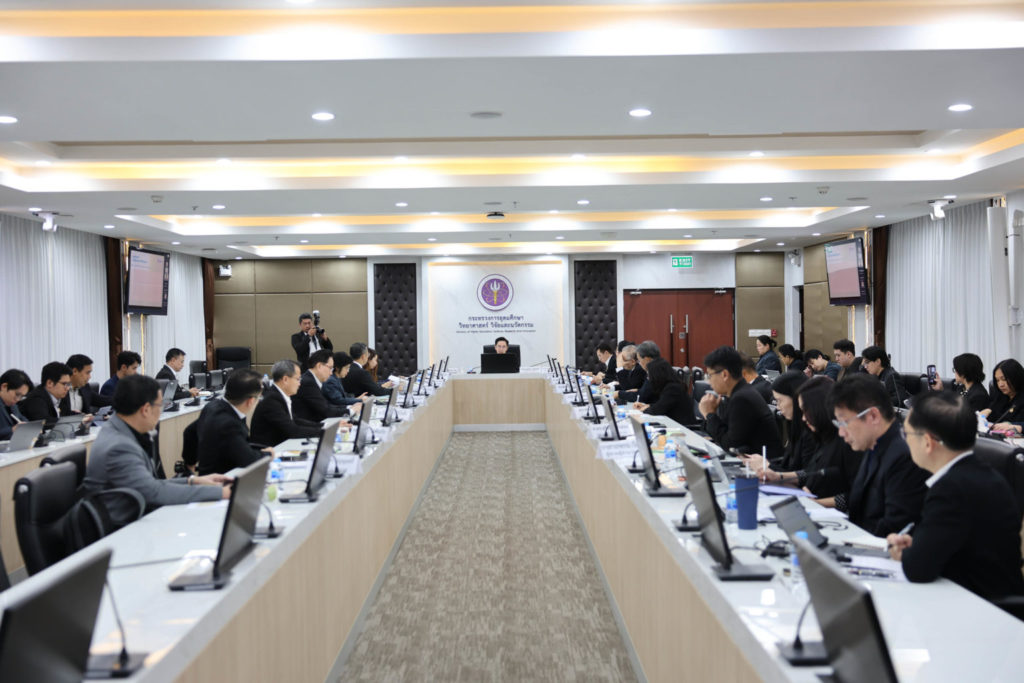
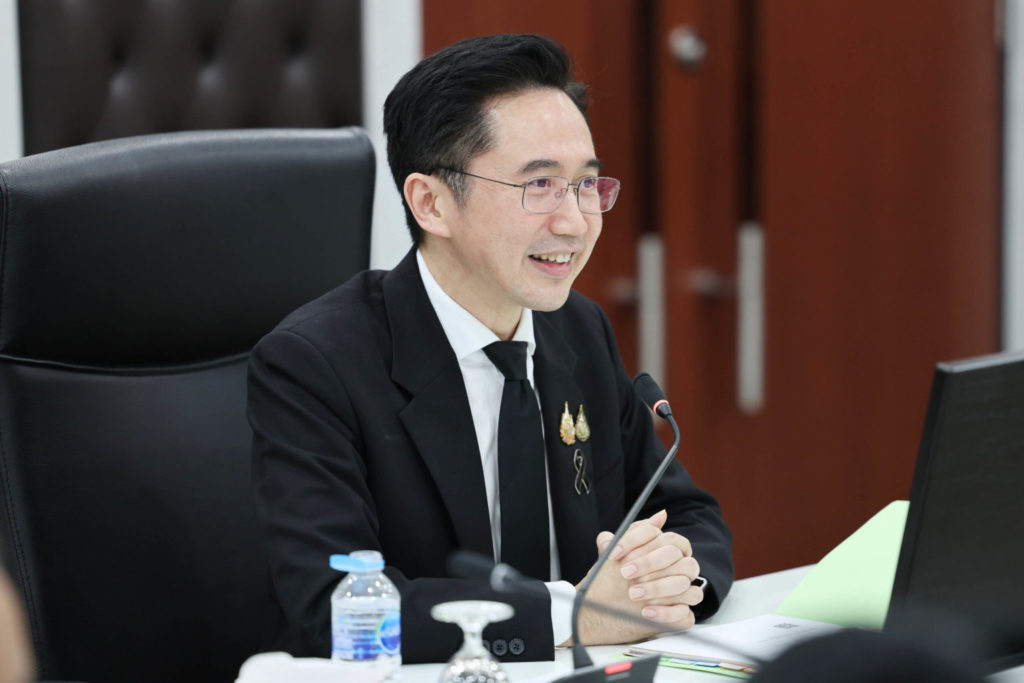
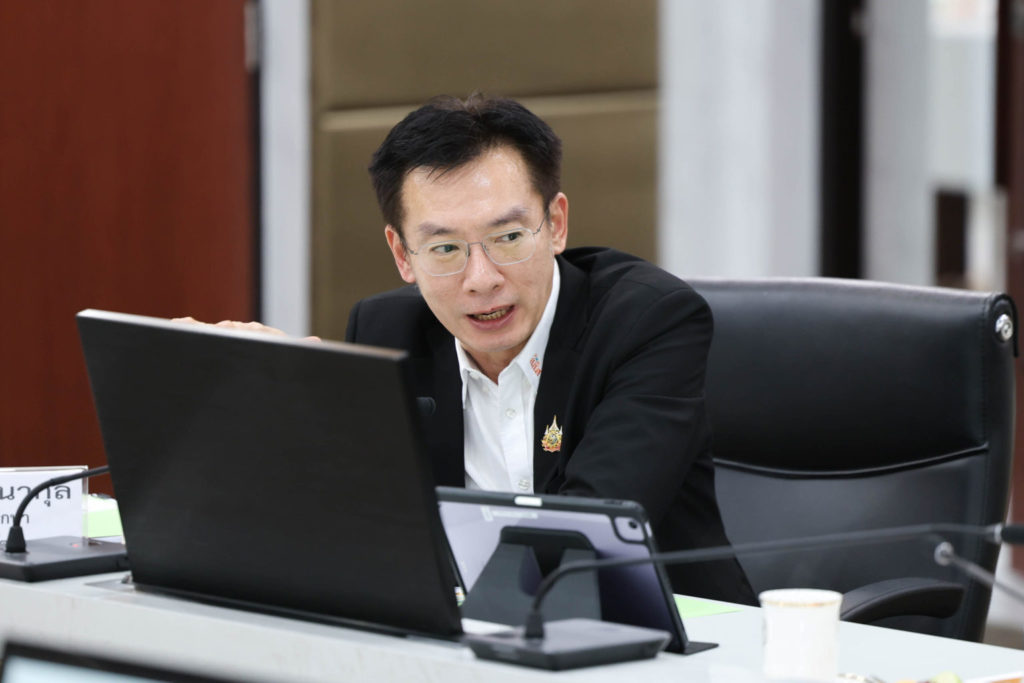
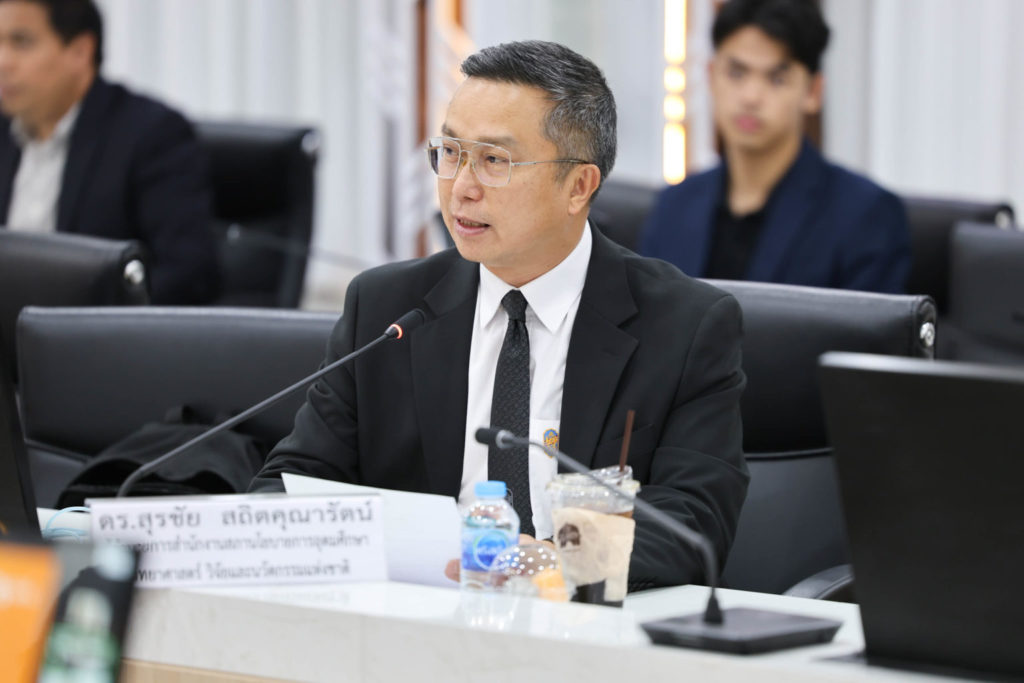
Minister Yodchanan announced the government’s key policy for advancing human capital development under the Thailand2 initiative, which aims to establish a lifelong learning ecosystem and equip the Thai workforce with the skills needed to thrive in a rapidly changing world. The initiative promotes integrated collaboration among government agencies, educational institutions, and industry so that workforce development becomes a national agenda. He also tasked NXPO with accelerating the development of skills intelligence systems, workforce analytics, and policy support tools to strengthen Thailand’s future industries.

In line with this policy, the Board reviewed the workforce development strategy for Thailand’s semiconductor and advanced electronics industry. Prof. Dr. Surin Khomfoi, Vice President of NXPO, presented a framework for developing both the semiconductor workforce and the industry ecosystem to enhance Thailand’s competitiveness and attract investment in high-technology industries. He outlined Thailand’s strategic roadmap for the semiconductor and advanced electronics sector together with the current investment landscape. Based on technological capabilities, investment requirements, and opportunities for economic value creation, Thailand has strong potential in several strategic segments. These include IC design, which offers high value-added with relatively low investment requirements; power semiconductor chips, photonic chips, and sensor chips, where no dominant global players have yet emerged and market demand continues to grow; and PCB and PCBA, where Thailand is already internationally recognized as a major manufacturing and assembly base for electronic components.
The presentation also highlighted that participation in global value chains has increased economic value while also exposing countries to greater external risks. Strengthening ASEAN integration is therefore essential to enhance the region’s bargaining power and resilience. Thailand is steadily moving towards higher value-added activities within the semiconductor value chain but must continue strengthening its technological capabilities while diversifying associated risks.
On the international front, the presentation highlighted NXPO’s participation in the 3rd Regional Workshop on Developing the ASEAN Semiconductor Roadmap: Enabling Pathways for Strategic Investment, held in the Philippines, where Thailand presented recommendations to support ASEAN’s collaborative roadmap. The recommendations called for clearer regional targets, the inclusion of photonics and printed circuit boards (PCB) in the roadmap, and the establishment of a regional platform for developing and exchanging highly skilled talent alongside joint research programs. Thailand also proposed developing a Talent Observatory, establishing a regional Skills Framework, and expanding the Thailand Skill Bridge initiative to ensure that workforce competencies are aligned with industry demand.
MHESI has also announced the Siam Silica Framework, a strategic initiative launched during its mission to the Netherlands and Belgium to strengthen Thailand’s semiconductor ecosystem. The framework focuses on five strategic areas—Photonics FAB, Advanced Packaging, Silicon Design, Quantum Photonics, and Power Devices—while advancing workforce development, research and innovation, international partnerships, and investment promotion. The initiative aims to position Thailand as a regional hub for the semiconductor and advanced electronics industry.
The Siam Silica Framework estimates a demand for 152 faculty members, 950 researchers, specialists and senior engineers, 553 highly skilled workers and engineers, and 1,330 technicians to achieve Thailand’s target of establishing eight IC design companies, one semiconductor fabrication facility, and two advanced packaging facilities by 2030. Meeting this workforce demand will require coordinated action across multiple agencies. The Office of the Permanent Secretary, MHESI will support targeted funding and international collaboration. The Research and Innovation Acceleration Agency for Competitiveness and Area Development (RCAD) will provide capacity-building grants, international collaborative research funding, and industry-academia research programs in strategic technologies. The National Science and Technology Development Agency (NSTDA) will strengthen training infrastructure, facilitate collaborative research with industry, and promote technology transfer. The National Innovation Agency (NIA) will support startup incubation and access to finance, while the National Research Council of Thailand (NRCT) will provide graduate scholarships in partnership with industry and support the implementation of the IC Design Sandbox program. The Board of Investment (BOI) will align the Competitiveness Enhancement Fund with workforce development and technology transfer objectives. NXPO will serve as the central coordinating agency by developing the national workforce development plan, formulating strategic programs, designing workforce development mechanisms, and integrating collaboration among relevant agencies. It will also support undergraduate sandbox programs and further enhance the STEMPlus Platform to facilitate the reskilling and upskilling of workers from existing industries for careers in the semiconductor and other advanced technology sectors.
Following the presentation, Board members agreed that workforce development must be closely aligned with industry needs through stronger collaboration among universities, vocational education institutions, industry, and government agencies. They also emphasized expanding work-integrated learning (WIL) programs to provide students with practical industry experience and enable a seamless transition into employment after graduation.
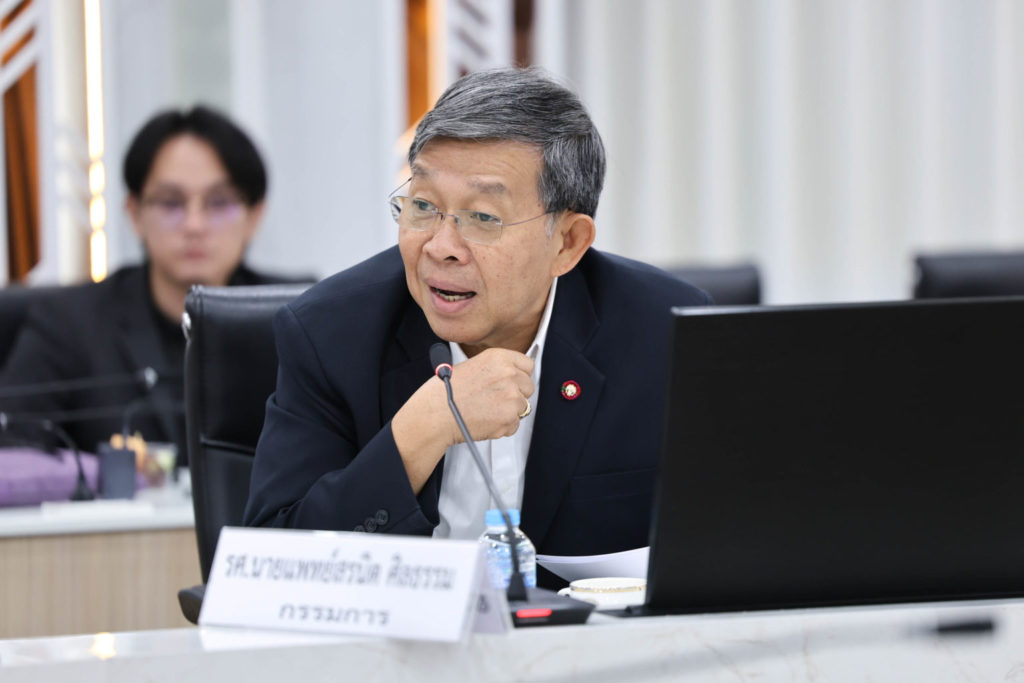

The Board further proposed that Thailand’s semiconductor industry be developed as an integrated national program encompassing workforce development, research, infrastructure, regulatory frameworks, and investment promotion. Clear targets, budgets, and agency responsibilities should be established for each component to ensure effective implementation and responsiveness to industry needs. The meeting also agreed that semiconductors should not be viewed simply as an industrial sector but as a foundational technology underpinning future industries, including artificial intelligence (AI), data centers, biotechnology, clean energy, and other high-value industries. Strengthening semiconductor capabilities will therefore play a pivotal role in enhancing Thailand’s long-term competitiveness.
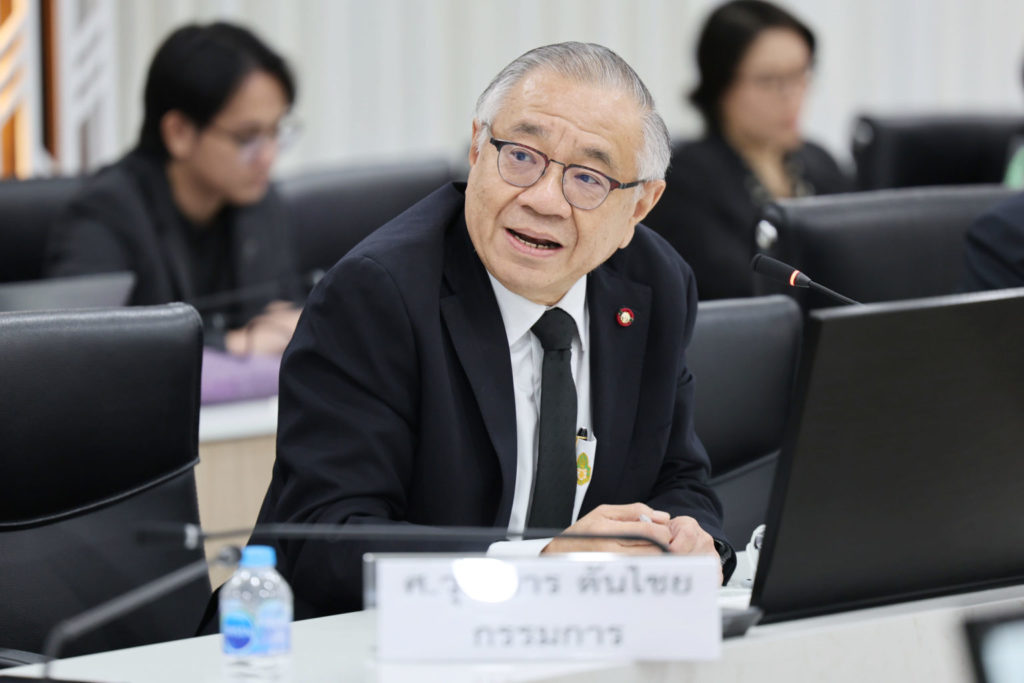


At the conclusion of the meeting, Minister Yodchanan instructed NXPO to incorporate the Board’s recommendations into the implementation plan and strengthen collaboration with relevant agencies to accelerate the development of Thailand’s semiconductor workforce and industrial ecosystem, support investment in advanced technology industries, and establish a strong foundation for the country’s future economy.