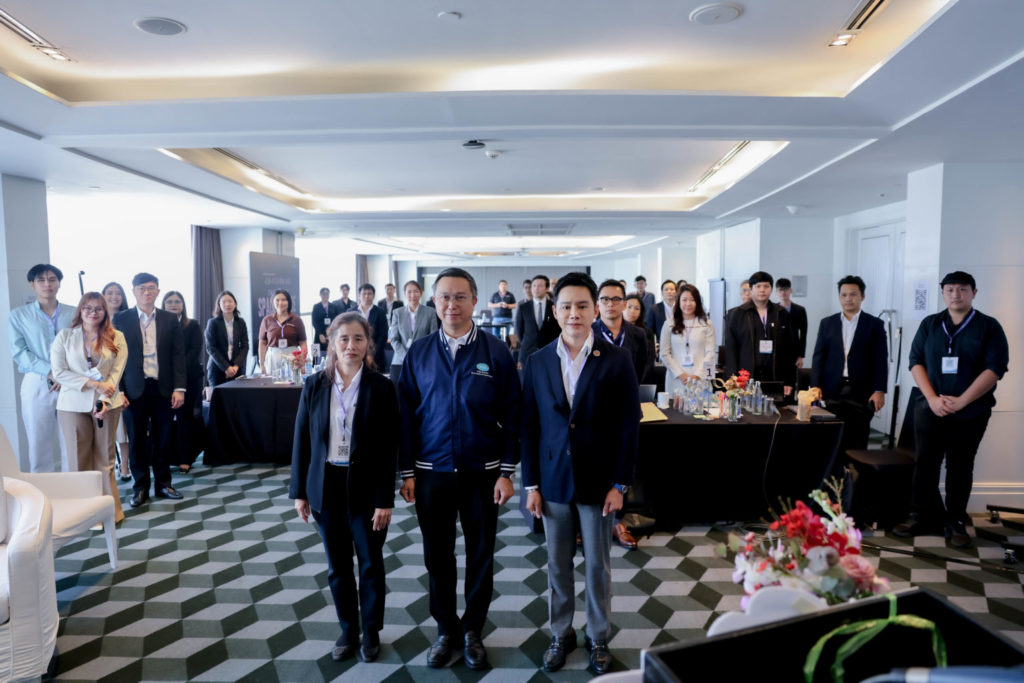
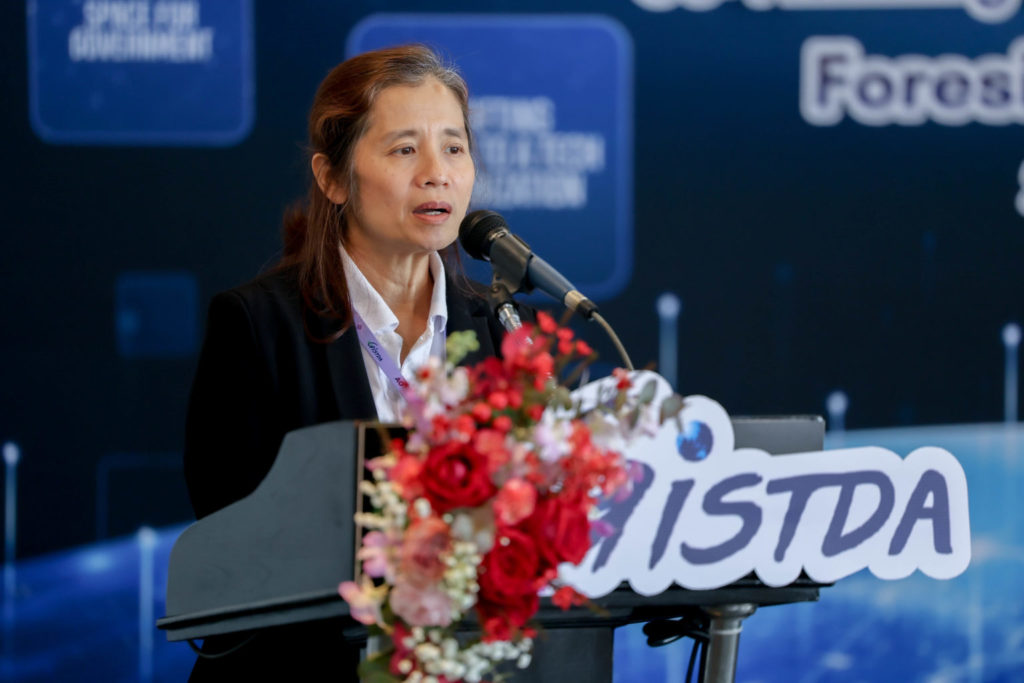
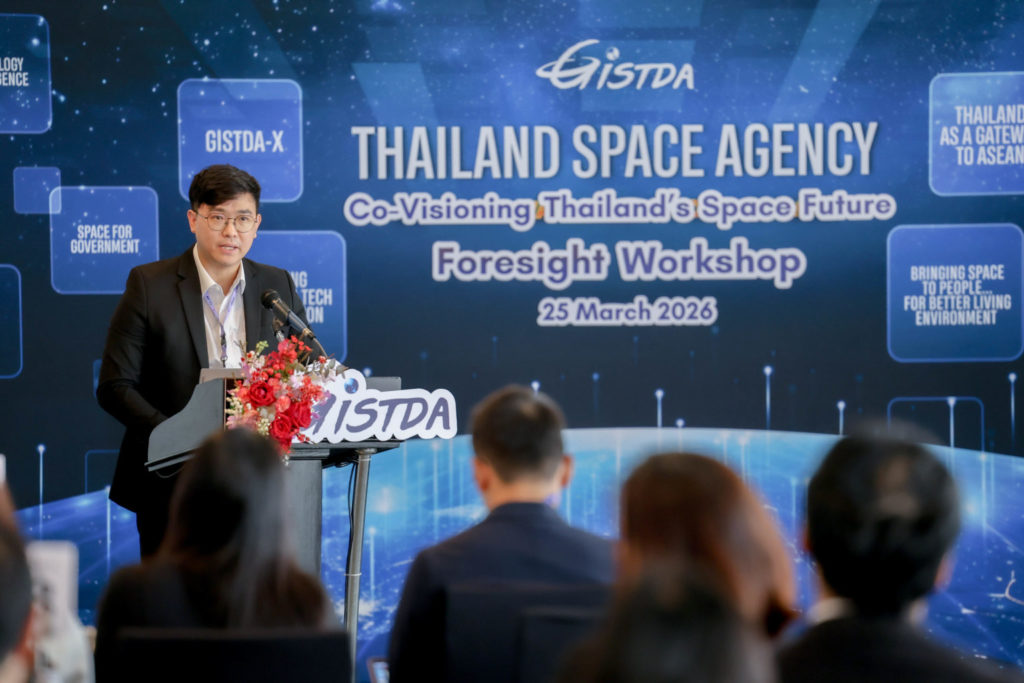
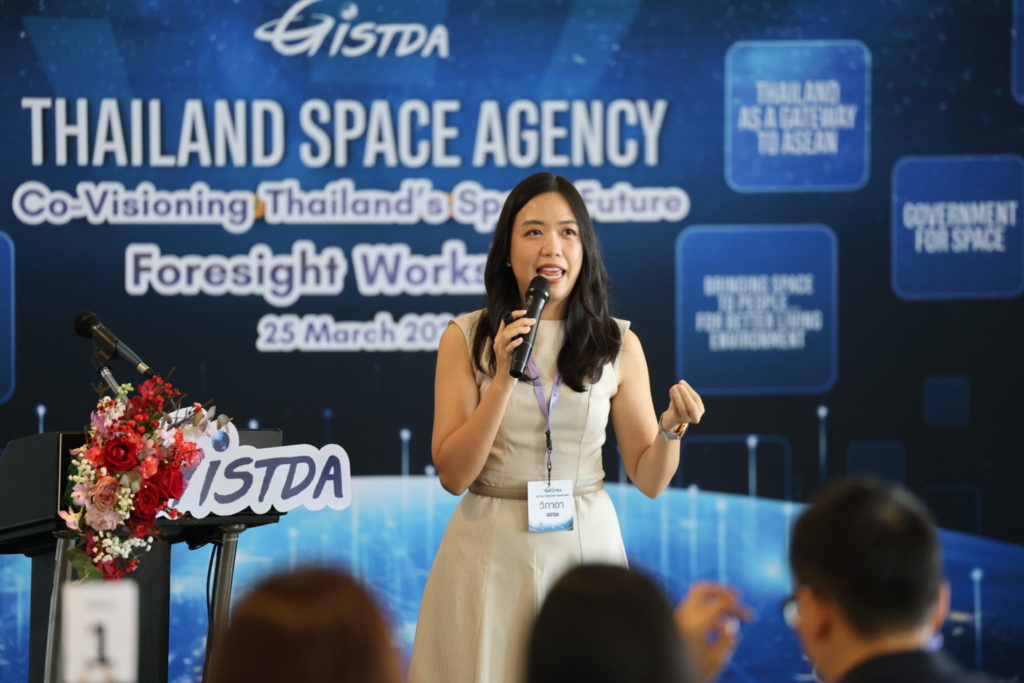
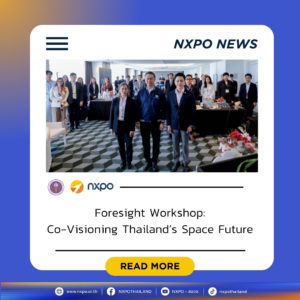
On 25 March 2026, Dr. Surachai Sathitkunarat, President of NXPO, participated in the Foresight Workshop: Co-Visioning Thailand’s Space Future, organized by the Geo-Informatics and Space Technology Development Agency (GISTDA). He was invited to deliver a keynote address on “Strategic Foresight in Thailand’s Policy-Making”.
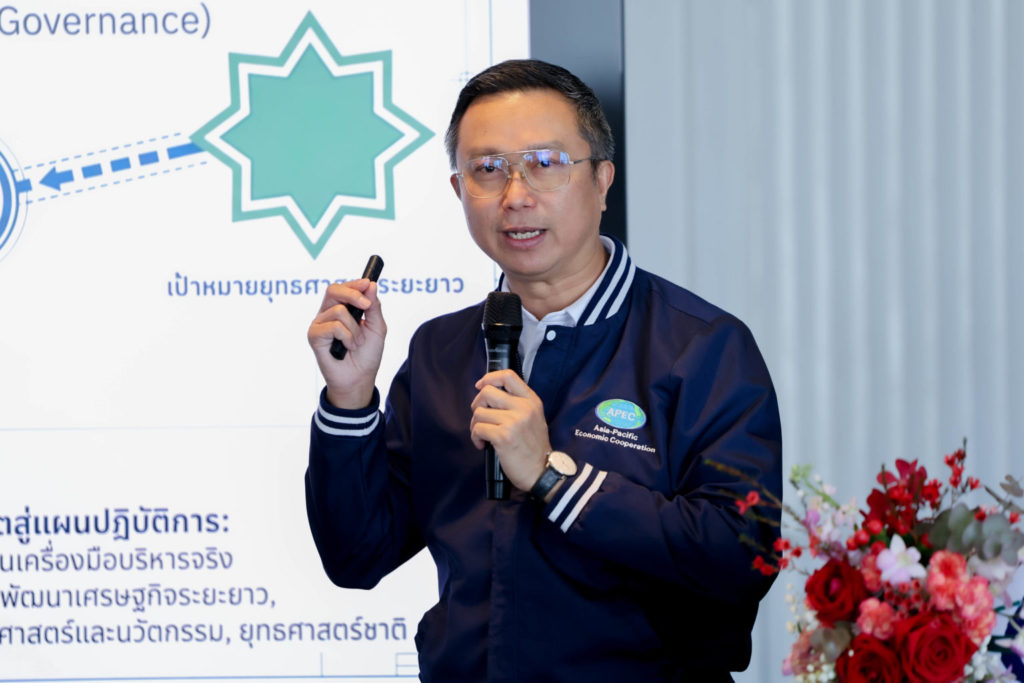
In his remarks, Dr. Surachai emphasized the increasing uncertainty of the global landscape, noting that public policymaking can no longer rely solely on historical data. Strategic foresight provides a systematic approach to exploring trends, uncertainties, and possible futures to inform policy decisions. It enables governments to anticipate emerging developments, prepare for disruption, and design policies that are flexible and adaptive to change.
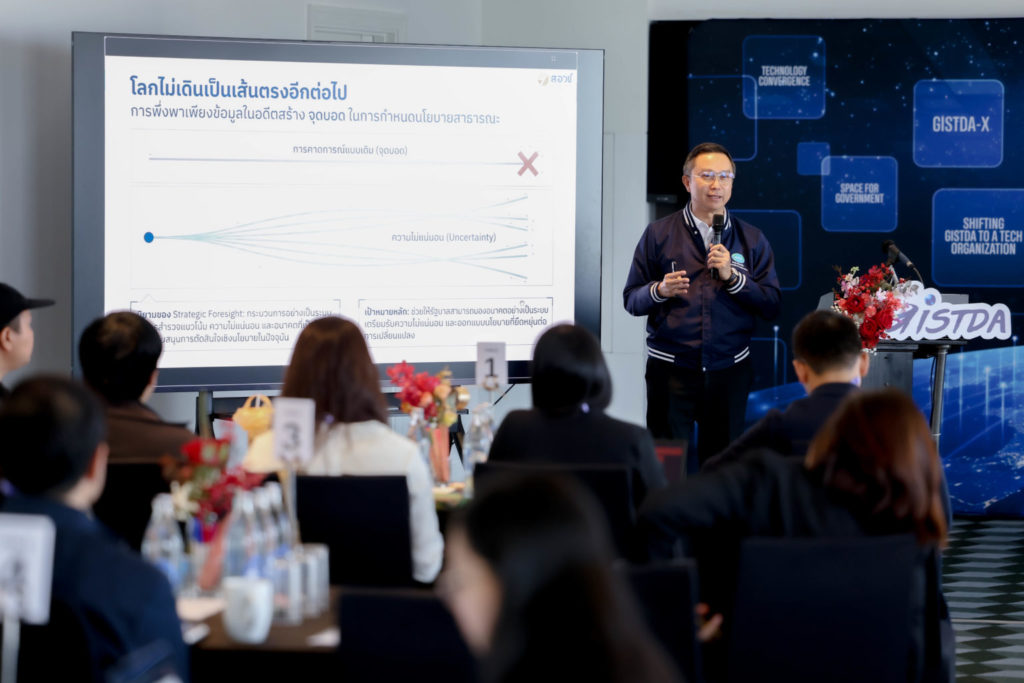
He noted that traditional policymaking often follows a linear approach—responding to issues only after crises arise—while operating in institutional silos and producing rigid policies that are difficult to adjust. In contrast, foresight-based policymaking adopts a multiple-futures perspective, allowing policymakers to anticipate risks, prepare in advance, and address challenges from a systemic viewpoint, resulting in more resilient and adaptable policies.
Dr. Surachai also introduced the Future-Ready Framework, which comprises four key pillars: 1) Seeing – identifying early warning signals and setting long-term goals over a 20–30-year horizon, including analyzing drivers of change and formulating a national strategies based on future-oriented analysis; 2) Navigating – managing uncertainty and prioritizing the allocation of limited resources; 3) Connecting – breaking down institutional silos to address complex challenges through collaboration among government, the private sector, academia, and civil society; and 4) Executing – translating foresight insights into actionable policies and raising awareness among policymakers.
He explained that the application of foresight in policymaking begins with scanning, using tools such as horizon scanning and weak signals analysis to identify drivers of change. This is followed by evaluating, which draws on methods such as trend analysis and Delphi surveys to incorporate expert and stakeholder perspectives. The next stage involves simulating possible futures through scenario planning and policy stress-testing to assess policy options and resilience. Finally, mapping tools—such as roadmapping and backcasting—are used to develop concrete strategic action plans that generate measurable policy outcomes. Strategic foresight supports policymaking by guiding the selection of priority technologies, informing budget allocation, and helping governments focus investments on high-potential sectors while reducing the risk of misdirected spending. It also contributes to the development of future industries and the emergence of high-value sectors such as smart cities, autonomous vehicles, and the bio-health industry.
Dr. Surachai further highlighted NXPO’s ongoing work in developing the Higher Education, Science, Research and Innovation Policy and Strategy 2028–2032, which will incorporate the principles of Mission-Oriented Innovation Policy (MOIP) to identify and prioritize national missions aligned with Thailand’s long-term development goals. Strategic foresight will be applied to support the formulation and implementation of this framework.
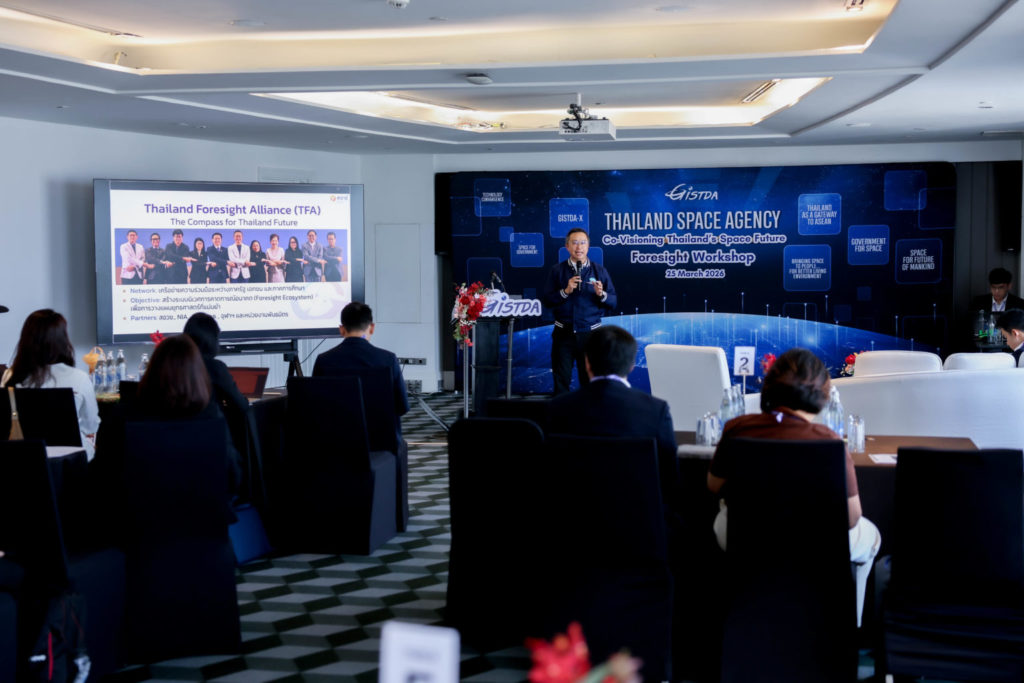
He also introduced the Thailand Foresight Alliance (TFA), a collaborative network bringing together government agencies, private sector organizations, and academic institutions to build a national foresight ecosystem. The alliance’s core activities include producing national signals and trends reports, developing foresight knowledge and human capital, providing advisory services, fostering cross-sector partnerships, and disseminating research and analytical outputs.
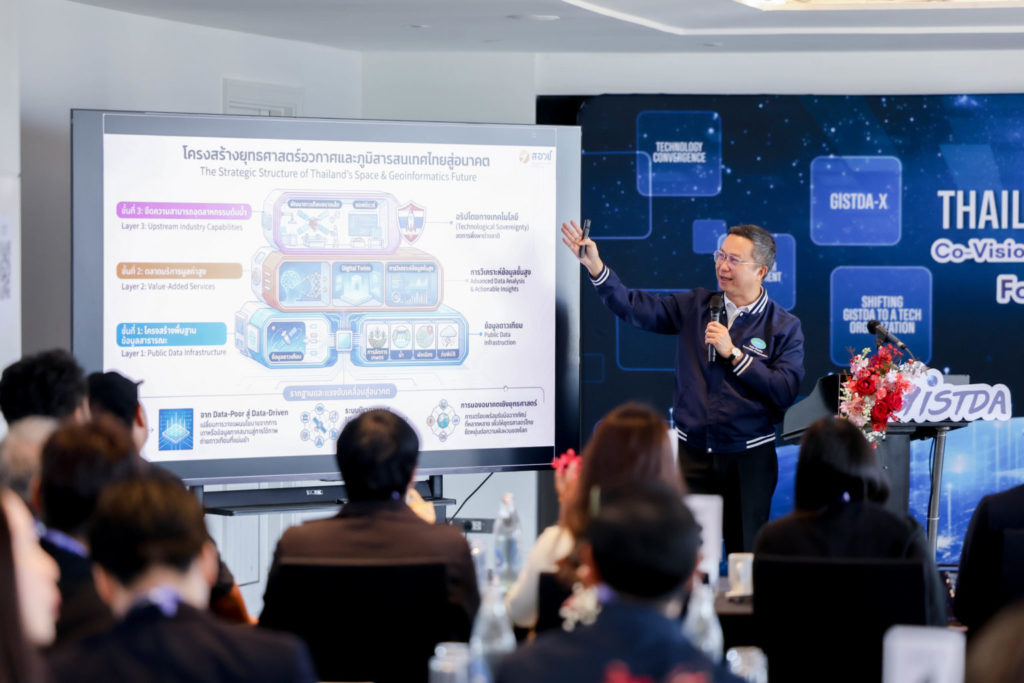
In addition, Dr. Surachai outlined Thailand’s future space and geo-informatics strategic architecture, which comprises three layers. The first layer focuses on public data infrastructure, consisting of satellite data to support applications in agriculture, water resource management, urban planning, and disaster management. The second layer centers on high-value service markets enabled by advanced data analytics. The third layer aims to build upstream industrial capabilities to strengthen national technological sovereignty in the long term. He emphasized that the key driver of this future vision is a shift from a data-poor to a data-driven policy paradigm. This transition involves moving from reliance on estimation or limited field data toward the use of precise satellite imagery. The THEOS-2 satellite program will play a critical role in building domestic engineering expertise and developing a highly skilled workforce. At the same time, Thailand must prepare for multiple future scenarios to ensure resilience and flexibility in responding to global uncertainties.