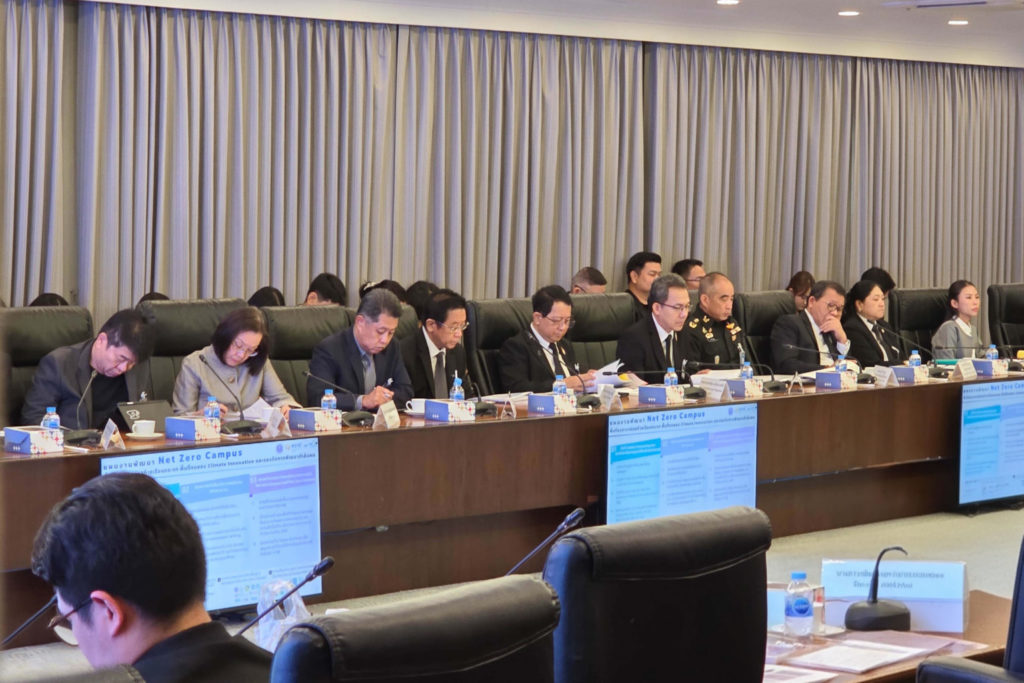
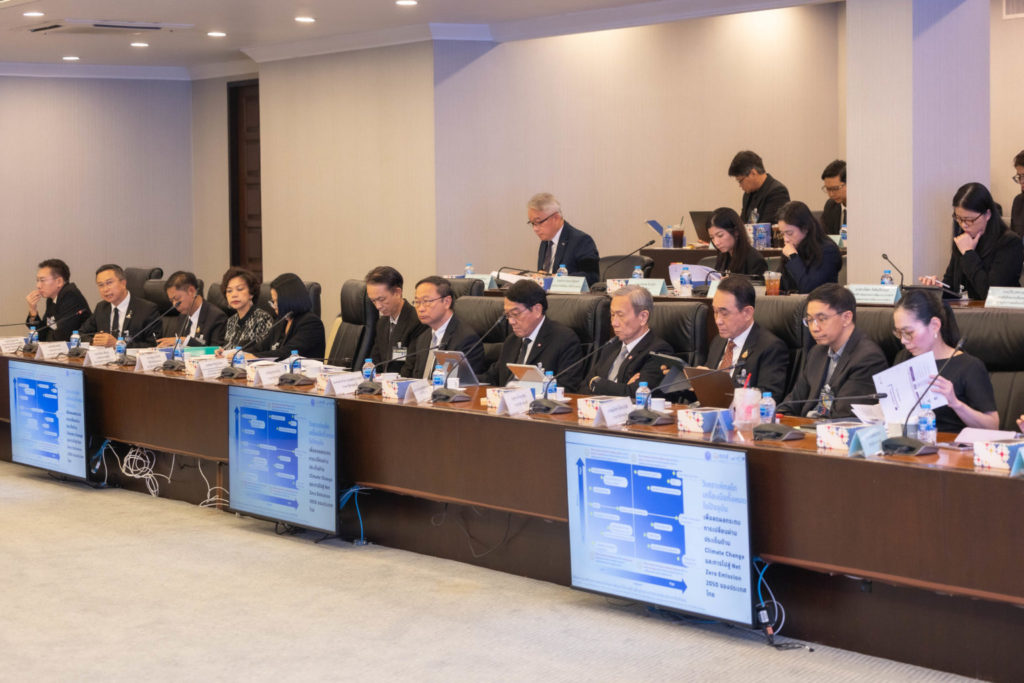
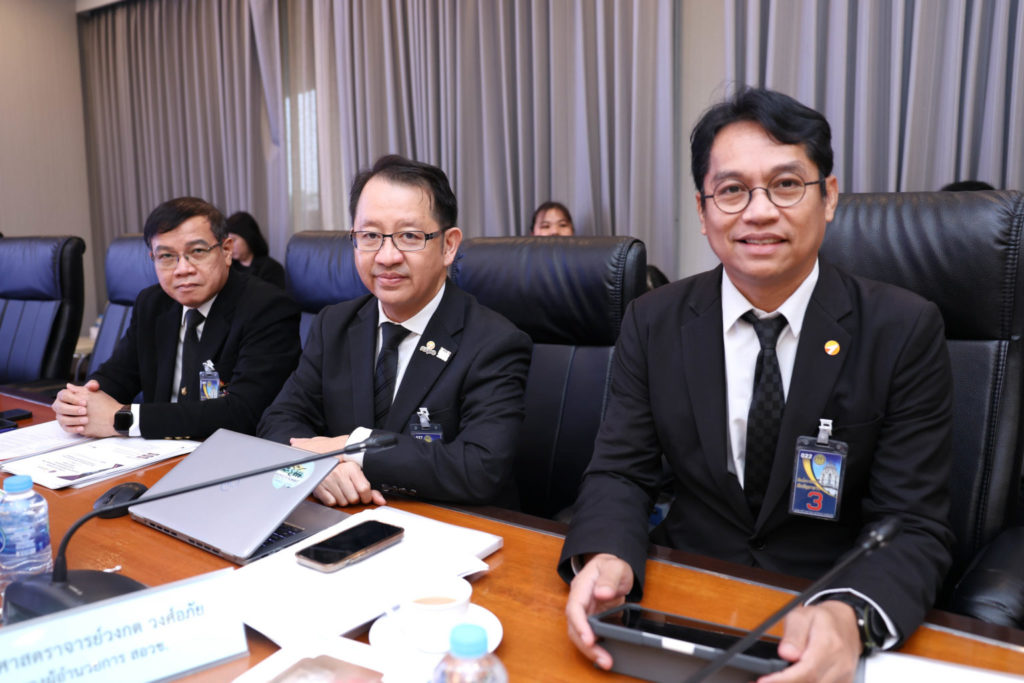
On 18 February 2026, Professor Emeritus Borwornsak Uwanno, Deputy Prime Minister, presided over a meeting of the National Higher Education, Science, Research and Innovation Policy Council. The meeting was attended by Mr. Surasak Phancharoenworakul, Minister of Higher Education, Science, Research and Innovation (MHESI) and Vice Chair of the Council; Prof. Dr. Supachai Pathumnakul, MHESI Permanent Secretary; Dr. Surachai Sathitkunarat, President of NXPO and Secretariat of the Council; as well as senior executives and appointed experts.

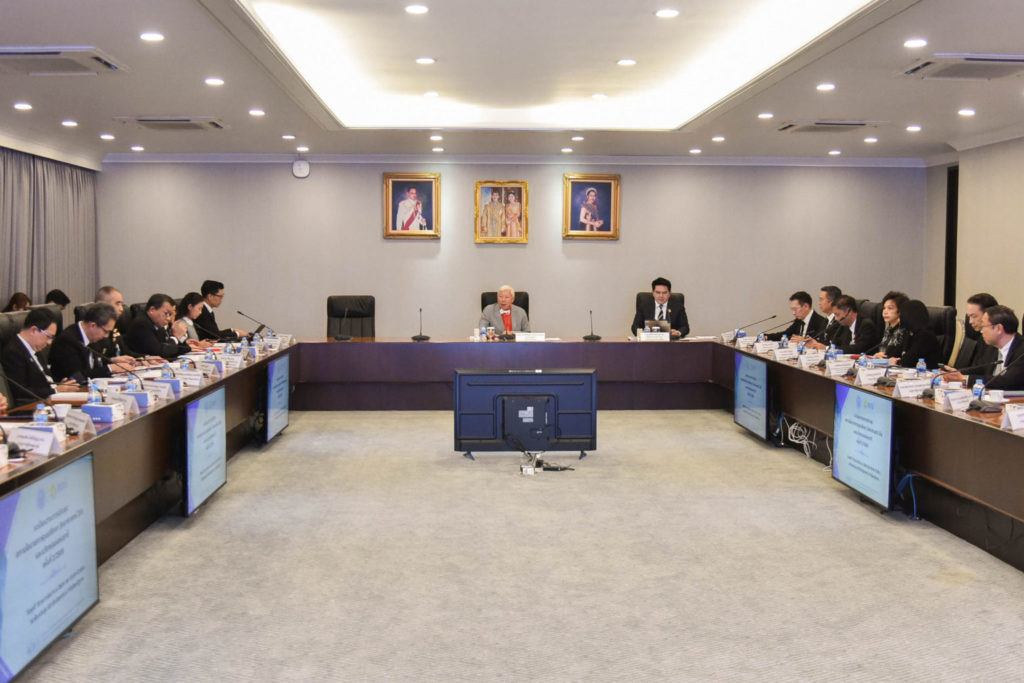


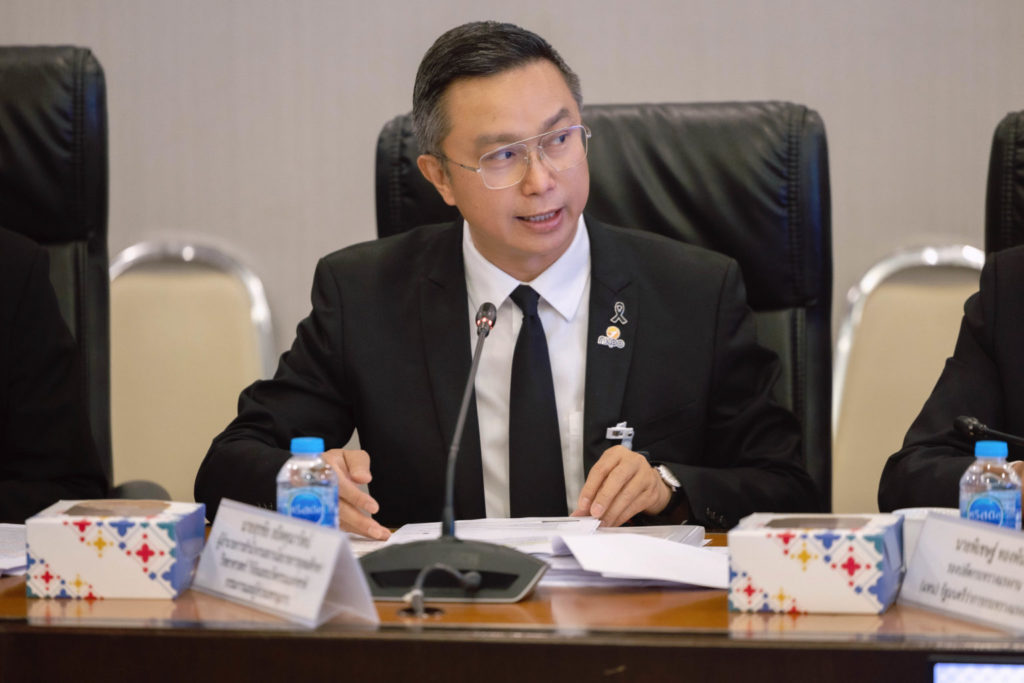
The Council approved the Climate Innovation Policy 2027–2032 to support the government’s effort to steer Thailand toward net-zero greenhouse gas emissions and to advance implementation of the Paris Agreement. The policy aims to address both physical risks and transition risks arising from climate change.
The Climate Innovation Policy leverages higher education, science, research and innovation as key drivers of adaptation and resilience across all sectors. It seeks to enable domestic enterprises to adjust to emerging trade measures and global market requirements, thereby enhancing investment attractiveness and contributing to GDP growth. The policy also promotes public engagement in climate action. The policy comprises three main programs:
- Climate Change Research Framework and Program: Focused on the development of mitigation technologies to reduce greenhouse gas emissions, alongside research to enhance climate resilience. Priority areas include early warning systems, integrated water resource management, sustainable agriculture, and disaster risk assessment.
- High-Skilled Workforce Development Program: Accelerates the production of specialized professionals and experts to support industry and service sectors in transitioning toward green growth.
- Net Zero Campus Program: Positions higher education institutions as national models for greenhouse gas reduction, living laboratories for climate innovation, and implementing carbon accounting systems.
In addition, the meeting approved the “Recommendations on Procurement for Research and Development by Public Organizations with Research and Innovation Missions” to address regulatory constraints and enhance flexibility in R&D operations. The Council agreed to propose that the Public Procurement and Supplies Administration Policy Commission extend R&D procurement regulations—currently applicable to higher education institutions—to seven public organizations with research and innovation mandates: the National Institute of Metrology; the National Science and Technology Development Agency (NSTDA); the Thailand Institute of Nuclear Technology (TINT); the National Astronomical Research Institute of Thailand (NARIT); the Synchrotron Light Research Institute; the Hydro-Informatics Institute (HII); and the Geo-Informatics and Space Technology Development Agency (GISTDA). The proposed revisions would ease key constraints by allowing specific procurement methods for urgently required research supplies, enabling advance payments to foreign contractors, and facilitating the disassembly of equipment for reverse engineering. The new guidelines will take effect upon approval by the Public Procurement and Supplies Administration Policy Commission.
Professor Emeritus Borwornsak also offered reflections on public administration system, highlighting the need for stronger inter-agency integration. He cited water management as a pressing issue, noting that responsibilities are currently fragmented across multiple ministries. He proposed consideration of a central, ministry-level agency to ensure more coherent and effective structural solutions. On human capital development, he emphasized the urgency of vocational education reform, calling for a shift in societal values from prioritizing academic degrees to emphasizing practical skills. He urged NXPO to coordinate with the Ministry of Education, the Office of the Civil Service Commission, and the private sector to advance systemic reforms and reshape public perceptions of vocational education in line with the needs of the modern economy.