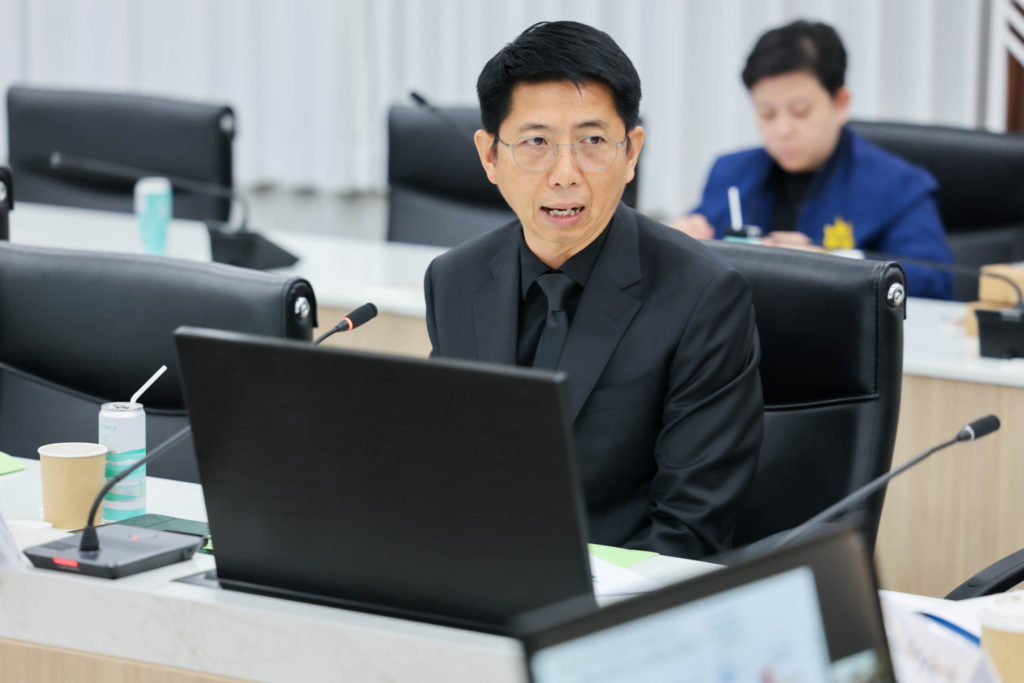
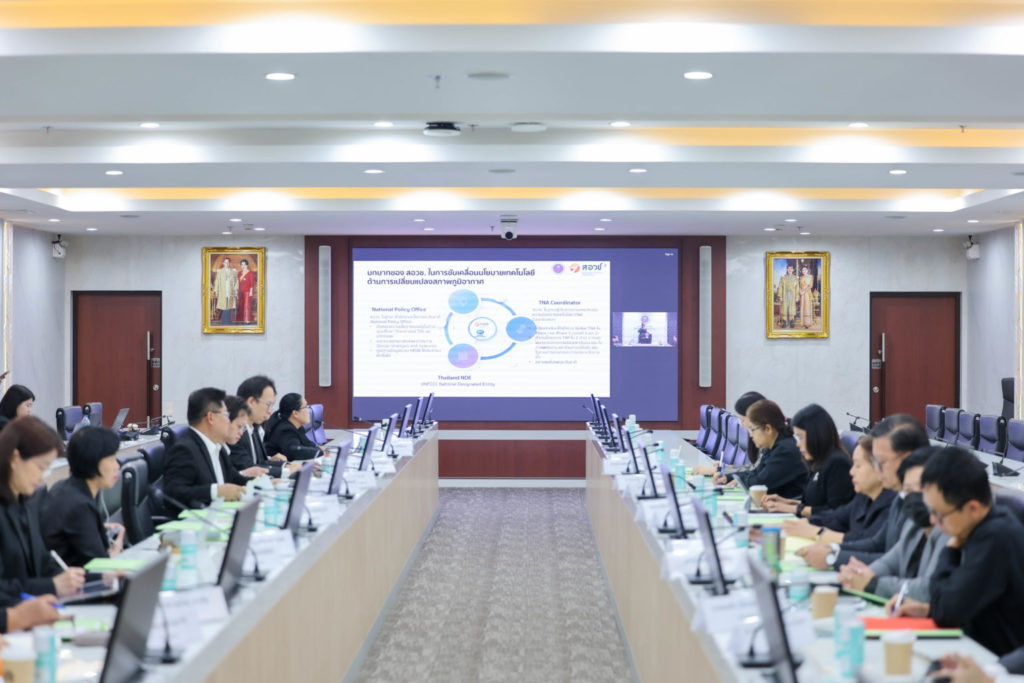
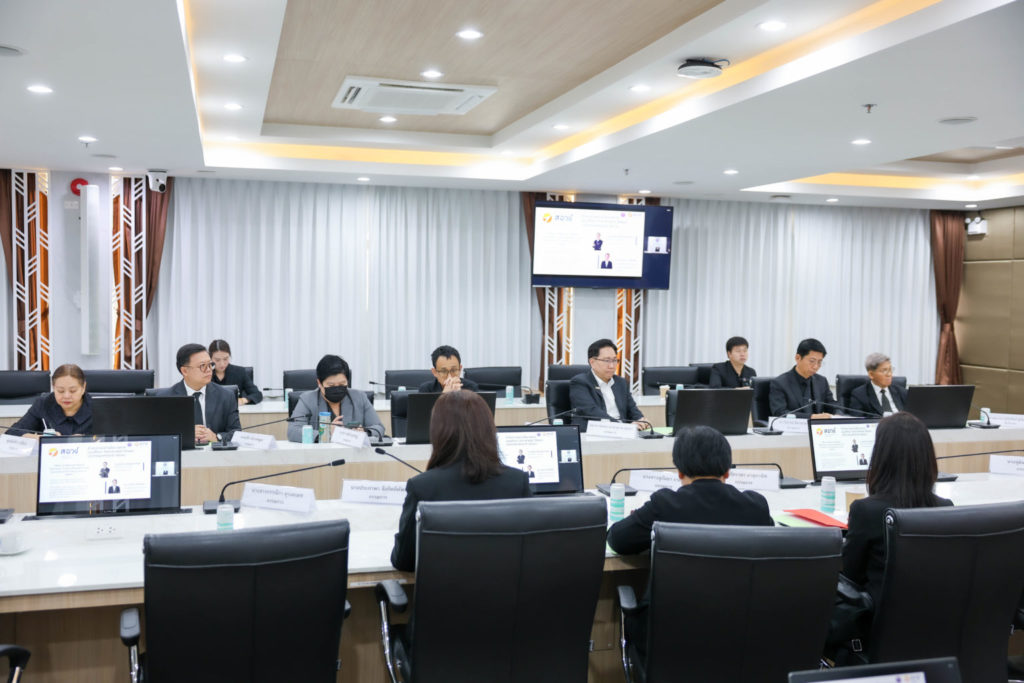
On 14 January 2026, NXPO, in collaboration with the Department of Climate Change and Environment (DCCE), convened the Steering Committee meeting for the Thailand Technology Needs Assessment (TNA) Project. The meeting was chaired by Dr. Surachai Sathitkunarat, President of NXPO, and attended by Assoc. Prof. Wongkot Wongsapai, Vice President of NXPO, Dr. Nuwong Chollacoop, Assistant to the President of NXPO and members of the project team.
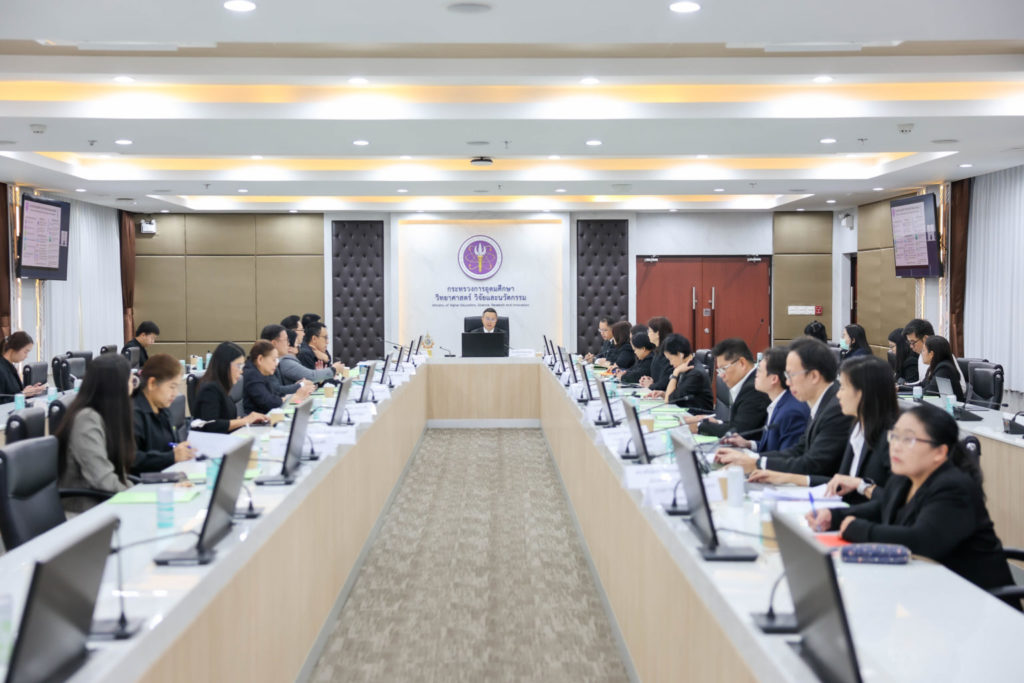
In his opening remarks, Dr. Surachai outlined NXPO’s mandate as the secretariat to the National Higher Education, Science, Research and Innovation Policy Council. This role encompasses policy formulation, the development of policy proposals, and the design of measures, mechanisms, and related legal instruments to respond to global trends with implications for Thailand.
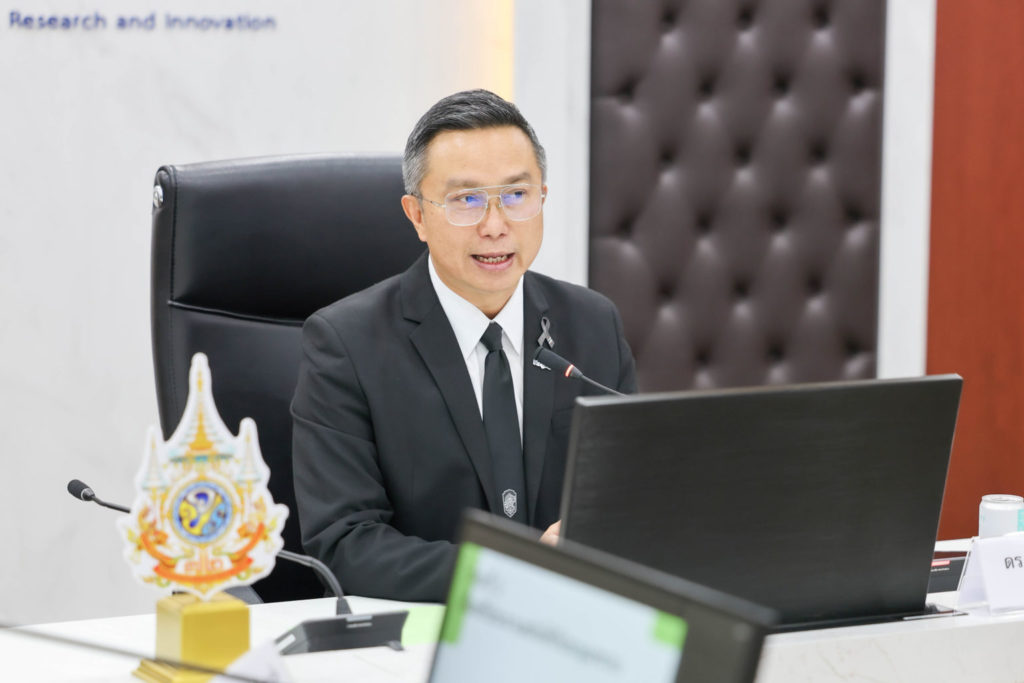
With regard to climate technology policy, Dr. Surachai emphasized that NXPO serves as Thailand’s principal representative under the Technology Mechanism, acting as the National Designated Entity (NDE Thailand) for the development and transfer of climate technologies under the United Nations Framework Convention on Climate Change (UNFCCC). NXPO also functions as the national coordinator for the TNA. Thailand participated in the Global TNA in Phases 1 and 5, corresponding to TNA Editions 1 and 2, respectively. The implementation of the second TNA provides a critical foundation for developing national strategies and project pipelines aligned with greenhouse gas mitigation targets, as well as for mobilizing international climate finance.
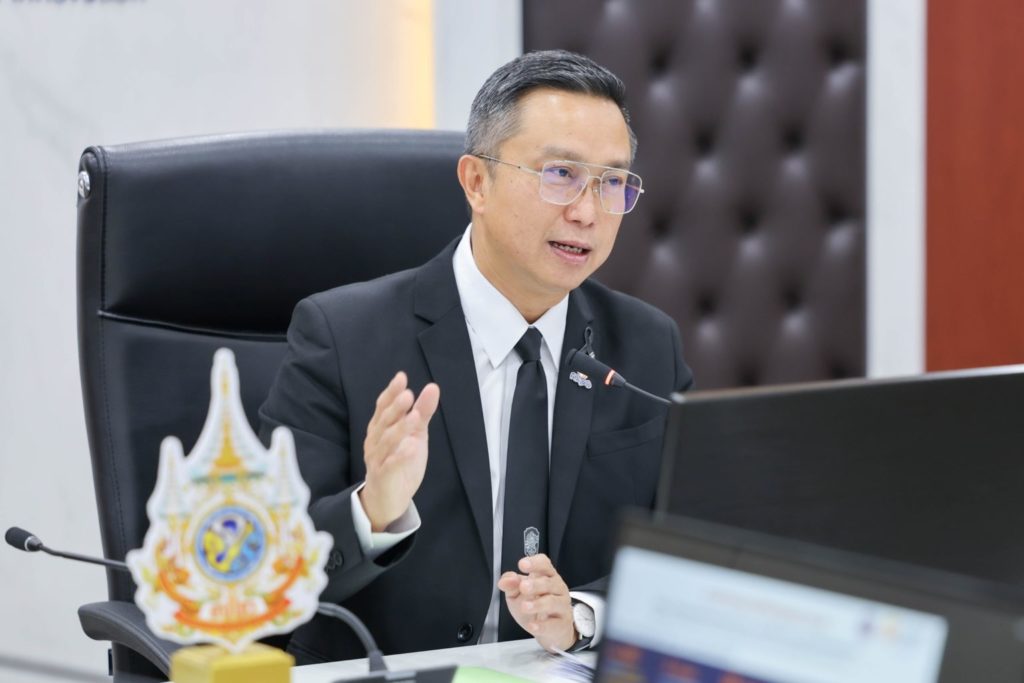
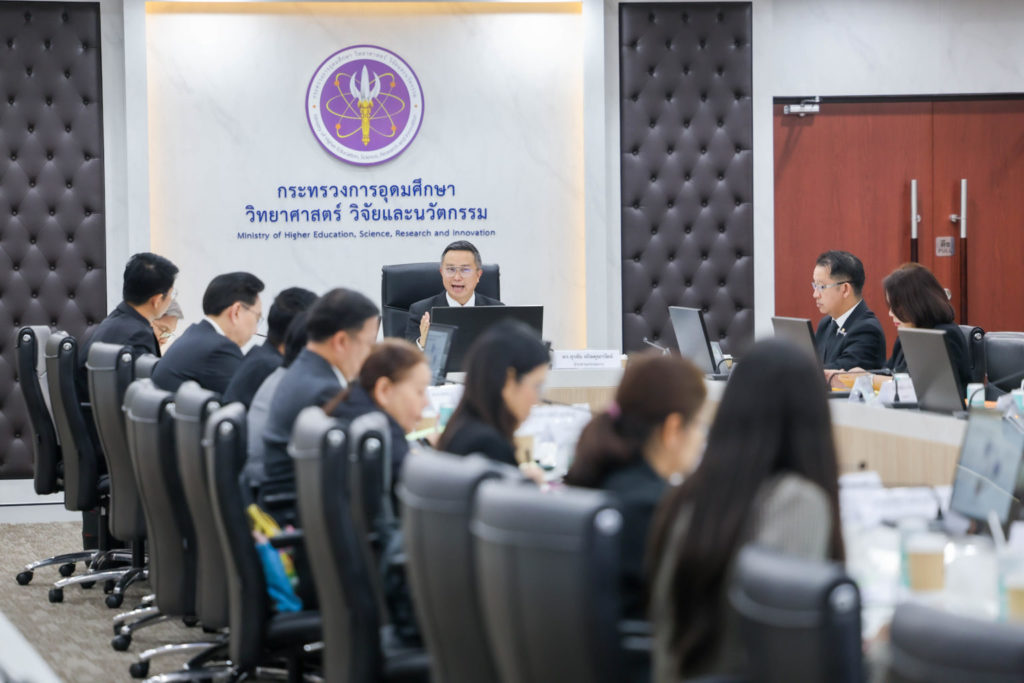
Dr. Surachai further highlighted NXPO’s role as the host of the APEC Center for Technology Foresight (APEC CTF), which applies foresight tools to support evidence-based policy formulation. In the current TNA cycle, foresight methodologies will be integrated as a key approach to assessing Thailand’s technology needs.
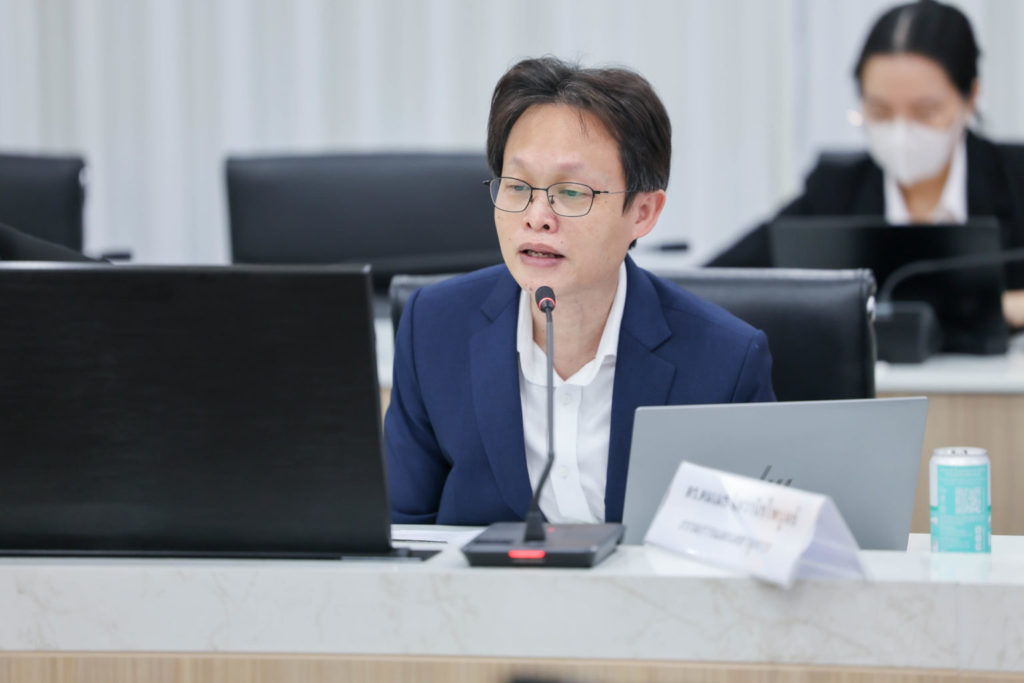
Dr. Kommate Jitvanichphaibool, Senior Director of the Strategic Foresight and Futures Studies Division at NXPO, underscored the significance of the Global TNA project in supporting developing countries to identify and plan technology pathways for climate change mitigation and adaptation. To date, 98 developing countries have completed TNA projects, with 26 countries incorporating TNA outcomes into their Nationally Determined Contributions (NDCs). Under Phase 5, 17 countries are currently implementing TNA projects. Upon completion, TNA reports can be used to seek United Nations funding for greenhouse gas mitigation initiatives, with approved projects to date totaling more than USD 1.839 billion.
Thailand has been recognized by the United Nations as a country that has produced high-quality TNA reports and effectively applied their findings to project design aimed at reducing national greenhouse gas emissions. As a result, Thailand is regarded as a global best-practice case in integrating TNA outcomes into national planning processes, leading to clearer and more effective climate action. The TNA results also strengthen Thailand’s position in international negotiations, including the Conference of the Parties (COP) to the UNFCCC, particularly on issues related to technology development and transfer.
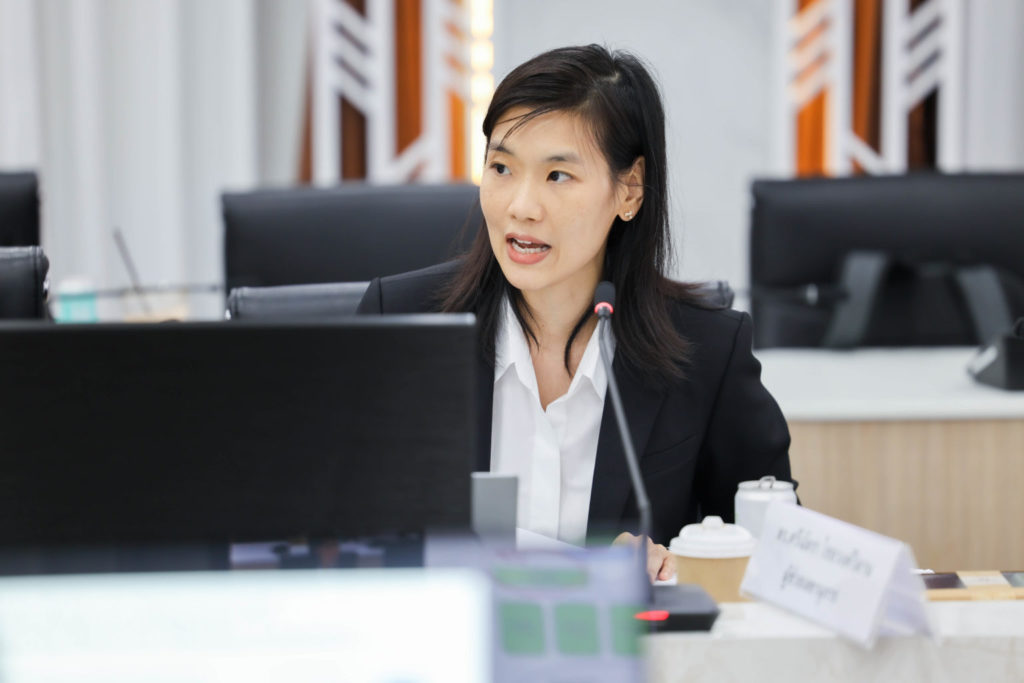
Dr. Srichattra Chaivongvilan, NXPO Strategist, presented the foresight tools to be applied in the second TNA. The STEEP analysis will be used for signal scanning and technology prioritization based on potential and impact, alongside the development of action plans and the setting of measurable targets.

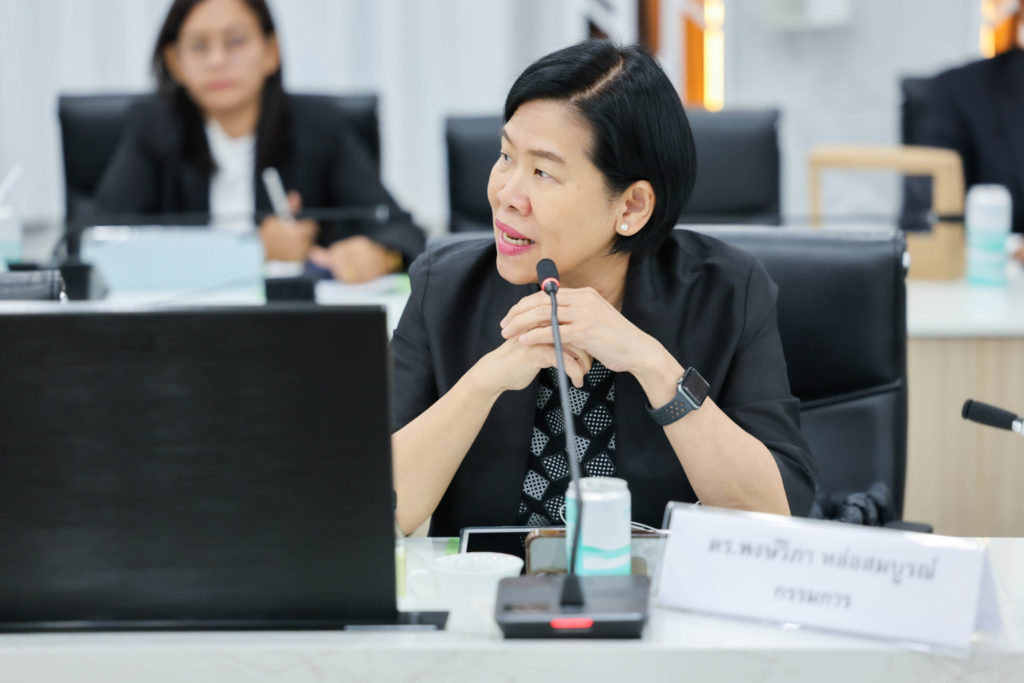
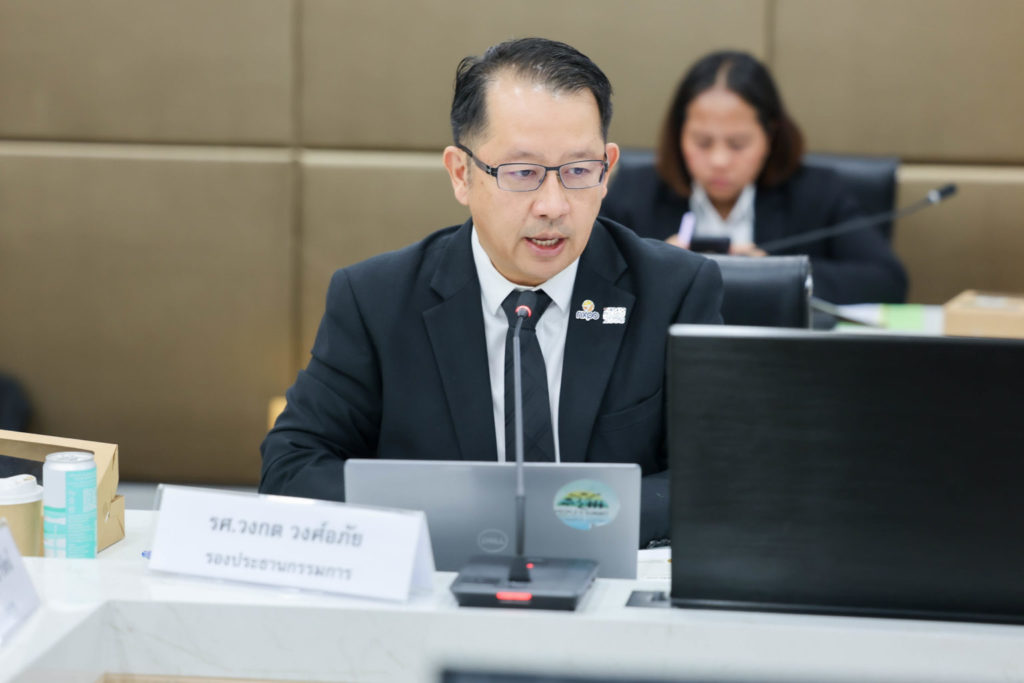
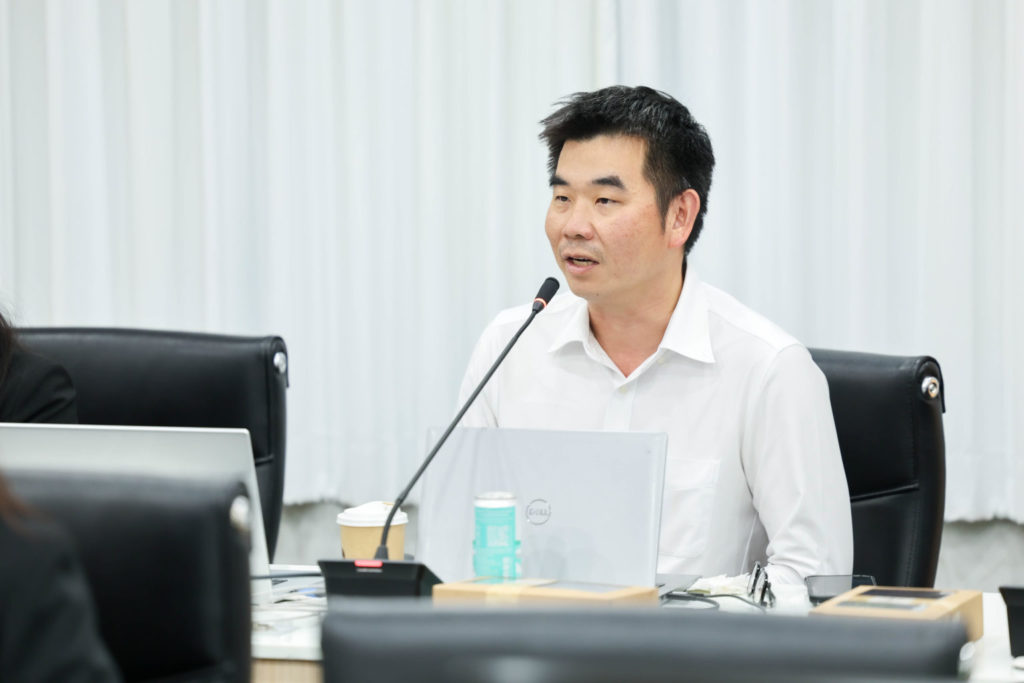
The meeting also reviewed the prioritization of strategic sectors and stakeholder engagement plans. It was proposed that key stakeholder groups be systematically engaged, including relevant government agencies in priority sectors such as energy, agriculture, water, industry, and the environment; the private sector; academia and experts; and the integration of gender considerations, in line with United Nations guidelines.