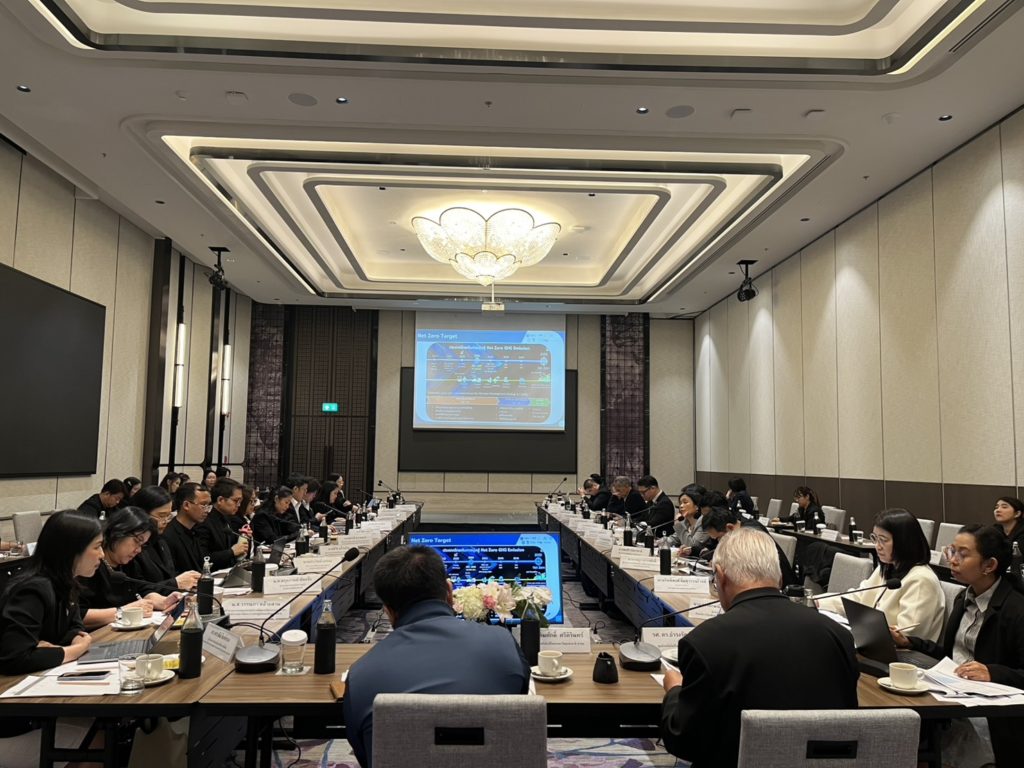
Dr. Saravanee Singtong, Director of the Sustainable Policy Division at NXPO, participated in the Steering Committee Meeting of the Network on Development of Databases and Indicators for a Low-Carbon Economy. The meeting was chaired by a representative of the National Science and Technology Development Agency (NSTDA), with Dr. Saravanee serving as Vice Chair. Participants included key agencies such as the Office of the National Economic and Social Development Council (NESDC), the National Statistical Office (NSO), the Office of Natural Resources and Environmental Policy and Planning (ONEP), and the Department of Climate Change and Environment (DCCE).
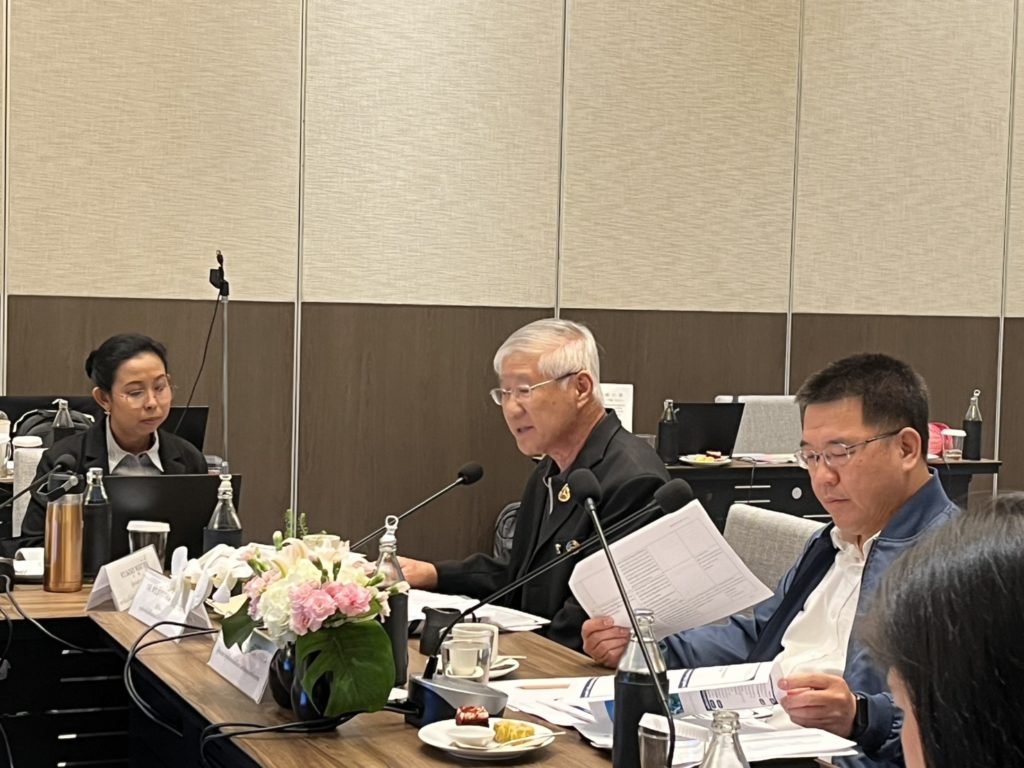
The meeting outlined the network’s objectives and implementation plan for fiscal years 2026–2030, which focus on: 1) establishing national infrastructure and databases for environmental data; 2) developing indicators aligned with Thailand’s context to support the transition toward a low-carbon economy; and 3) formulating policy recommendations to strengthen databases and indicators related to greenhouse gases (GHGs), the circular economy (CE), the Sustainable Development Goals (SDGs), and national GHG mitigation efforts. The Steering Committee is organized into five working groups: 1) Building Materials and Construction; 2) Bioethanol, Biomaterials, and Biochemicals; 3) Plastics and Petrochemicals; 4) GHG Emission Factors and the Carbon Border Adjustment Mechanism (CBAM); and 5) Natural Resources and Environment.

Dr. Saravanee emphasized that Thailand’s adjustment of its 2050 net zero target will further accelerate the country’s green transition and enhance the competitiveness of Thai supply chains in the global market. She also highlighted ongoing cooperation in higher education, science, research, technology, and innovation on climate change among NXPO, DCCE, Thailand Science Research and Innovation (TSRI), and the Council of University Presidents of Thailand (CUPT). A key outcome of this collaboration is the development of a national climate change research framework, with a strong emphasis on GHG emission factors (EFs) and systems research. The framework is expected to be submitted to the National Higher Education, Science, Research and Innovation Policy Council in early 2026 to support the implementation of the forthcoming Climate Change Act.