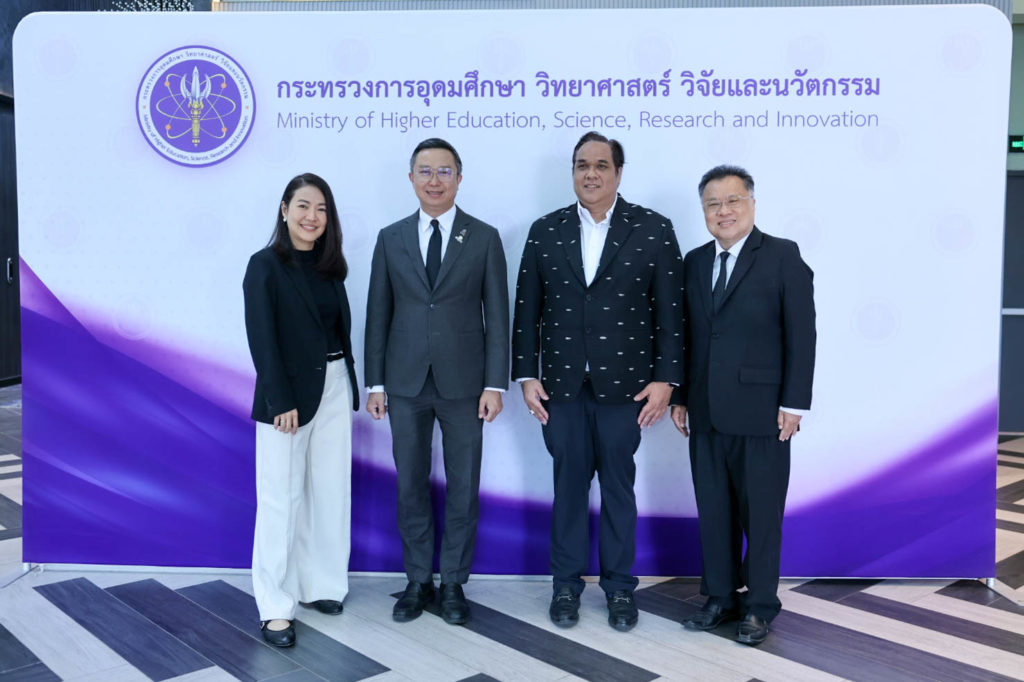
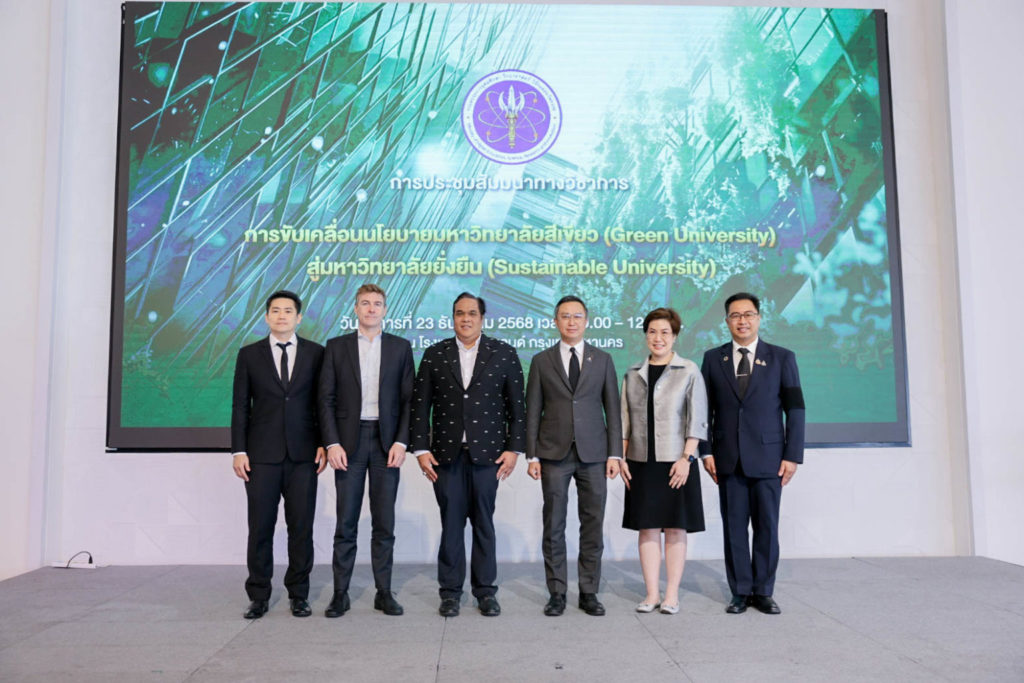
On 23 December 2025, Dr. Surachai Sathitkunarat, President of NXPO, delivered a keynote address entitled “The Transition to ESG Universities: Change Agents for Sustainability” at the seminar “Driving Green University Policies toward Sustainable Universities.” Hosted by the Ministry of Higher Education, Science, Research and Innovation (MHESI), the event attracted strong interest from MHESI partner organizations across both the public and private sectors.
Dr. Surachai highlighted the growing demand for a green workforce driven by emerging policy and regulatory developments, including sustainability disclosure and ESG (Environmental, Social and Governance) reporting requirements, the Climate Change Act mandating greenhouse gas (GHG) emissions reporting, and the introduction of an Emissions Trading System (ETS). These mechanisms create the need for expanded verification and advisory services, as well as increased deployment and investment in climate-related technologies such as carbon capture, utilization and storage (CCUS) and green hydrogen. It is projected that demand for climate-related professionals in 2030 will reach approximately 235,000–275,000 people.

He emphasized that while multiple stakeholders are involved in building a climate technology ecosystem, effective collaboration among three key sectors under the triple helix model is critical. This includes leadership from the private sector and industry, knowledge support from higher education institutions, and facilitation by government agencies. In particular, stronger support is needed to promote technology adoption among startups to ensure that innovations can be successfully commercialized and brought to market.
Dr. Surachai also outlined NXPO’s role in advancing Thailand’s climate action agenda, including its function as Thailand’s National Designated Entity (NDE)—the central coordinating body for climate technology development and transfer under the United Nations Framework Convention on Climate Change (UNFCCC). In addition, NXPO serves as the coordinating agency for Thailand’s Second Technology Needs Assessment (TNA), a key instrument for identifying the country’s priority climate technologies for submission to the UNFCCC.
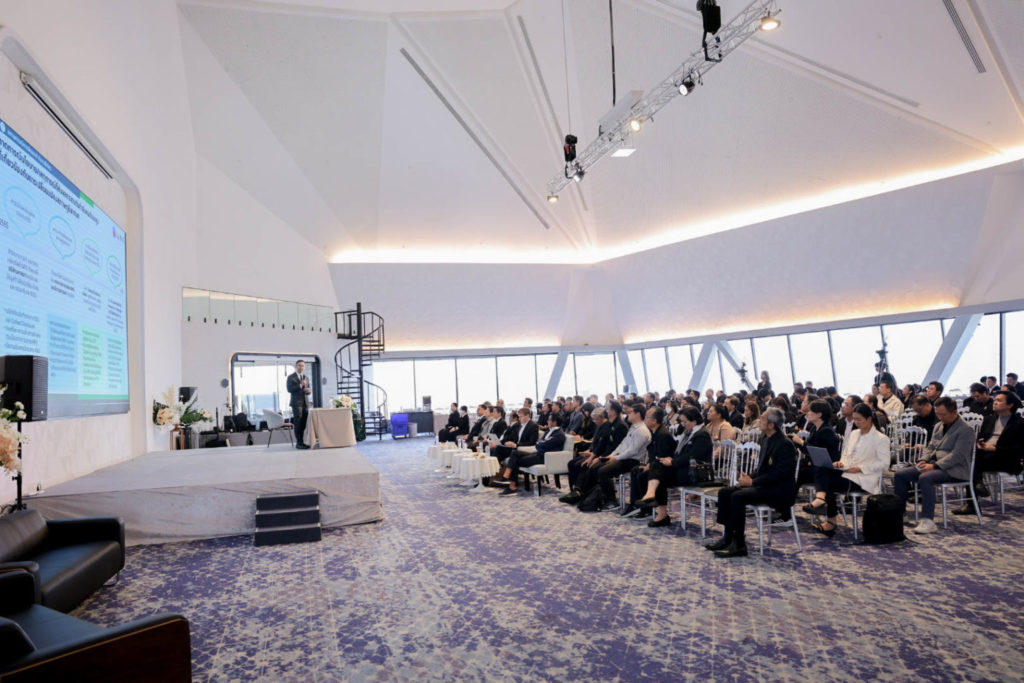
Furthermore, NXPO has collaborated with the Department of Climate Change and Environment (DCCE), Thailand Science Research and Innovation (TSRI), and the Council of University Presidents of Thailand (CUPT) to develop frameworks and research agendas on climate change. These efforts aim to generate research that directly addresses practical challenges, structured around three main programs: greenhouse gas mitigation, climate resilience and adaptation, and systems research.
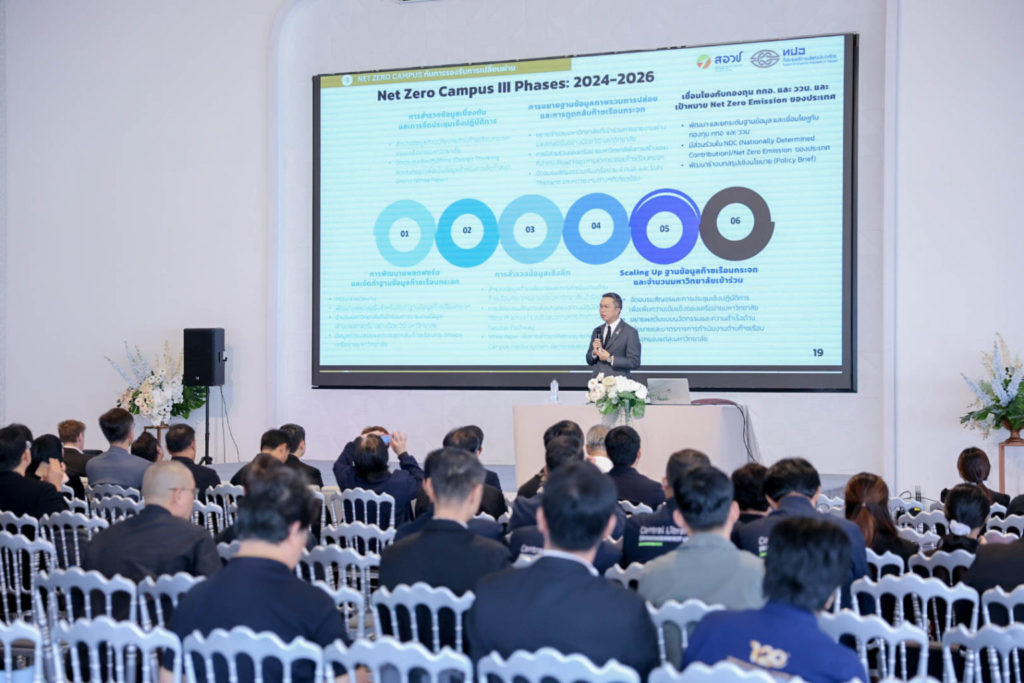
NXPO has also advanced the Net Zero Campus initiative in collaboration with the Sustainable University Network of Thailand (SUN Thailand), positioning higher education institutions as a driving force in Thailand’s pathway toward net-zero greenhouse gas emissions by 2050. Recognizing disparities in institutional capacity, large universities are expected to serve as mentors and leaders in supporting other institutions through the transition. Particular emphasis is also placed on regional universities, which play a vital role in addressing area-based and local climate challenges.
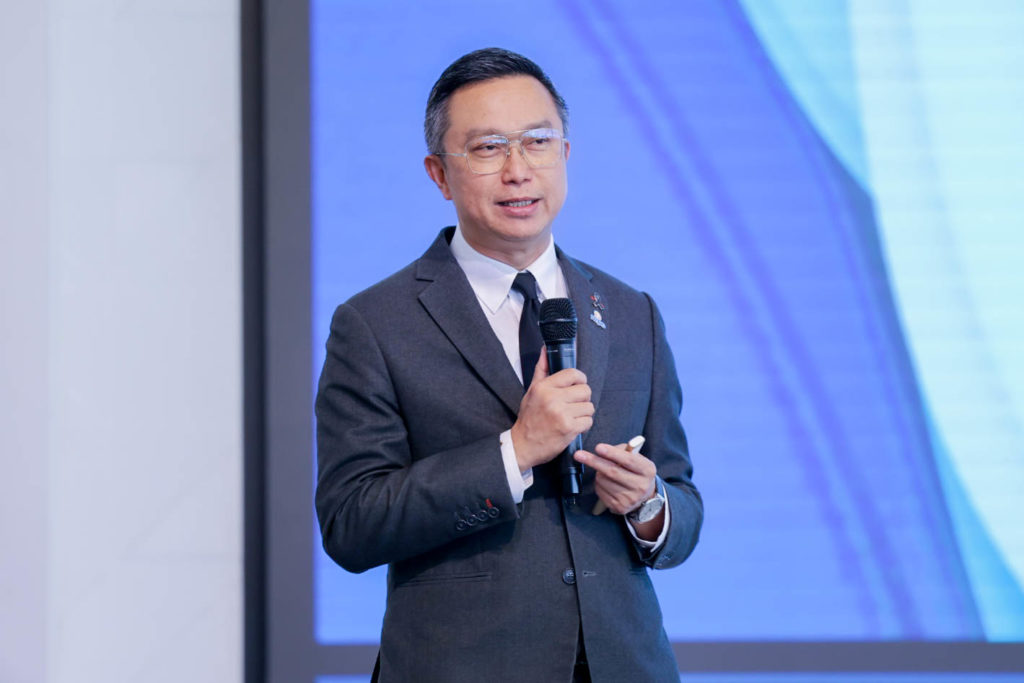
“Universities can significantly support the country’s transition, but their roles must evolve—for example, by shifting from a primary focus on research publications toward addressing national and local challenges, strengthening international collaboration, and building partnerships,” Dr. Surachai concluded.