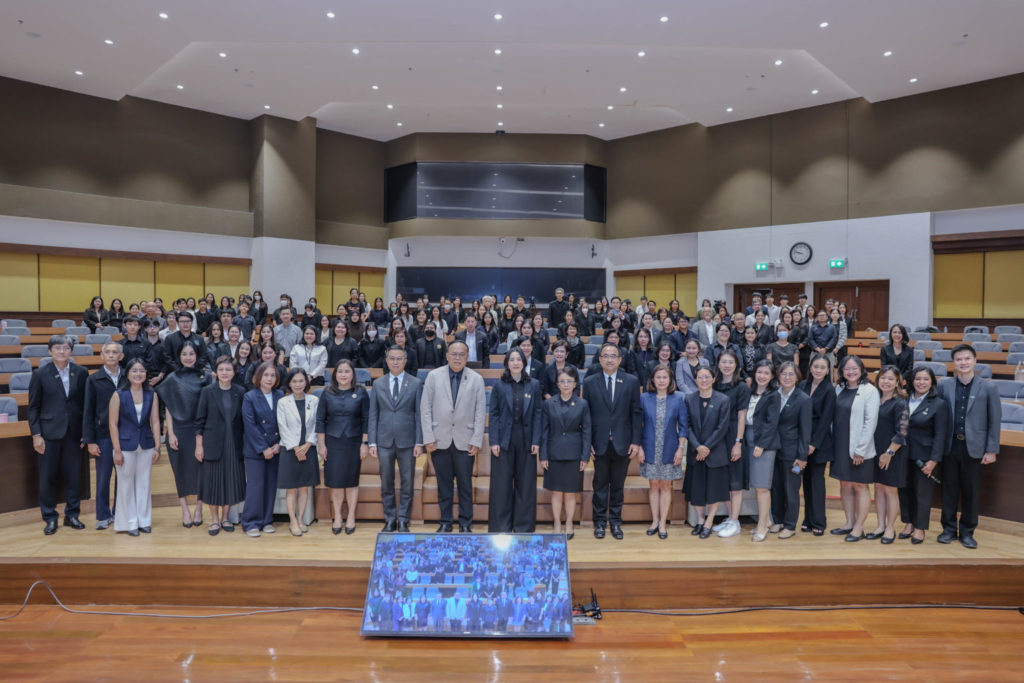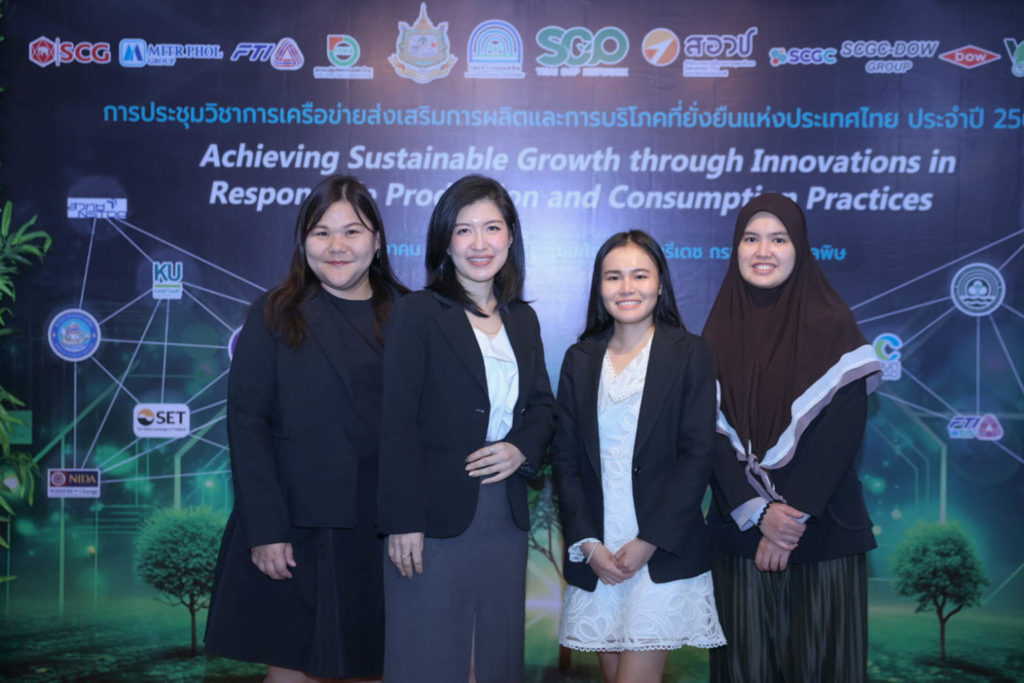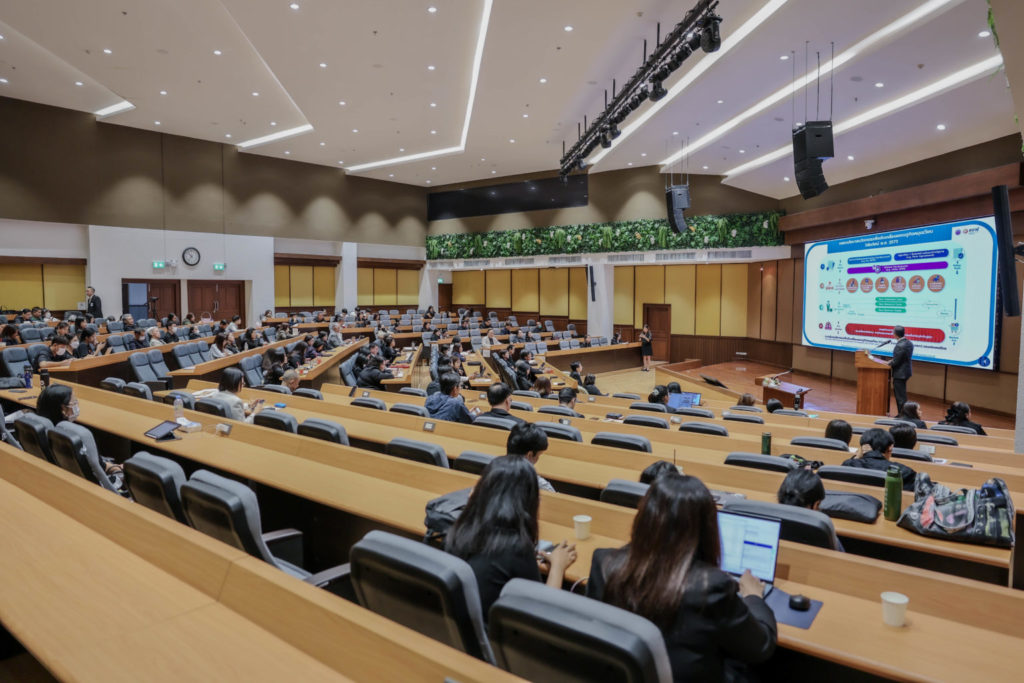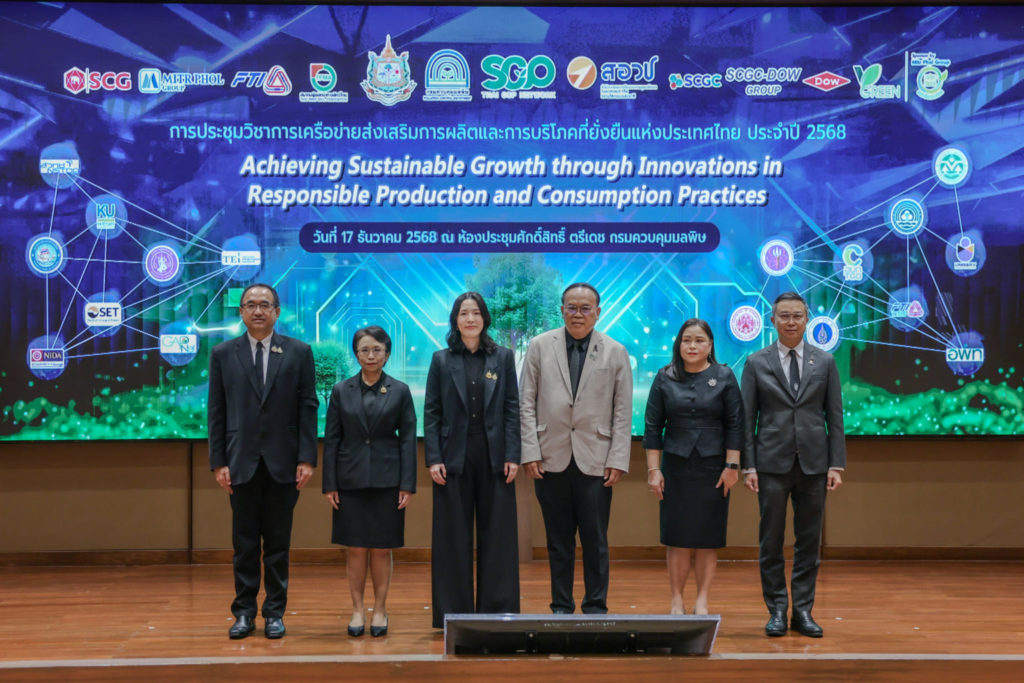
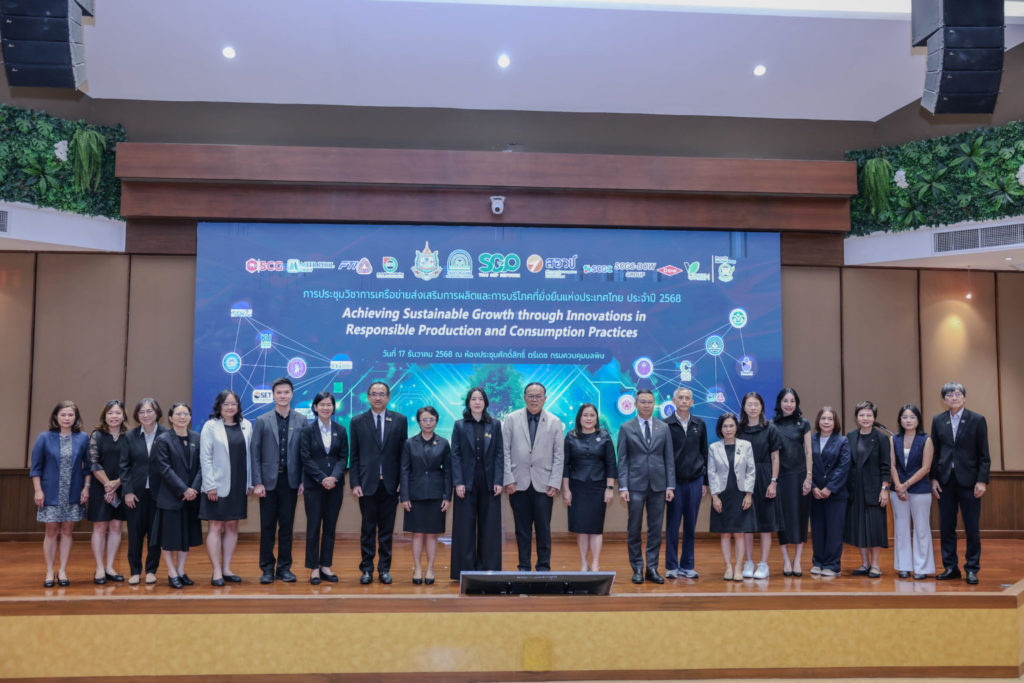
Dr. Surachai Sathitkunarat, President of NXPO, delivered a special lecture on policies supporting the circular economy and sustainable consumption and production, aligned with SDG 12, at the 2025 Annual Academic Conference of the Thai Sustainable Consumption and Production Network (Thai SCP Network). The conference was held under the theme “Achieving Sustainable Growth through Innovations in Responsible Production and Consumption Practices” and was officiated by Ms. Patranant Thongprapan, Deputy Secretary-General to the Prime Minister for Political Affairs.
During the opening ceremony, Dr. Wijarn Simachaya, President of the Thailand Environment Institute and Chair of the Thai SCP Network, presented a report on the Network’s progress, while Mr. Tananchai Wannasook, Deputy Director-General of the Pollution Control Department (PCD), delivered a keynote address.
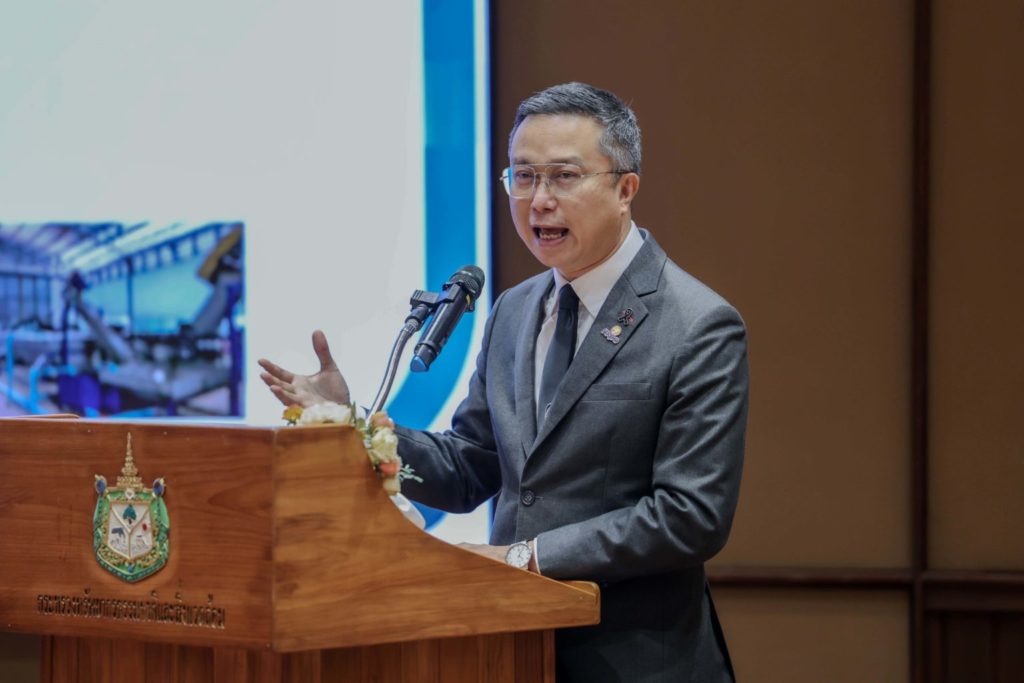
In his presentation, Dr. Surachai introduced the Circular Economy Innovation Ecosystem: Vision 2030, which comprises four levels: policy, structure and enablers, enterprises, and the public. The policy level serves as a policy-push mechanism while also supporting market pull, working in synergy with the public level, which plays a similar role. He highlighted NXPO’s role in translating policy into practice through initiatives, including the development of a prototype digital platform to support circular economy implementation under the Saraburi Sandbox Program and the development of the Green Enterprise Indicator (GEI).
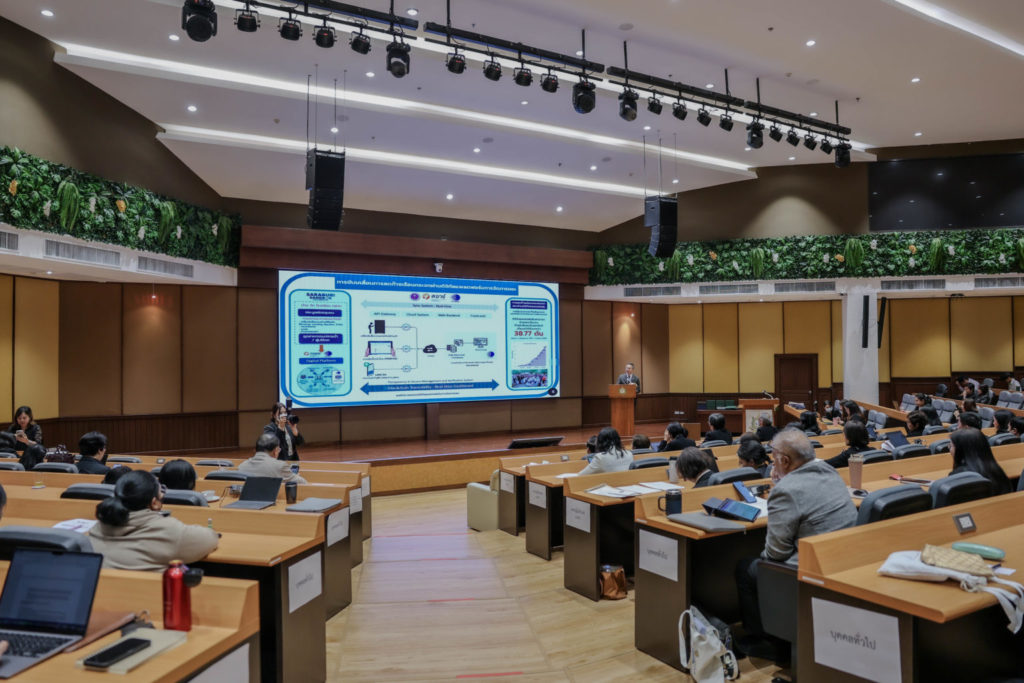
Under the Saraburi Sandbox initiative, NXPO, in collaboration with the Thailand Institute of Scientific and Technological Research (TISTR), has developed a prototype digital platform to enable innovative waste management based on circular economy principles. This initiative seeks to reduce greenhouse gas emissions and generate local income by tracking waste flows—from households, temples, schools, and markets—to reverse vending machines (RVMs), recycling markets, junk collectors, and second-hand goods shops. The platform offers real-time data on material flows and price changes across sectors, which is traceable, and can calculate reductions in carbon dioxide equivalent emissions of more than 38.77 tons (from October 2024 to September 2025).
Dr. Surachai also highlighted the Green Enterprise Indicator (GEI), an initiative developed by NXPO in collaboration with the Management System Certification Institute (MASCI), the Thai Industrial Standards Institute (TISI), the Federation of Thai Industries (FTI), and the Office of Small and Medium Enterprises Promotion (OSMEP). The GEI covers environmental, social, economic, and governance dimensions and serves as a tool for assessing circular and green economy performance. It supports enterprises in their transition toward green business practices within the Thai context. The indicator is applicable to all types of enterprises, regardless of size, location, or operational complexity. As scheme owners, organizations may define their own application schemes, and the GEI can be used in conjunction with national and international management system standards and guidelines related to the circular and green economy. The GEI is expected to be announced as a national standard in 2026.