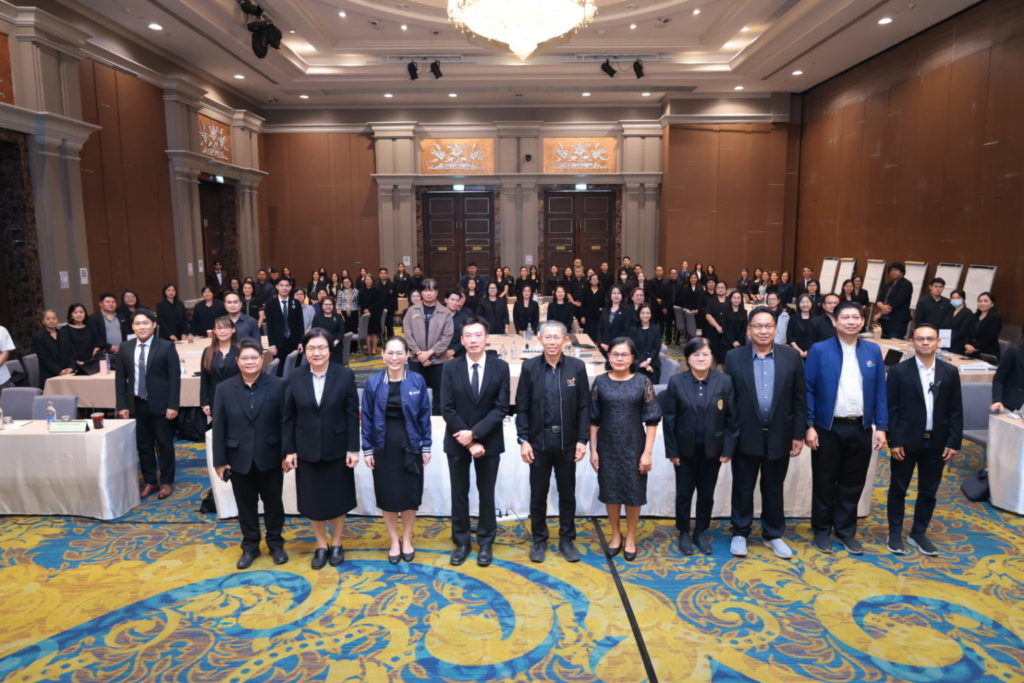
On 14 November 2025, Dr. Siriporn Pittayasophon, Vice President of NXPO, joined a workshop organized by the Office of the Permanent Secretary, Ministry of Higher Education, Science, Research and Innovation (MHESI) to develop guidelines for producing graduates in food science and technology to support local and community development.
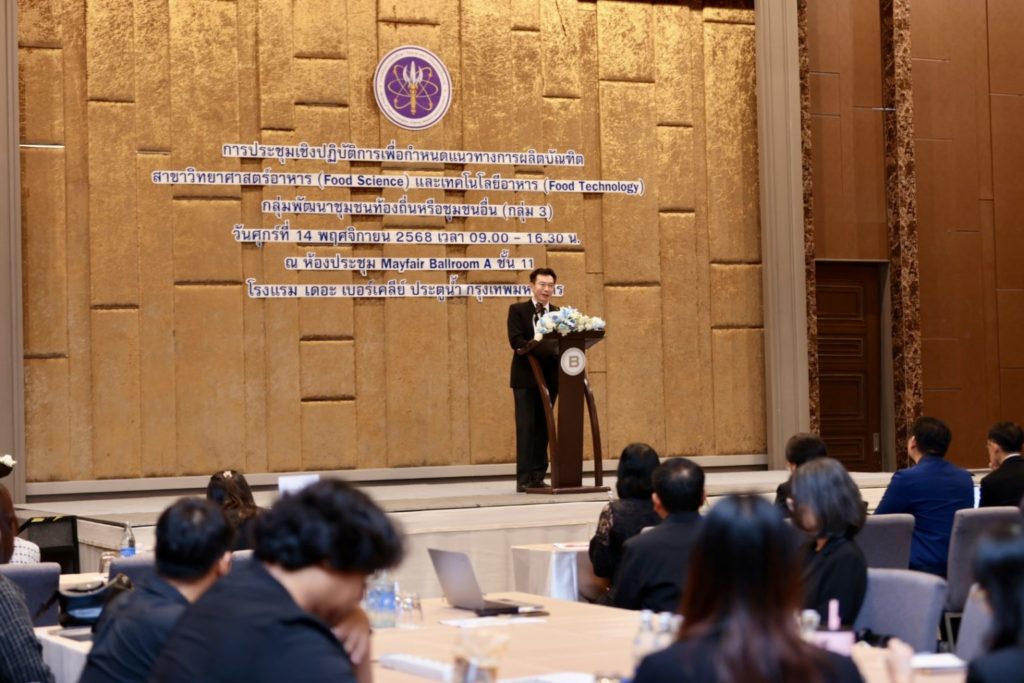
During the panel discussion, Dr. Siriporn presented key data underscoring the importance of Thailand’s food industry, including its economic contribution, employment structure, and R&D activities. She also highlighted area-based support initiatives under the Program Management Unit on Area Based Development (PMU A), together with insights into workforce landscape—both in terms of demand for skilled labor and the current supply of graduates from Rajabhat Universities and other higher education institutions.

Dr. Siriporn emphasized the critical role of Rajabhat Universities in strengthening the competitiveness of the local food industry and supporting the grassroots economy, in line with the policy direction of the Privy Council and the MHESI Minister. She proposed enhanced roles for Rajabhat Universities across the community-level food value chain, from upstream to downstream, leveraging their strong regional presence to transfer scientific knowledge and technology, upgrade local products, add value to agricultural resources, and respond directly to local labor market demands. She also highlighted the importance of supporting legal compliance, food safety standards, and FDA certification to help community enterprises and SMEs access modern markets.
In addition, Dr. Siriporn outlined three strategic directions for Rajabhat Universities in providing food science and technology education: 1) defining a clear identity and area-specific role; 2) updating curricula to meet the needs of the modern food industry; and 3) creating learning models that engage with local enterprises and community agencies. These efforts aims to strengthen food-related education and build a skilled workforce capable of supporting one of Thailand’s most vital economic sectors.