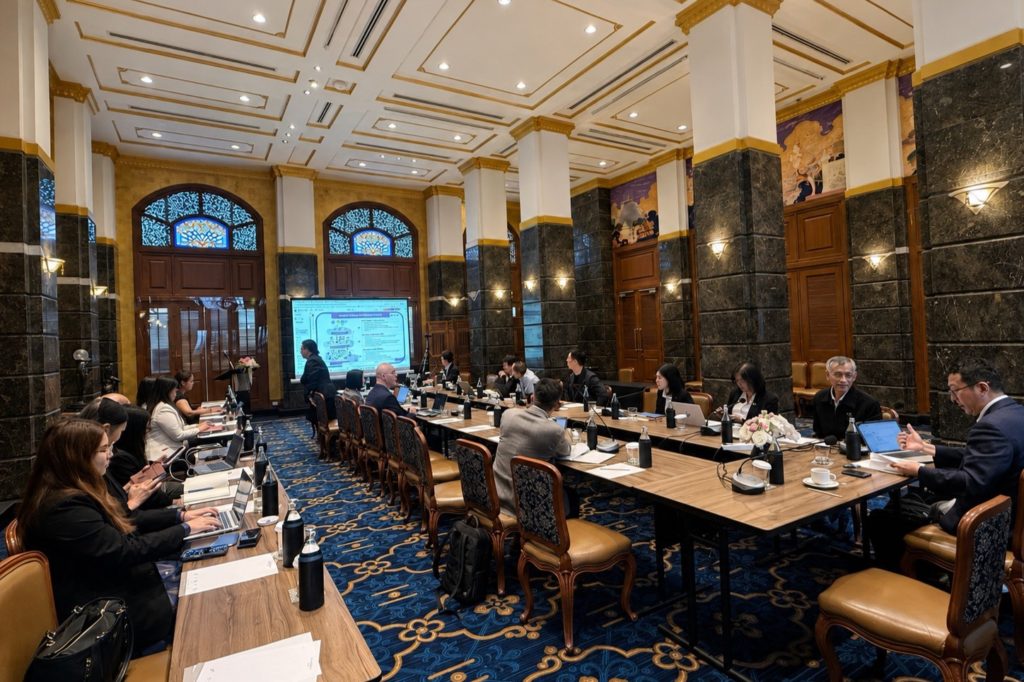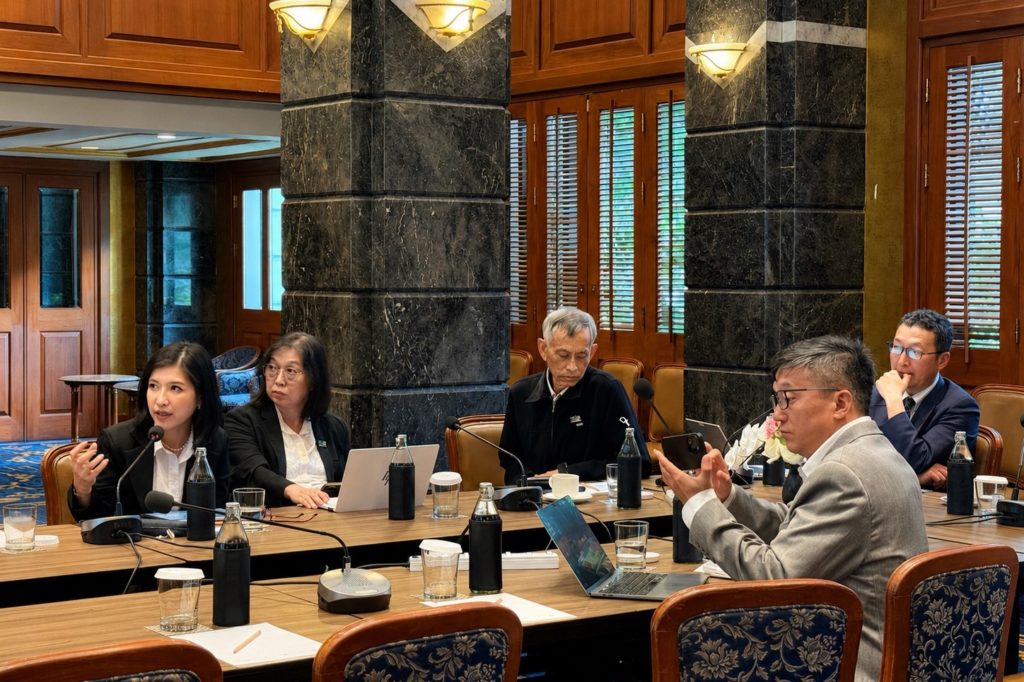
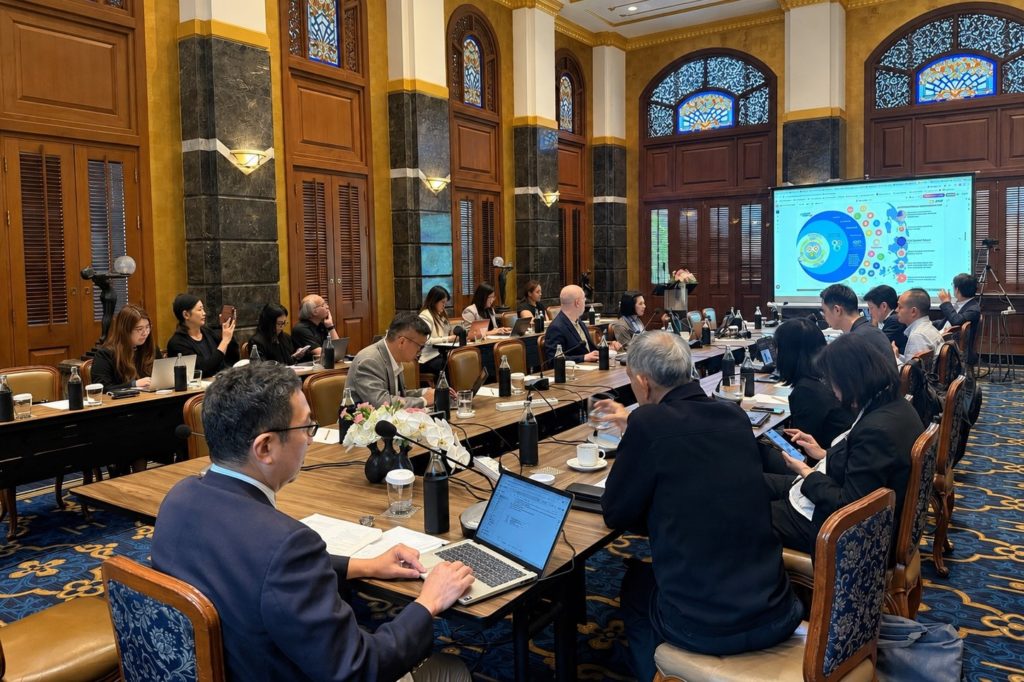
Dr. Saravanee Singtong, Director of the Sustainability Policy Division at NXPO, participated in the Kick-off Meeting of ASEAN-Japan Dialogue for the Co-creation and Social Implementation of SCP 3.0: Transition to a Circular, Decarbonized and Nature-Positive Economy (AJSCP 3.0), organized by the Asia-Pacific Roundtable for Sustainable Consumption and Production (APRSCP) and the Institute for Global Environmental Strategies (IGES) on 6 July 2026 at The Sukosol Hotel, Bangkok. She represented Thailand in the session “Science, Technology and Innovation for the BCG Economy”.
During the session, Dr. Saravanee presented Thailand’s approach to advancing the Bio-Circular-Green Economy (BCG) through science, technology and innovation (STI). She highlighted the country’s efforts to translate circular economy principles into practice through the Circular Economy Innovation Ecosystem: Vision 2030, the development of national standards, guidelines, and roadmaps, and policy research assessing both the economic impacts of circular economy adoption and the legal and regulatory barriers to circular business development.
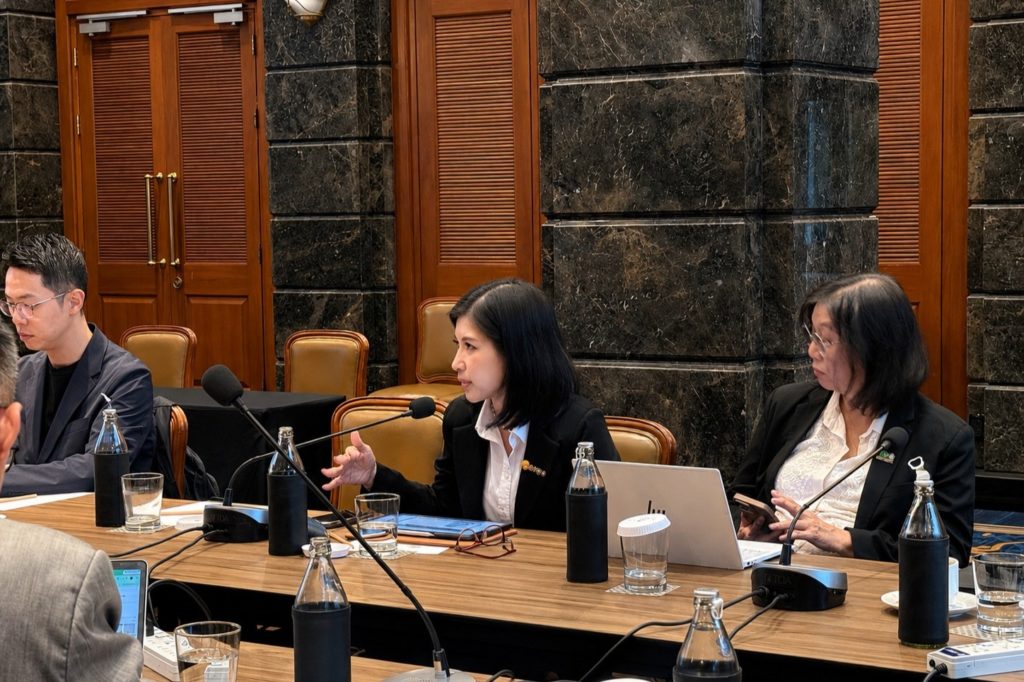
Dr. Saravanee also highlighted NXPO’s role in connecting policy, practical tools, and multi-stakeholder partnerships to accelerate the transition to a green economy. In collaboration with research institutions and government agencies, NXPO has supported initiatives on circular economy development, regulatory and legal reform, and policy incentives. The agency has also developed the Green Enterprise Indicator (GEI) as a national assessment framework to help enterprises evaluate their readiness for the transition to a circular and green economy. In addition, the GEI serves as a platform linking businesses with government support measures and financing opportunities.
The presentation also showcased area-based initiatives, including the Saraburi Sandbox, which is piloting a digital platform that integrates data on waste management, material circulation, greenhouse gas emissions reduction, and value creation for local communities and businesses. Developed through collaboration among industry, government agencies, local authorities, and communities, the initiative demonstrates that the transition to a circular, low-carbon economy requires an enabling regulatory environment, transparent data, market mechanisms that stimulate demand for recycled materials, and active stakeholder engagement. Together, these elements can generate tangible outcomes, including higher community incomes, more efficient resource utilization, and progress toward Thailand’s greenhouse gas reduction targets.
The AJSCP 3.0 Kick-off Meeting aims to strengthen collaboration among industry, academia, and the public sector across ASEAN and Japan to develop new economic and social models that integrate decarbonization with circular economy principles. The initiative aligns closely with Thailand’s BCG strategy and the country’s long-term transition toward a sustainable, low-carbon future.