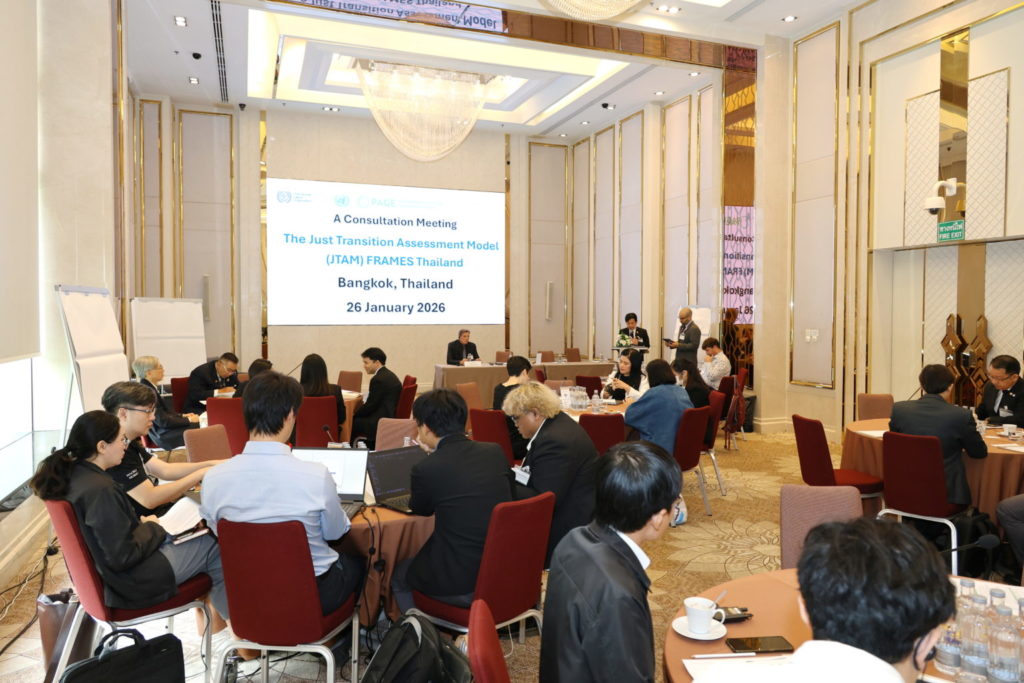
On 26 January 2026, Assoc. Prof. Wongkot Wongsapai, Vice President of NXPO, participated in the Just Transition Assessment Model (JTAM) Thailand Meeting. The meeting was organized by the International Labour Organization (ILO), in collaboration with the Office of the National Economic and Social Development Council (NESDC) and Thammasat University, under the framework of the Partnership for Action on Green Economy (PAGE)—a joint initiative of five UN agencies, namely ILO, UNDP, UNIDO, UNEP, and UNITAR. The event brought together representatives from government agencies, academia, the private sector, and international organizations.
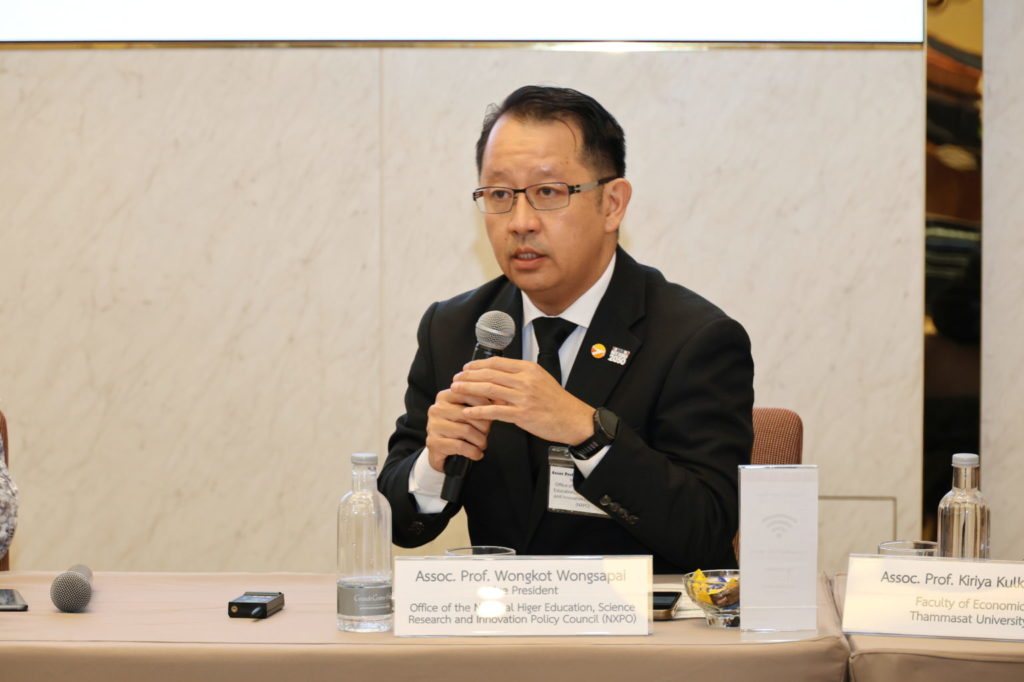
During the meeting, Assoc. Prof. Wongkot delivered a presentation in the session on findings from previous research on education planning and employment related to climate change. He emphasized that achieving a net-zero transition requires a systematic approach to workforce development, as well as close alignment between labor and education policies and future industrial directions. He highlighted the importance of developing green skills through upskilling and reskilling as a key mechanism for advancing a just transition, and underscored the critical role of research and innovation in supporting effective workforce and employment policy formulation.
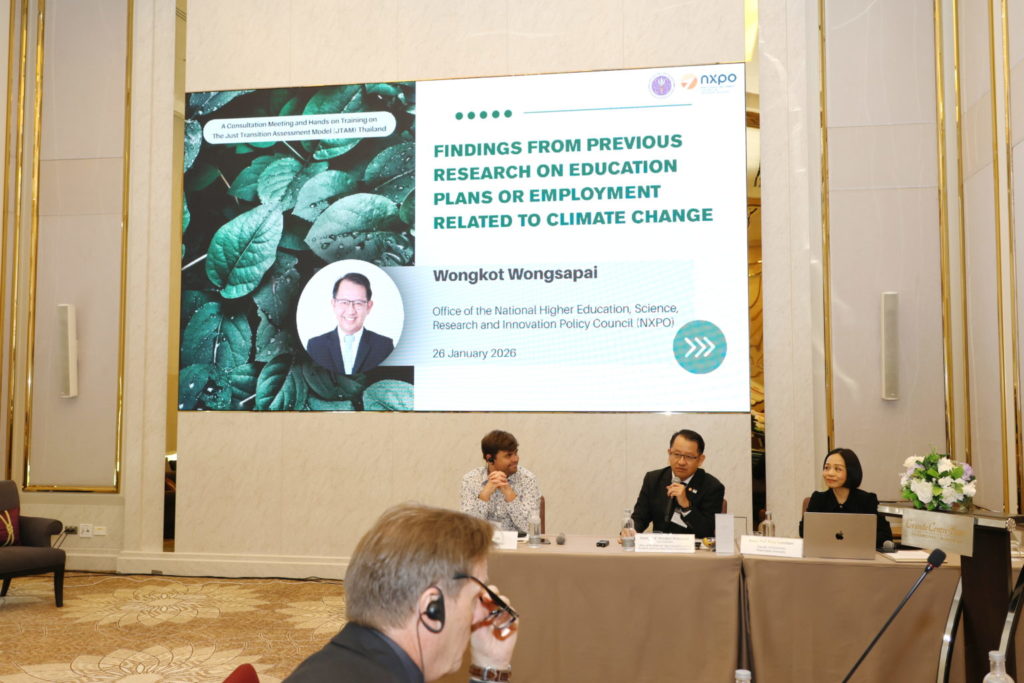
He further outlined NXPO’s role in promoting the integration of higher education, science, research, and innovation policies with climate change policies and action plans, particularly in the area of sustainability skills. NXPO supports knowledge generation, the development of policy frameworks, and collaboration among government agencies, higher education institutions, and the private sector, thereby strengthening national capacity to drive a just transition.
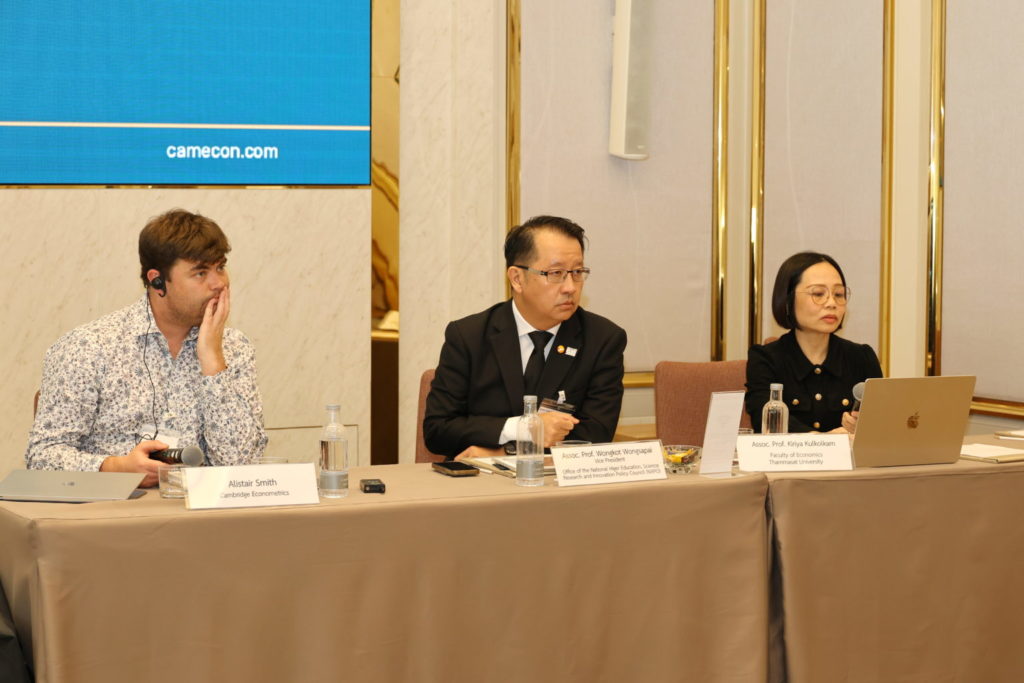
The meeting also served as a platform for exchanging perspectives on advancing the JTAM approach. Participants proposed recommendations to address challenges related to green labor data systems and to enhance the use of digital technologies in promoting sustainable development within the labor sector.